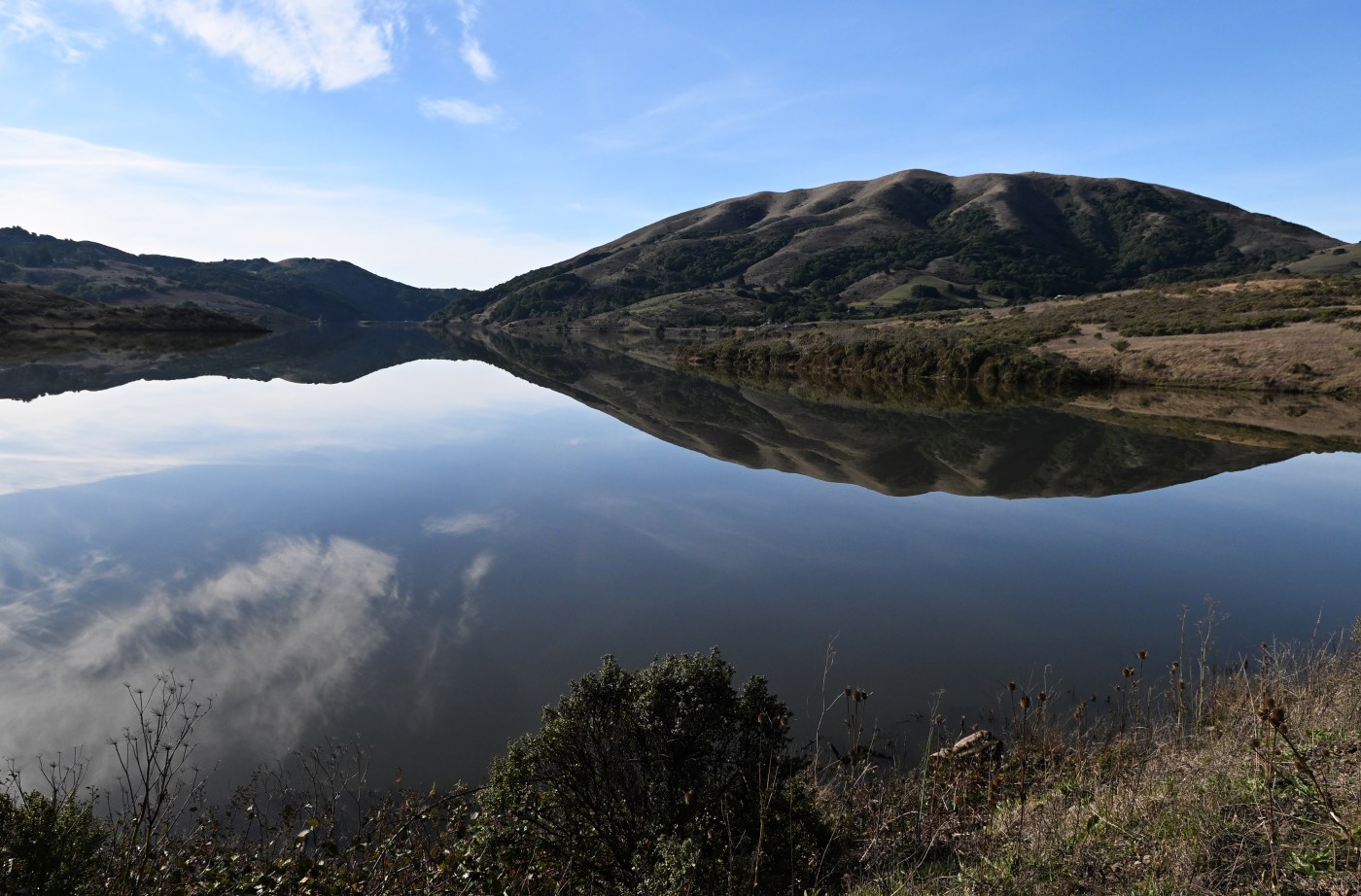
UPDATE: The Marin Municipal Water District has just announced a significant investment of $387,685 to conduct an urgent study addressing flooding concerns in Nicasio, California. This move follows widespread protests from residents opposing a now-canceled plan to expand the Nicasio Reservoir, which they believe could worsen flooding conditions.
Residents have reported increased flooding along Nicasio Creek and Halleck Creek, attributing it to sediment buildup on district property. The flooding has caused damage to roads, private yards, and even the local community school. The district’s recent decision to cancel the reservoir expansion was celebrated by the community, but residents insist that immediate action is needed to address the flooding crisis.
During a board meeting held on November 18, Marin Water District officials approved a contract with Environmental Science Associates, a firm tasked with investigating the flooding issues. “What we found is, without question, there’s district responsibility,” stated Ben Horenstein, general manager of the district. He emphasized the need to address the condition of local streams and properties.
Board chair Matt Samson acknowledged the high cost of the study, calling it “a very expensive study, but I think it’s warranted.” He added, “I appreciate the fact that we’re moving forward with it,” highlighting the importance of understanding the flooding impacts for future water management.
The originally proposed reservoir expansion was intended to increase the county’s water supply and enhance drought defenses. It involved modifying the spillway gates at Seeger Dam, which controls the reservoir’s 22,340 acre-feet capacity. However, project costs ballooned from an initial estimate of $10 million to $15 million to an astonishing $37 million to $54 million, prompting the board to terminate the plan in August.
The purpose of the new study is to identify factors contributing to reduced creek flow and evaluate long-term management options to mitigate flooding. Adriane Mertens, spokesperson for the district, clarified that the study focuses solely on current creek conditions and is not linked to any possible future spillway modifications.
Community members, including Martha Davis of the Nicasio Landowners Association, expressed appreciation for the district’s responsiveness. “Continuous monitoring is really important because this is not a one-and-done situation,” Davis noted, emphasizing the need for ongoing engagement as the ecosystem evolves.
Residents are also concerned about the district’s anticipated “atmospheric river capture” project, which would involve a 13-mile, 36-inch pipeline to transport water from the Russian River into the Nicasio Reservoir. Many worry that the reservoir may not have the capacity to handle the additional water supply.
District officials, including Paul Sellier, the water resources director, assured that the pipeline would be utilized during drought conditions when reservoir levels are critically low. Davis thanked staff for addressing these pressing concerns, noting that clear communication fosters collaboration.
In response to immediate flooding threats, the district is also pursuing emergency permits from the San Francisco Bay Regional Water Quality Board to remove accumulated debris from district-owned sections of Nicasio Creek. If approved, this essential work is expected to be completed within two to three weeks to facilitate better water flow to the reservoir.
As the situation develops, community members remain vigilant, eager for updates on the flood study and ongoing engagement from the Marin Municipal Water District.