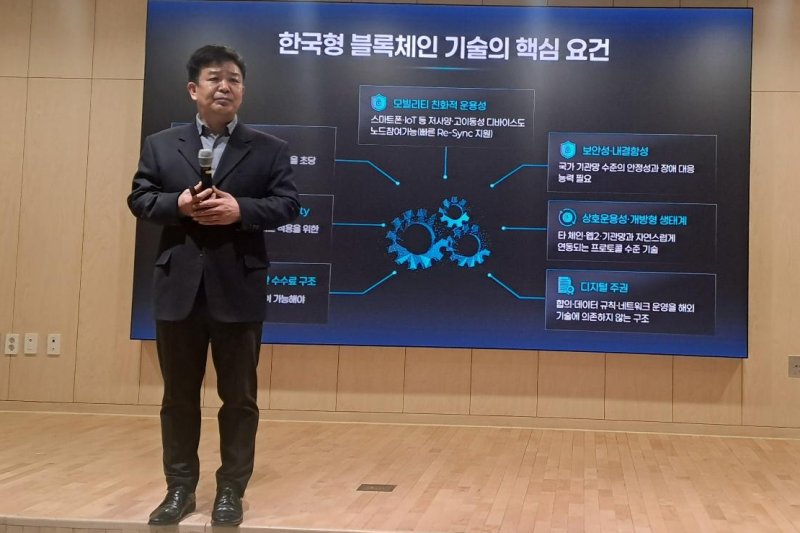
Participants at a recent forum held by the Korea Blockchain Association in Seoul have called on the South Korean government to adopt a more proactive approach in supporting the development of blockchain technologies. The forum, which took place on December 3, 2023, featured discussions about the current regulatory environment and its impact on innovation in the blockchain sector.
Moon Young-bae, Vice Chairman of the association, expressed concerns regarding the country’s regulatory framework, which requires explicit permission before new blockchain initiatives can be launched. He contrasted this with the approach taken by the United States and other advanced economies, where a negative regulation framework generally allows business activities unless they are specifically prohibited.
“The Seoul administration has attempted to heavily regulate the blockchain industry, particularly in relation to coins or tokens,” Moon stated. “On the flip side, there is extraordinary technology at work called blockchain.” He emphasized the need for South Korea to invest in developing its own main network to facilitate real-world blockchain applications.
Blockchain technology serves as a decentralized and distributed digital ledger designed to securely record transactions across multiple computers. Its attributes include transparency, tamper-resistance, and verifiability, making it a compelling solution for various applications.
Moon further highlighted that blockchain could enhance the security and reliability of artificial intelligence (AI) applications. Drawing parallels to historical challenges, he noted, “In the early 20th century, numerous car accidents hindered the widespread adoption of automobiles. Traffic lights played a crucial role in improving safety and encouraging their use.” He argued that blockchain could similarly ensure the trustworthiness of AI-related data and solutions.
Echoing Moon’s sentiments, Lee Sang-yoon, CEO of Bloom Technology, also stressed the importance of deregulation. His company has developed its own main network called Locus Chain and is an active member of the association. “Countries like the United Arab Emirates and Switzerland have significantly deregulated the blockchain industry. Following the inauguration of President Donald Trump earlier this year, the United States is also moving in that direction,” Lee remarked.
Lee asserted that the transition to a decentralized internet is inevitable and will address numerous future challenges. He underscored the necessity for South Korea to adapt its regulations to remain competitive on the global stage.
As the discussion concluded, participants agreed that enhancing the supportive framework for blockchain technologies could position South Korea as a leader in this innovative field. The ongoing dialogue reflects a growing recognition of the transformative potential of blockchain and the need for regulatory environments that foster creativity and advancement.