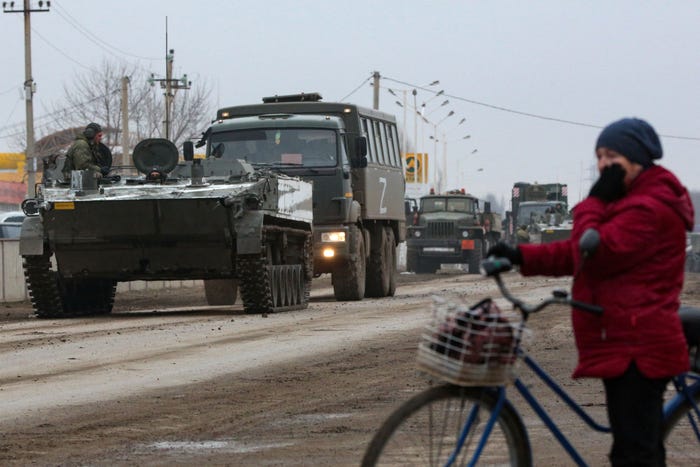
Col. Gen. **Vladimir Chirkin**, a former leader of Russia’s ground forces, recently criticized the Kremlin’s intelligence services for their role in the country’s invasion of Ukraine. In an interview with Russian radio outlet **RBC** on **November 27, 2023**, Chirkin stated that the intelligence community deserves a failing grade for its performance in the early stages of the conflict, which began in **February 2022**.
Chirkin, who commanded Russian ground forces from **2012 to 2013**, described the situation as a significant miscalculation by Moscow. He remarked that military leaders were misled into believing that **70%** of the Ukrainian population supported a pro-Russian government. “It turned out to be exactly the opposite,” he said. “30% for us and 70% against.” His comments align with analyses from both Western and Ukrainian sources, which found that Russia drastically underestimated its enemy.
In the interview, Chirkin noted that many had believed the war would conclude quickly, stating, “Everyone, if you recall, started saying in February 2022 that the war would be over in three days.” He lamented that the reality was far more complex, adding, “Unfortunately, it didn’t work out that way.” He emphasized that the Russian military was again unprepared for conflict, a pattern he indicated has persisted throughout Russia’s military history.
Chirkin’s candid remarks stand out in a military culture often characterized by loyalty to the state. His critique highlighted the “Tbilisi syndrome,” where troops hesitate to make tactical decisions without direct orders, which he attributed to early challenges faced by Russian forces.
The general’s comments have garnered attention, particularly among Ukrainian commentators. **Denis Kazanskyi**, a Ukrainian political journalist, noted the significance of Chirkin’s admissions, which deviate from the typical rhetoric of Russian officials. The frankness of his assessment even surprised the interviewer, **Yuri Tamantsev**, who remarked on the unexpected honesty at the beginning of their conversation.
Despite his criticism of the intelligence community, Chirkin refrained from condemning the Kremlin’s rationale for the invasion. He discussed how Russian warfare has evolved over the years and shared insights on potential strategies for achieving Moscow’s objectives in Ukraine.
The broader context of his remarks is significant, especially considering the Kremlin’s strict laws against spreading “false information” about the war, which can result in severe penalties. Rights groups have raised concerns that such laws have been used to silence dissent and criticism within Russia.
Chirkin’s military career has not been without controversy. He was ousted from his command in **2013** amid bribery allegations and later convicted in **August 2015** for accepting a bribe of **450,000 rubles**, leading to a five-year sentence in a labor camp. His sentence was commuted in **December** of the same year, and he was eventually reinstated in rank.
As the war in Ukraine continues to evolve, figures like Chirkin offer a rare glimpse into the internal assessments and challenges facing the Russian military leadership. His remarks may signal a shift in how former military officials engage with the realities of the ongoing conflict.