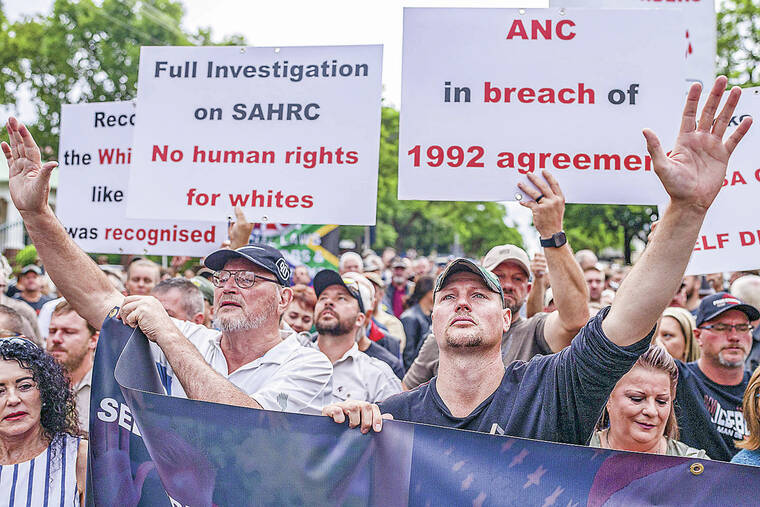
UPDATE: Afrikaner leaders are experiencing a significant shift in their relationship with U.S. officials, with unprecedented access at the U.S. Embassy in South Africa. This development comes as the Biden administration reassesses its foreign policy approach toward South Africa, creating fresh opportunities for Afrikaners to voice their concerns.
The dynamic changed notably since President Donald Trump took office, when he implemented a halt to U.S. aid to South Africa and imposed 30% tariffs on imports. Afrikaners, previously marginalized, have now become key players in discussions about U.S. foreign policy, particularly regarding their claims of persecution.
In a recent visit to Washington, Theo de Jager, a prominent Afrikaner farm organizer, reported a warm reception from officials, including those from Vice President JD Vance’s office. “We have never had this level of engagement before,” de Jager stated, highlighting the shift in attention toward the Afrikaner community.
Since July 2023, the U.S. Embassy has begun engaging Afrikaners in a manner not seen in previous administrations. Embassy officials have even started sharing social media posts in Afrikaans, reflecting the increased focus on this community. Jaco Kleynhans, an official from the Solidarity Movement, noted, “Our access and engagement have increased tremendously in the past 10 months.”
This new relationship has sparked concern among some South African lawmakers, who have accused Afrikaner organizations of treason for allegedly spreading misinformation that could harm U.S.-South Africa relations. Kallie Kriel, CEO of AfriForum, remarked that Afrikaners’ growing prominence in U.S. discussions is rooted in the South African government’s closer ties with nations considered enemies by the U.S.
At this year’s Independence Day celebration at the U.S. Embassy, the presence of Afrikaners was notably larger, signaling their new standing. Gerhard Papenfus, an Afrikaner business leader, expressed gratitude for the outreach, stating, “Here’s an administration that reaches out and says, ‘We hear you.’”
While the Trump administration has embraced Afrikaner issues, the foreign diplomatic landscape remains cautious. Most embassies are reluctant to publicly associate with Afrikaners, fearing backlash from the South African government.
U.S. diplomats, including former ambassador Patrick Gaspard, have observed that Afrikaner organizations once held little sway in bilateral discussions. Now, their views are increasingly sought after, marking a dramatic shift in the narrative surrounding Afrikaners and their rights.
As tensions rise in South Africa over this newfound attention, the implications of this engagement could reshape not only U.S. policies but also the dynamics of the Afrikaner community within South Africa. Stakeholders are closely watching how this relationship evolves, particularly as U.S. officials remain interested in their perspectives on crucial topics such as farm safety and economic policies.
What to Watch: The continued engagement of Afrikaners with U.S. officials will be significant in the coming months. As discussions advance, the responses from both the South African government and the Afrikaner community will be critical in determining the future of U.S.-South Africa relations.
Stay tuned for more updates on this developing story as the situation unfolds.