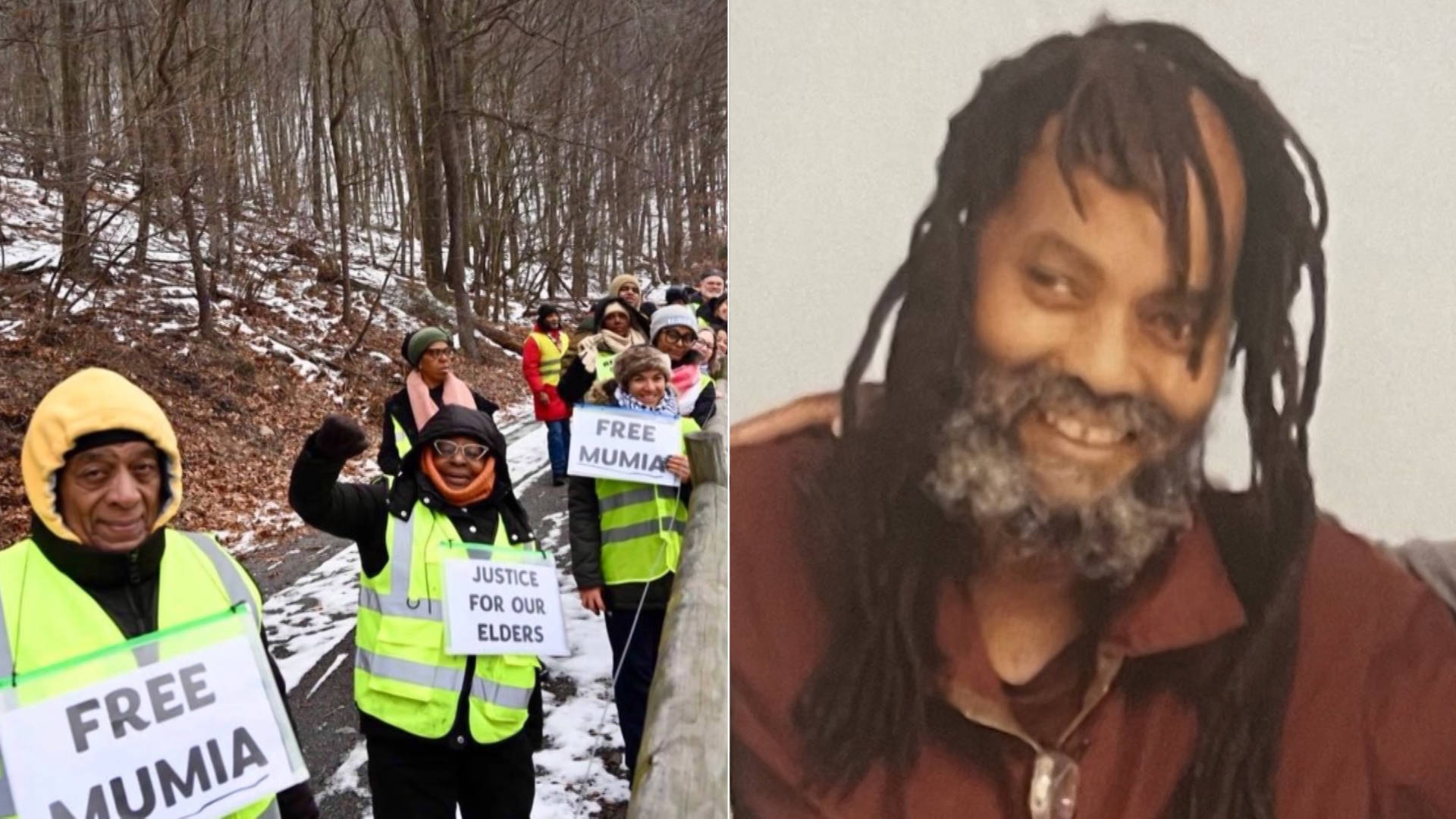
Supporters of Mumia Abu-Jamal, a prominent political prisoner, are completing a significant 103-mile march to demand medical care for him and other aging inmates. The march concludes today in Frackville, Pennsylvania, where Abu-Jamal is incarcerated at SCI Mahanoy. This date marks the anniversary of his arrest in 1981 for the murder of Philadelphia police officer Daniel Faulkner, a conviction he has consistently maintained was wrongful.
Abu-Jamal, a former award-winning journalist and co-founder of the Philadelphia chapter of the Black Panther Party, has gained international attention for his claims of judicial bias and prosecutorial misconduct during his trial. Human rights organizations, including Amnesty International, have stated that he was denied a fair trial, with new evidence emerging in 2019 that uncovered serious flaws in the judicial process.
At 71 years old, advocates are increasingly concerned about Abu-Jamal’s health, particularly regarding his eyesight. He underwent cataract surgery after being blind for eight months, but he now requires further treatment to address ongoing issues that could lead to permanent vision loss. Activist Larry Hamm, who participates in the march, articulated the urgency of the situation, stating, “We’re marching today to demand freedom for Mumia and all political prisoners.”
Concerns Over Medical Neglect
Advocates argue that Abu-Jamal’s medical needs reflect a broader issue within the prison system, where healthcare access is often limited, particularly for elderly inmates. Noelle Hanrahan, a member of Abu-Jamal’s legal team, highlighted the struggle for adequate medical treatment, emphasizing that “we ration healthcare in this country, and in particular for prisoners.” She stressed the necessity for Abu-Jamal to receive specialist care for conditions related to glaucoma and diabetic retinopathy.
The march serves not only as a call for Abu-Jamal’s medical care but also as a campaign for the humane treatment of all prisoners, especially the elderly. Marchers hope to shed light on the challenges faced by aging inmates who often do not receive the medical attention they require.
As Hamm noted, “I’m a witness to the fact that we have an aging prison population, and, like Mumia, many of them are not getting the medical care they need.” The marchers believe that by raising awareness, they can influence change in the prison healthcare system.
Legacy and Ongoing Advocacy
Abu-Jamal’s legacy extends beyond his incarceration. He has authored 15 books and continues to write commentaries from prison, garnering a global following. His case has inspired a movement advocating for prison reform and justice for political prisoners.
During the march, participants expressed a deep commitment to ensuring that Abu-Jamal receives the medical care he deserves. They also aim to amplify calls for justice and reform in the prison system. “We’re taking that long walk because the walk for freedom is a long walk,” said activist Zayid Muhammad. “It’s time to get Mumia all the healthcare he needs.”
As the march concludes today, supporters will hold a press conference and rally outside SCI Mahanoy to reinforce their demands for healthcare for Abu-Jamal and all political prisoners. The movement surrounding Abu-Jamal’s case highlights ongoing issues of justice, healthcare, and human rights within the prison system, making it a focal point for activists and advocates alike.