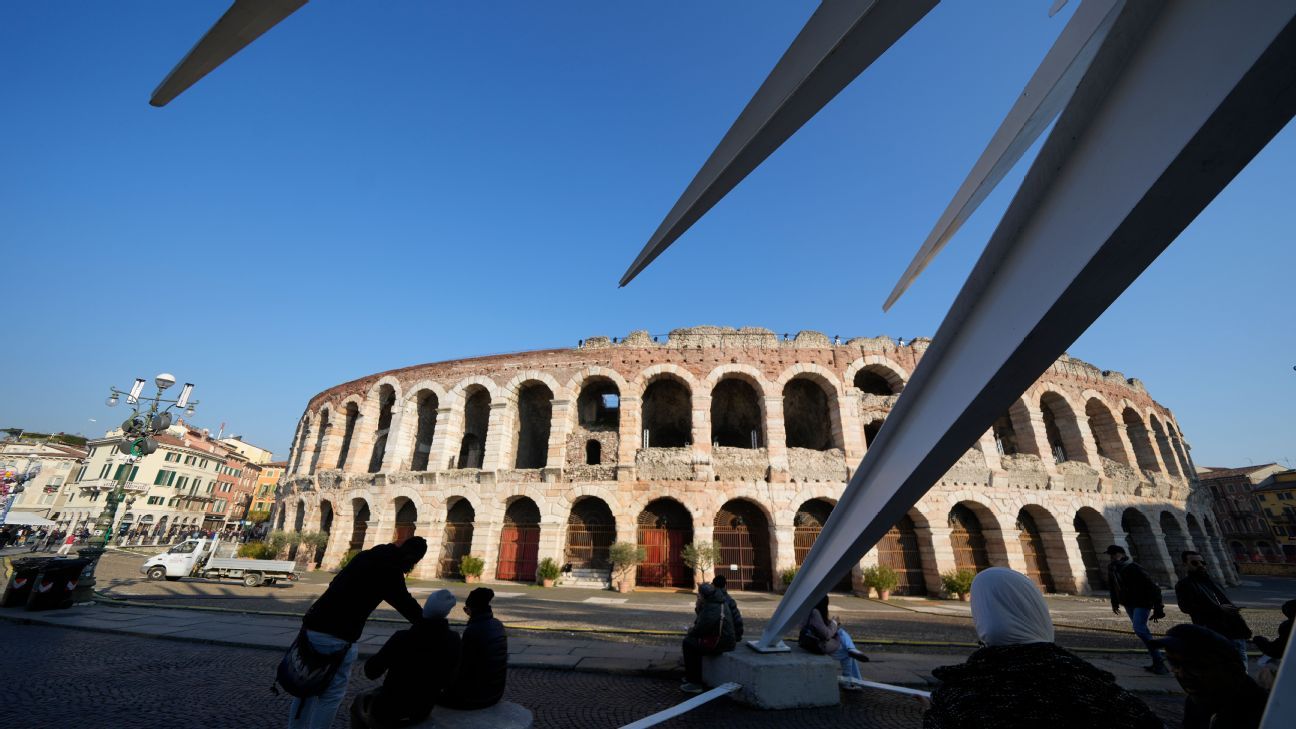
Verona’s ancient Roman Arena is set to undergo significant renovations to enhance accessibility ahead of the 2026 Milan Cortina Games. This historic site will host both the Olympic closing ceremony on February 22, 2026, and the Paralympic opening ceremony on March 6, 2026. The renovations aim to make the venue more accommodating for individuals with disabilities, a notable change for a structure that has historically not provided adequate access for all visitors.
Constructed in the 1st century, the Roman Arena was originally designed for gladiatorial combat and has been repurposed over centuries. It has served as a medieval marketplace and currently hosts a renowned opera festival. Despite its rich history, the venue has not incorporated significant accessibility features, leaving many visitors without proper accommodations.
Investment in Accessibility and Safety
The upcoming Games have prompted an €18 million (approximately $21 million) investment to improve both accessibility and safety. The project is being overseen by the governmental company responsible for Olympic infrastructure, ensuring that the renovations align with current accessibility regulations. According to architect Giulio Fenyves, the opportunity presented by the Olympics has allowed for a comprehensive re-evaluation of how to facilitate movement in and out of the Arena.
Enhancements include a kilometer of sidewalks leading from Verona’s main train station to the Arena, making it safer for wheelchair users and parents with strollers through the addition of curb ramps. Furthermore, dedicated bike lanes will be constructed to promote safer travel in the vicinity of the historic site.
The route for the upcoming Parade of Athletes will also see significant upgrades, allowing for better access for those who require wheelchairs or have mobility challenges. This work is being coordinated with preservation officials to ensure that the modifications complement the Arena’s historical significance.
Innovative Features for Modern Needs
Inside the Arena, one of the most notable changes will be the introduction of a wheelchair-accessible ramp. This ramp will be constructed from pre-rusted steel and the same Prun stone from the Lessinia hills, maintaining the Arena’s distinctive pinkish-yellow hue while integrating modern accessibility needs. Project manager Paolo Zecchinelli expressed hope that this ramp would remain as a lasting legacy of the Games.
Previously, individuals with mobility challenges accessed the Arena via a natural slope from the adjacent Piazza Bra, a method that did not meet current standards. The new ramp will blend seamlessly with the Arena’s existing architecture, and a temporary ramp will also be installed for the duration of the Games to accommodate elderly spectators, families with children, and those needing additional support.
Additional improvements include replacing a makeshift railing from the 1950s with a more permanent solution, as well as installing new handrails at various heights on internal stairways and entrances. The renovation of restrooms is also part of the ongoing efforts to enhance user experience for all visitors.
Plans extend beyond the Olympic events, with future work including the installation of an elevator to provide access to the Arena’s upper levels. This upgrade will enable those with limited mobility to enjoy performances and scenic views of the surrounding hills.
Zecchinelli noted the importance of these changes, stating, “A part will remain as a gift to the city, which will help this beautiful monument to be more accessible both to people who tour it and those who attend opera performances and other concerts.” This commitment to improved access not only serves the needs of the upcoming Games but also ensures that Verona’s Roman Arena remains a welcoming site for generations to come.