Recent findings from NASA’s Chandra X-ray Observatory challenge the prevailing belief that nearly all galaxies host supermassive black holes at their centers. The study, conducted over two decades and involving a comprehensive analysis of more than 1,600 galaxies, reveals that many smaller galaxies are likely devoid of these massive cosmic entities.
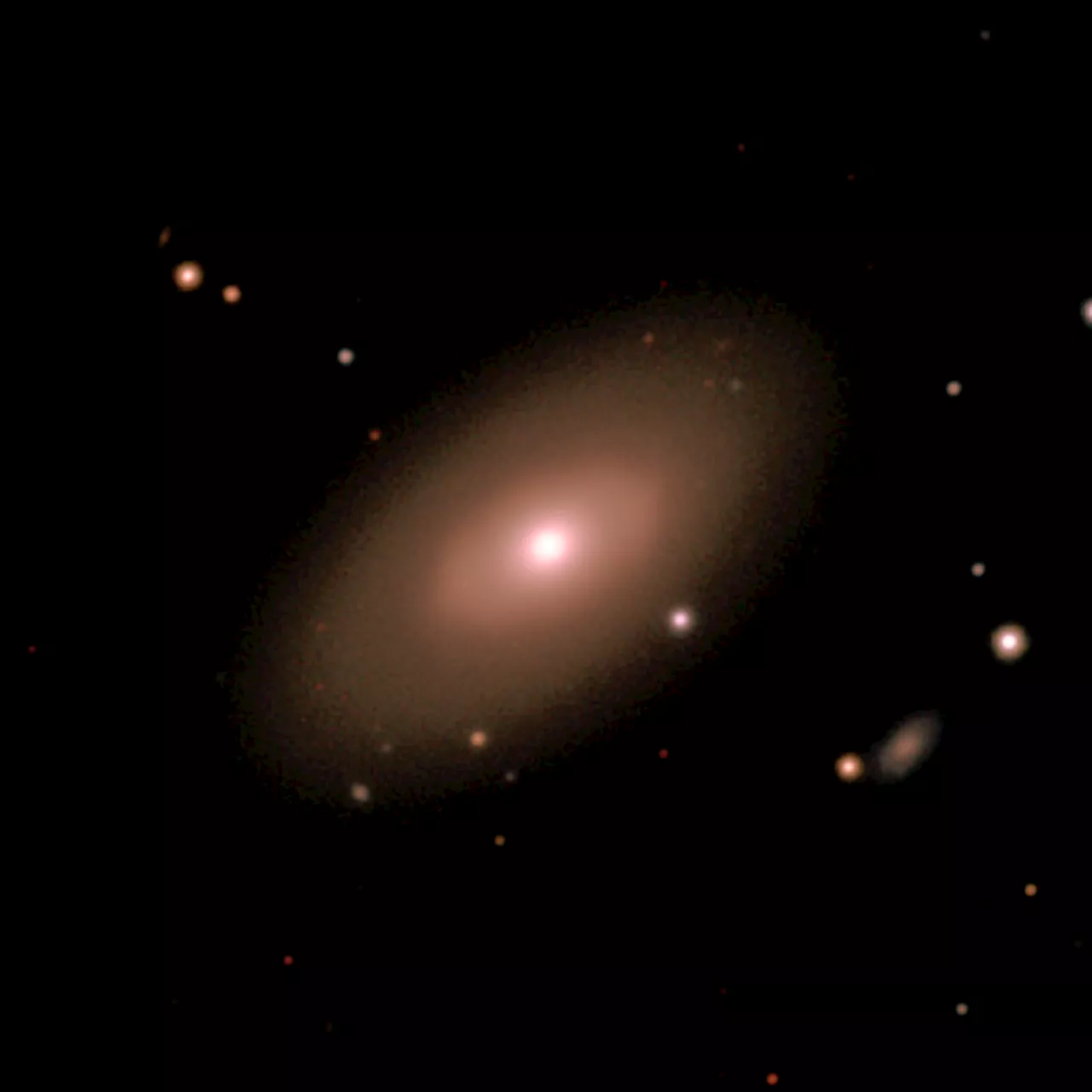
The research team, led by Fan Zou from the University of Michigan, focused on two particular galaxies, NGC 6278 and PGC 039620, to illustrate their findings. The investigation utilized X-ray data to assess the presence of supermassive black holes, typically indicated by bright X-ray sources resulting from material falling into these gravitational giants.
Most of the larger galaxies examined showed clear signatures of supermassive black holes, with over 90% of massive galaxies, including those comparable in size to the Milky Way, containing these black holes. In contrast, smaller galaxies, particularly those with masses under three billion solar masses, showed a marked absence of similar X-ray sources. This suggests a significant disparity in the occurrence of black holes between smaller and larger galaxies.
Elena Gallo, a co-author of the study, emphasized the importance of accurately counting black holes in smaller galaxies. “It’s more than just bookkeeping. Our study gives clues about how supermassive black holes are born,” she stated. The implications of this research extend beyond mere statistics; they offer critical insights into the formation processes of these enigmatic cosmic structures.
The study, published in The Astrophysical Journal, proposes two main explanations for the lack of detectable X-ray sources in smaller galaxies. The first posits that the fraction of galaxies containing supermassive black holes is significantly lower in these less massive galaxies. The second suggests that any black holes present could be producing X-rays at such low levels that they remain undetected by current instruments.
Zou and his colleagues concluded that the evidence from the Chandra data supports the notion that fewer black holes exist in smaller galaxies compared to their larger counterparts. This conclusion has profound implications for our understanding of black hole formation. The researchers suggest that supermassive black holes may originate from massive gas clouds collapsing directly into black holes, which would already possess a mass thousands of times greater than that of the Sun. Alternatively, smaller black holes could form from the collapse of massive stars, but the current findings indicate that the first scenario is more likely.
This research could also influence the study of black hole mergers, particularly as smaller galaxies merge with one another. A reduced number of black holes in these dwarf galaxies implies there will be fewer sources of gravitational waves detectable by future missions such as the Laser Interferometer Space Antenna.
NASA’s Marshall Space Flight Center manages the Chandra program, while the Smithsonian Astrophysical Observatory oversees science operations from Cambridge, Massachusetts, with flight operations based in Burlington, Massachusetts. The findings from this study not only reshape our understanding of black hole distribution in the universe but also pave the way for future explorations into the mechanisms of galaxy formation and evolution.