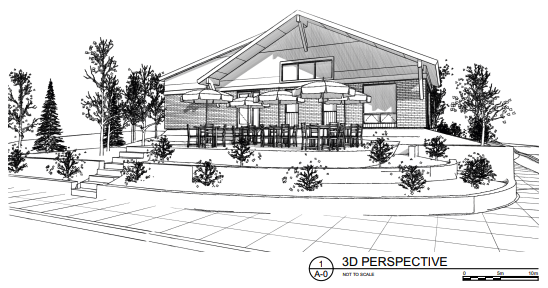
The owners of a long-vacant building on Dillon’s Main Street have presented preliminary redevelopment plans to the Town Council following emergency funding for roof repairs. The property, located at 103 Main St., has been unused for several years, previously serving as medical offices. In October 2023, the owners, Dillon Development Co. LLC, secured just under $64,000 from the Town’s Urban Renewal Authority to address a collapsing roof.
In April 2023, the Urban Renewal Authority rejected a proposal from the owners to purchase town-owned land for a new mixed-use development featuring a restaurant, office spaces, and residential units. Despite this setback, the authority approved the funding for the urgent repairs. During the October meeting, architect Bobby Craig, one of the owners, indicated plans to convert the building into two commercial units and two residential units. However, council members raised concerns about the parking requirements for residential units, which had contributed to the rejection of the earlier proposal.
When pressed for assurances regarding the town’s return on its investment, Craig expressed confidence in securing tenants post-renovation. “I still want my damn office in the building,” he stated, emphasizing his commitment to establishing his office there.
Plans for Redevelopment and Council Feedback
On December 2 and December 16, 2023, Craig and his partners returned to the council with updated plans, which propose transforming the existing structure into a restaurant and two three-bedroom residential units. Given that the town owns surrounding land, the owners requested assistance either in purchasing or utilizing that land for an outdoor restaurant patio and parking for residential units. They also sought an exception to local zoning regulations to permit residential units on the ground floor.
During the discussions, Mayor Pro Tem Joshua Samuel criticized the revised proposal for including only one commercial space. Craig defended the decision, indicating that market assessments had influenced their shift towards two residential and one commercial unit. He noted interest from potential renters, highlighting a conversation with a local business owner who expressed eagerness to occupy a residential unit.
Despite the owners’ optimism, council member Barbara Richard voiced concerns regarding the size of both the restaurant and the residential units. Preliminary plans indicate the restaurant would span just over 1,200 square feet, which Richard deemed “very small,” while each residential unit would be 972 square feet.
The owners acknowledged the possibility of adding a second story to accommodate more commercial space, though they aimed to minimize structural alterations to the existing building. Craig countered Richard’s concerns by mentioning that a planned outdoor patio would provide approximately 500 square feet of additional seating.
Future Steps and Council Priorities
The council revisited the redevelopment topic during the December 16 work session, as town staff felt previous discussions lacked clarity. The council and owners engaged in further dialogue, with Samuel reiterating that prioritizing commercial space would likely yield a more favorable outcome. He expressed disappointment regarding Craig’s previous assurance to occupy the space with his business, stating, “It influenced my vote to grant money toward repair of a roof.”
Much of the conversation revolved around solutions for residential parking. Outside of council member Rachel Tuyn, there was little interest in selling land to the owners for parking purposes. Instead, the council proposed allowing exceptions for residential parking, potentially requiring residents to purchase annual overnight parking passes.
The council expressed a preference for increasing commercial space in the development, either by adding a second commercial unit or enlarging the restaurant. They also suggested reducing the number of bedrooms in each unit to create larger spaces and lessen parking demands.
“I don’t know that you’re going to have the votes if you go full-bore on housing,” warned Mayor Carolyn Skowyra. She emphasized the council’s desire to reach a consensus on the project, indicating openness to innovative solutions. While the council is willing to facilitate the owners’ plans for outdoor amenities, they remain firm against providing land for residential parking.
Richard advocated for making the housing “attainable” for local workers rather than for short-term rentals or second-home owners, a sentiment echoed by other council members. Following these discussions, Craig and his partners committed to revising their proposal based on the feedback received before resubmitting any applications.
As Dillon moves forward with these redevelopment plans, the outcome will significantly shape the future of Main Street, balancing the need for commercial growth with community housing requirements.