A significant breakthrough in the investigation of a mass shooting at Brown University occurred when authorities discovered the suspect, Claudio Neves Valente, dead in a New Hampshire storage facility. The 48-year-old former student is also implicated in the killing of Nuno F.G. Loureiro, a professor at the Massachusetts Institute of Technology (MIT).
Valente was found on Thursday evening, October 5, 2023, from an apparent self-inflicted gunshot wound, according to Col. Oscar Perez, the Providence police chief. Investigators believe he fatally shot two students and injured nine others in a lecture hall at Brown University on September 30, before allegedly killing Loureiro two days later at his home in Brookline, Massachusetts, approximately 80 kilometers from Providence.
Christina Paxson, President of Brown University, confirmed that Valente was enrolled as a graduate student studying physics from the fall of 2000 to the spring of 2001 but had no current affiliation with the university. Both Valente and Loureiro had attended the same academic program in Portugal from 1995 to 2000.
The background of Valente reveals that he had been let go from a position at a Portuguese university in 2000. After studying at Brown on a student visa, he obtained legal permanent resident status in the United States in September 2017. The timeline of his life between leaving Brown in 2001 and acquiring the visa remains unclear, although his last known address was in Miami.
Following the revelation of Valente’s identity, President Donald Trump announced the suspension of the green card lottery program that allowed Valente to remain in the United States. Rhode Island Attorney General Peter Neronha stated that many aspects of the case remain uncertain, particularly concerning the motives behind the shootings.
Investigation and Discovery
The investigation into the shootings was significantly aided by a tip from an individual who had multiple encounters with Valente. This person recognized Valente from images shared by the police, leading to crucial details about a Nissan sedan with Florida plates linked to the suspect. Neronha noted the importance of this tip, which enabled law enforcement to utilize a network of over 70 street cameras operated by Flock Safety in Providence.
After leaving Rhode Island, Valente reportedly attempted to conceal his identity by placing a Maine license plate over the rental car’s original plate. Surveillance footage captured him entering an apartment building near Loureiro’s residence and later entering the storage facility in Salem, New Hampshire, where he was ultimately found deceased. At the time of his death, he had a satchel and two firearms with him.
Loureiro, who joined MIT in 2016, had recently been named to lead the school’s Plasma Science and Fusion Center. His work focused on understanding the physics of astronomical phenomena, such as solar flares.
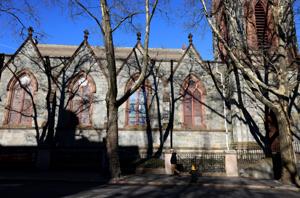
Despite the extensive surveillance measures at Brown University, the attack occurred in an older part of the engineering building with limited camera coverage. Investigators believe the shooter entered and exited through a door facing a residential street, which might explain the lack of footage capturing his movements.
Context and Implications
The nature of targeted attacks like these often leads to the shooters either taking their own lives or being apprehended by law enforcement. Katherine Schweit, a retired FBI agent specializing in mass shootings, noted that investigations can take time, referencing past incidents such as the 2013 Boston Marathon bombing, which required four days for authorities to track down the suspects.
The tragic events at Brown University and the subsequent murder of Loureiro have prompted discussions about campus safety and the challenges of preventing such violence. As investigations continue, the search for answers regarding Valente’s motives and the circumstances surrounding his actions remains a priority for law enforcement and the affected communities.