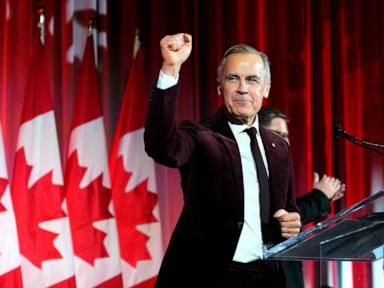
Canada and the United States are scheduled to commence formal discussions to review their free trade agreement in mid-January 2024. This announcement comes from the office of Canadian Prime Minister Mark Carney, who informed provincial leaders about the upcoming talks. Dominic LeBlanc, the designated representative for U.S.-Canada trade relations, will meet with U.S. officials to initiate this critical dialogue.
Background on the Trade Agreement
The current trade agreement, known as the United States-Mexico-Canada Agreement (USMCA), is set for a comprehensive review in 2026. The agreement was negotiated during Donald Trump‘s presidency, which included provisions for potential renegotiation. Carney’s discussions with provincial leaders included updates on the state of trade relations, emphasizing the importance of maintaining strong economic ties with the U.S.
Canada relies heavily on its trade relationship with the United States, exporting over 75% of its goods to its southern neighbor. The USMCA currently exempts a significant portion of these exports from tariffs. Trade discussions had previously stalled following an October meeting between Carney and Trump, where tensions arose due to an advertisement campaign by the Ontario provincial government that opposed certain tariffs.
Current Trade Challenges
Carney noted that Canada had been close to reaching an agreement on tariff reductions in key sectors, including aluminum and steel, prior to the breakdown in talks. Tariffs have posed challenges for various segments of the Canadian economy, particularly in aluminum, steel, automotive, and lumber industries. Jamieson Greer, the U.S. Trade Representative, has highlighted several trade irritants, which are part of a broader discussion concerning continental trade.
Among the U.S. concerns are Canadian policies related to dairy products, alcohol, and digital services, which will be focal points in the upcoming negotiations. Additionally, Carney and the provincial premiers are planning to convene in Ottawa early in the new year to further address these issues.
Trade between Canada and the U.S. is substantial, with nearly CAD 3.6 billion (approximately USD 2.7 billion) worth of goods and services crossing the border each day. Canada remains a key supplier of crucial resources to the U.S., providing 60% of its crude oil imports and 85% of its electricity imports. Furthermore, Canada is the largest foreign supplier of steel, aluminum, and uranium to the U.S., holding critical minerals and metals that are of strategic interest to U.S. national security.
Carney emphasized that access to these critical resources is not guaranteed. “It’s a potential opportunity for the United States, but it’s not an assured opportunity for the United States,” he stated. This highlights the competitive nature of global trade, as Canada has other international partners, particularly in Europe, eager to engage in trade discussions.
As the January talks approach, both nations face the challenge of navigating complex trade dynamics while seeking mutually beneficial outcomes. The discussions will be closely watched by various sectors, as they hold significant implications for the future of U.S.-Canada economic relations.