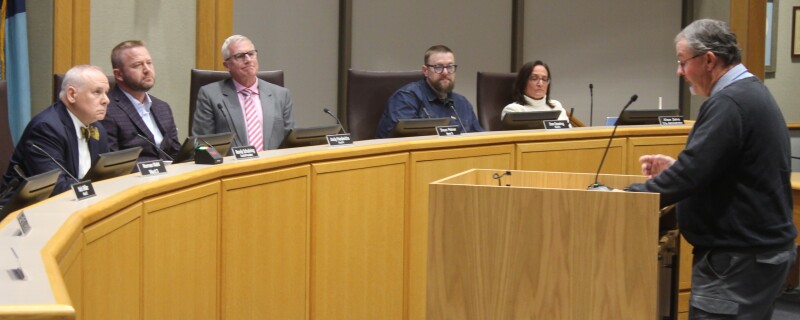
UPDATE: The Rochester City Council just voted to override Mayor Kim Norton’s veto, approving a pivotal $65 million for the city’s planned sports and recreation complex. This decision allows the project to move forward, with construction expected to begin in March 2025. Supporters rallied at the special meeting, emphasizing the urgent need for improved local sports facilities.
Rochester Community and Technical College Head Baseball Coach Clark Jones led the charge, stating, “Providing a quality tournament in Rochester, on turf fields during March, for us would be a game changer.” His remarks came as the council reviewed a veto of $52.2 million in planned construction contracts and material purchases.
The council’s approval, with a 5-2 vote, allows the complex’s initial phase to proceed, a move that many believe will enhance local sports tourism and save teams significant travel expenses. Jones articulated the financial impact, noting it could save the local baseball program $20,000 to $30,000 annually by eliminating trips to neighboring states for early-season games.
Despite the overwhelming support, concerns linger. Mayor Norton argued that her veto was meant to reflect community feedback, as many residents believed they were voting for a facility that included both indoor and outdoor options. “The project before you is not a year-around, community-focused, indoor-outdoor and economically viable sports and recreation facility,” she said.
Jane Shellum, a local resident, echoed these sentiments during the public comment period, expressing disappointment over the council’s decision to pivot from the original vision of a 90-acre complex with a 125,000-square-foot indoor facility.
Former council member Ed Hruska defended the adjusted plans, stating that the changes are necessary due to rising costs. “The proposal was based on a $50 million project in Iowa from 2018, and we’ve seen significant increases since then,” he noted. “The adjusted plan reduces future tax impacts while still providing community benefits.”
Supporters argue that the complex will not only serve local teams but also boost the local economy through sports tourism. Kristine Ihrke, area director of sales at Kahler Hospitality Group, highlighted that visitors would drive significant revenue to local businesses, benefiting Rochester residents.
“The original goal was to stimulate local economic development while providing a facility for community use,” Ihrke added. Numerous residents expressed their enthusiasm, with board members from various sports emphasizing the facility’s potential to bring in diverse events.
However, not all feedback was positive. Critics like AJ Colapinto raised concerns about the scaled-back project, questioning the viability of outdoor facilities during Minnesota’s harsh winters. “Without an indoor facility, I don’t see how it serves the community effectively,” he remarked.
The council’s decision comes at a crucial time, with the majority of voters in 2023 supporting the development of a sports complex. Council President Randy Schubring stated, “It’s difficult to reject plans that align with what the voters approved.”
As construction gears up for the spring, the community remains divided but hopeful. The new facility promises to reshape Rochester’s sports landscape and provide lasting benefits for both athletes and local businesses.
Stay tuned for further updates as the project progresses and community discussions continue.