As the demand for artificial intelligence (AI) continues to surge, a significant challenge has emerged: the energy consumption required to power advanced AI models. Training a single model can consume as much electricity as 120 U.S. homes use in an entire year. With projections indicating that data center energy demands may double by 2030, the need for a sustainable energy solution has become critical. Lado Okhotnikov, founder of the holistic biotech platform Holiverse, emphasizes the urgency of this issue, stating, “The problem is becoming especially urgent now, as AI is advancing rapidly and its energy demands are growing just as fast.”
Okhotnikov’s work focuses on the integration of human biology and technology, framing the energy crisis as a systemic challenge. “Even today, we must think about where we will source that energy without compromising people’s lives or existing industries,” he adds. Currently, many look towards renewable energy sources as a solution. Okhotnikov acknowledges this shift, noting that renewable energy is gaining traction globally: “Renewable energy collected on Earth is no longer a fantasy: many countries are actively transitioning to it, and I hope this shift will only accelerate.”
Challenges of Renewable Energy
While wind, solar, and geothermal energy are vital components of a sustainable energy future, they come with limitations. Geographic constraints, weather variability, and the absence of sunlight at night pose significant challenges. These sources serve as essential bridges but may not be the ultimate solution for a civilization aiming to sustain an ever-evolving global AI ecosystem. This situation raises a pressing question: what comes next?
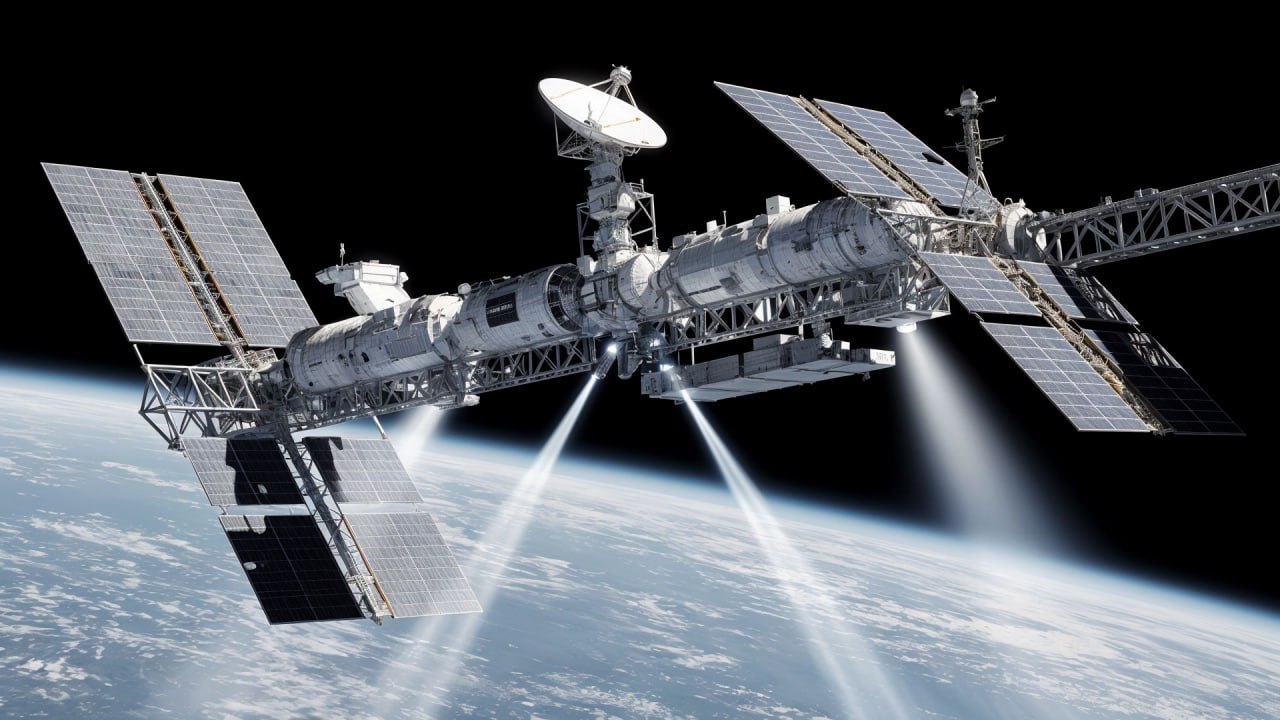
For visionaries like Okhotnikov, the answer lies in exploring options beyond Earth. “Terrestrial resources are not limitless,” he explains. “Very soon, we will have to look to space—because the future, without question, belongs there.” This vision aligns with the concept of Space-Based Solar Power (SBSP). Imagine vast solar arrays in geostationary orbit, receiving uninterrupted sunlight 24 hours a day, converting this energy, and transmitting it wirelessly to Earth.
The potential of SBSP is already being explored by reputable organizations like the European Space Agency and NASA. Feasibility studies suggest that such systems could provide the consistent energy supply that intermittent renewable sources often lack. A report released in 2025 for the European energy grid noted that SBSP could offer a stable backbone for the future energy landscape.
Innovative Solutions for a Sustainable Future
“The solar power we can collect here on Earth is only a tiny fraction of what is available in space,” Okhotnikov observes, highlighting the immense potential for innovation. Holiverse is actively investigating designs and collaborations to align future AI infrastructure with energy generated in space. This ambitious goal reflects the company’s commitment to integrating diverse systems into a cohesive, sustainable whole.
Realizing solar energy in space presents several challenges, including international governance, orbital construction, and transmission efficiency. Additionally, the costs associated with launching materials into orbit remain significant. However, advancements in materials science and the development of reusable rocket technology could soon render these obstacles manageable. Okhotnikov views Holiverse as a strategic pioneer in this transition, stating, “We are developing technologies capable of powering the next era of AI.” He believes that the company is on the verge of making tangible progress toward actualizing this vision.
The implications of harnessing space-based solar power are profound. By freeing AI from terrestrial energy constraints, researchers could expand their capabilities beyond current limits. An extensive, sustainable energy network would support the substantial computational demands needed for advancements in materials science, personalized medicine, and climate prediction.
In conclusion, as Holiverse and other innovators explore the potential of space-based energy, it becomes clear that the future of AI may depend on looking skyward. Using the sun’s boundless energy could be the key to unlocking the next major advancement in artificial intelligence.