A powerful winter storm has struck Southern California, bringing with it heavy rainfall and severe flooding. The storm, classified as a “strong atmospheric river,” is projected to persist for several days, leading to evacuation orders in the Los Angeles area and leaving nearly 42 million residents under flood watches. According to the National Weather Service (NWS), the heaviest rainfall is currently affecting the L.A. Basin, with rainfall rates of 0.5 to 1 inch per hour reported.
The NWS has issued a “rare High Risk of Excessive Rainfall” alert that will remain in effect through Christmas Day. This hazardous weather is expected to cause widespread flash flooding, particularly in urban areas, as well as dangerous rock and mudslides throughout the region. Fire crews have been actively evacuating residents from homes in San Bernardino County due to flash floods and debris flows.
Road closures have been widespread across Southern California due to the extreme weather, which has also led to widespread power outages and damage to trees, as strong gusts of wind accompany the heavy rainfall. The NWS noted that adjacent regions, including parts of Northern and Central California—as well as Southern Nevada—could also experience flash flooding in the coming days.
In the Sierra Nevada mountains, snowfall totals are expected to reach several feet, making travel over mountain passes impossible through the week. As the storm continues, officials are closely monitoring conditions and advising residents to remain vigilant.
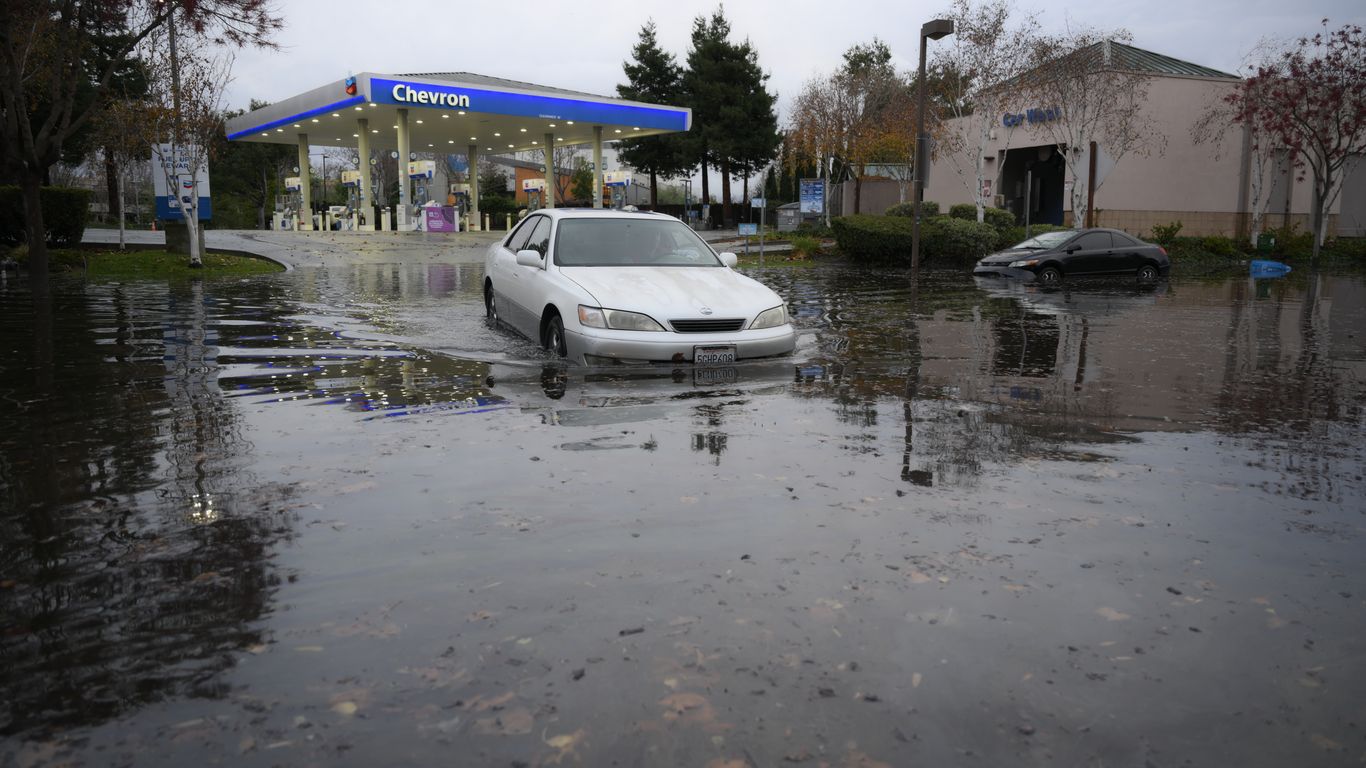
As the situation unfolds, images from the storm highlight the severity of the weather. Flooding was reported near the Meta Campus in Menlo Park, California, and at the Ventura Beach RV Resort, which has been placed under evacuation orders. In another incident, an advertising sign fell on vehicles during the storm in National City.
Residents are urged to stay informed and heed local advisories as the severe weather persists. The NWS continues to provide updates on the evolving conditions and their potential impacts on the community.