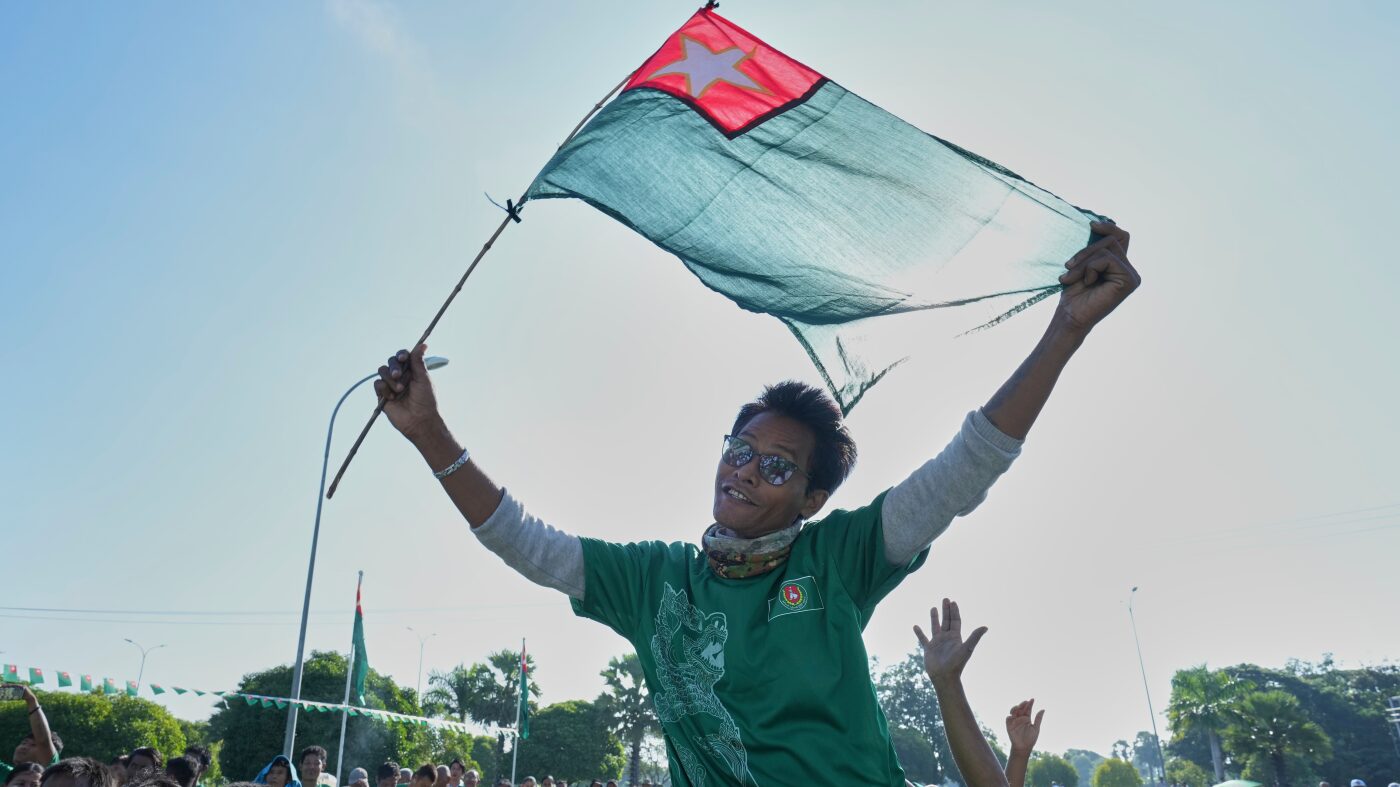
Myanmar’s military government has announced plans for staggered general elections, starting on December 28, 2023 and concluding in late January 2024. This initiative aims to restore stability and mitigate the junta’s international isolation. However, the elections are widely criticized as a “sham,” taking place against the backdrop of a brutal civil war that erupted following the military coup in February 2021.
Since the coup, Myanmar has descended into chaos. The military has conducted indiscriminate bombings of civilian areas, imprisoned tens of thousands, and displaced millions. Aid agencies report that over 11 million people are facing food insecurity as the military attempts to regain control over territories seized by opposition forces.
At a recent summit of the Association of Southeast Asian Nations in Malaysia, United Nations Secretary General António Guterres questioned the legitimacy of the elections. He stated, “Is there anyone who believes that there will be free and fair elections in Myanmar? It is quite obvious that in the present state of conflict… the conditions for free and fair elections are not there.”
New Laws and Increased Repression
To manipulate the electoral process, the military has implemented a law banning what it terms “interference.” According to Human Rights Watch, nearly 100 people had been detained under this law by November, a number that has since more than doubled. Many of those arrested face severe penalties for social media posts critical of the election, highlighting the regime’s intent to stifle dissent.
The military has also announced that elections will not occur in many contested areas, particularly those controlled by rebel forces, which cover almost half the country. Most Western governments have opted not to send observers, openly denouncing the elections as illegitimate. Critics argue that the junta seeks to establish a parliament dominated by its proxy party, the Union Solidarity and Development Party (USDP), which suffered a significant defeat in the last elections in 2020 against the National League for Democracy (NLD). The NLD is banned from participating this time, and its leader, Aung San Suu Kyi, remains imprisoned.
Military Gains and External Influences
In recent months, the military has reportedly regained some territory lost to rebel groups. According to Morgan Michaels, a Southeast Asia security analyst at the International Institute for Strategic Studies (IISS) in Singapore, the military’s conscription efforts and improved battlefield organization have contributed to its resurgence. He notes, “After a couple of years of catastrophic losses, the military has begun to regain the initiative.”
Despite this, the military’s position is bolstered by support from neighboring China, which has endorsed the upcoming elections. While China does not favor the junta, it prioritizes stability over chaos, as ongoing conflict threatens its significant infrastructure investments in Myanmar. Yun Sun from the Stimson Center explains that the civil war jeopardizes the China-Myanmar economic corridor, which serves as a crucial link for Beijing’s interests in South Asia and beyond.
In this context, China views the military as “a necessary evil.” Beijing has pressured ethnic armed groups to relinquish captured territory and has restricted arms supplies to ensure the military’s control, further complicating the opposition’s efforts.
Challenges Facing the Opposition
Another significant issue for the junta is the waning enthusiasm among young fighters who initially took up arms against the military. As noted by analyst Min Zaw Oo, many are now seeking refuge in neighboring countries like Thailand, signaling a shift in resolve. However, some remain committed to opposing the military’s rule. Rebel commander Ko Ta Mar expressed frustration with the lack of unity among opposition forces but emphasized the existential nature of their struggle.
Despite the ongoing hardships, many citizens are beginning to lose faith in the shadow National Unity Government, the political successor to the ousted government. Analyst David Mathieson indicates that there is a growing sentiment among the populace that, although they despise the military regime, it appears to have a clearer plan for restoring order, even if it lacks a democratic vision.
As Myanmar approaches the second and third rounds of elections in January, the military is banking on a low threshold of expectations to achieve its goals of restoring order domestically and easing diplomatic isolation internationally. The outcome of these elections, however, remains uncertain in a nation fraught with conflict and division.