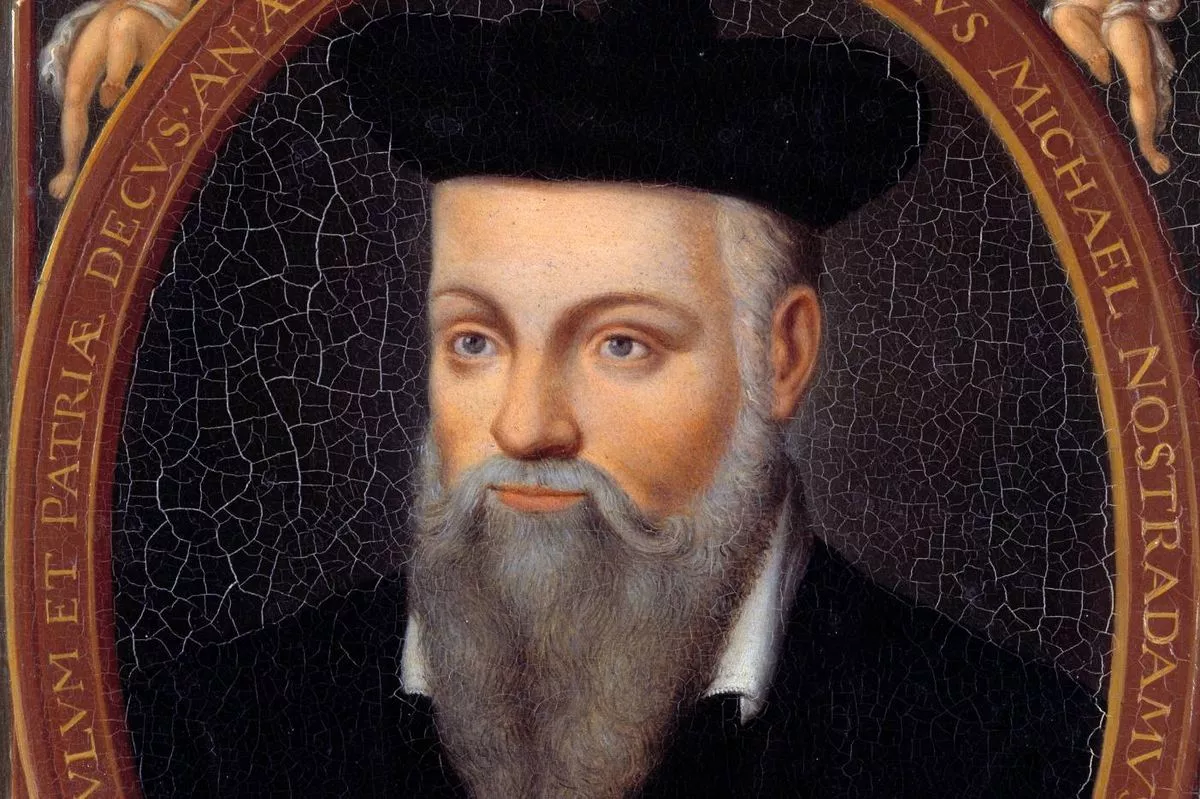
The prophetic writings of the 16th-century French astrologer Nostradamus are gaining renewed attention as we approach 2026. His cryptic quatrains, particularly those published in his landmark work, ‘The Prophecies’, have inspired fascination and fear regarding future global events. Among the 942 quatrains, several ominous predictions have emerged, hinting at potential calamities in the coming year.
Nostradamus’ verses have often been interpreted to predict significant conflicts. One quatrain ominously states, “Seven months great war, people dead through evil/ Rouen, Evreux the King will not fail.” This has led some to suggest it refers to the ongoing conflict between Russia and Ukraine, with echoes of past warfare resonating in his words. Notably, his writings have been linked to historical tragedies, including the atomic bombings of Hiroshima and Nagasaki, which some interpret as foreshadowed by the phrase, “Within two cities, there will be scourges the like of which was never seen,” according to the Mirror.
Predictions Spark Speculation
Another striking prediction involves a “great swarm of bees” that is said to “arise by the night ambush.” Some speculate this could occur in 2026, with the number 26 linked to the event. The symbolism of such a swarm raises questions, as it seems unlikely that bees could cause substantial harm through an ambush.
Perhaps one of the more bizarre predictions involves a prominent individual being struck by lightning. Nostradamus wrote, “the great man will be struck down in the day by a thunderbolt.” This mention of a “great man” has led to numerous interpretations, potentially referring to a celebrity or world leader facing an unforeseen calamity during daylight hours. The thought of a lightning strike at a public event has become a popular topic of discussion as the world anticipates 2026.
Nostradamus’ prophecies also extend to specific locales. One particularly grim prediction states, “Because of the favour that the city will show… the Ticino will overflow with blood.” This foreboding line has led some to speculate about possible disasters in the picturesque Italian-speaking region of Switzerland. Whether this refers to a mass casualty event, an outbreak of disease, or a natural disaster remains open to interpretation.
Interpretation and Skepticism
Skeptics point out that Nostradamus wrote in Middle French and employed deliberately ambiguous phrasing, complicating the interpretation of his quatrains. Variations in manuscripts, spelling errors, and diverse interpretations over the centuries have led to a myriad of theories about his true intentions.
As interest in Nostradamus’ predictions grows, the debate over their significance continues. Whether viewed as fascinating historical artifacts or mere coincidence, his quatrains have a lasting allure that captivates the imagination. As we move closer to 2026, the world watches with a mixture of intrigue and trepidation, pondering what the future may hold.