The 1980s produced a range of cars that have not aged well in terms of aesthetics and performance. Some of these vehicles, despite initial popularity, became notorious for their poor design and disappointing ownership experiences. This analysis explores five notable automotive flops from the decade that many would prefer to forget.
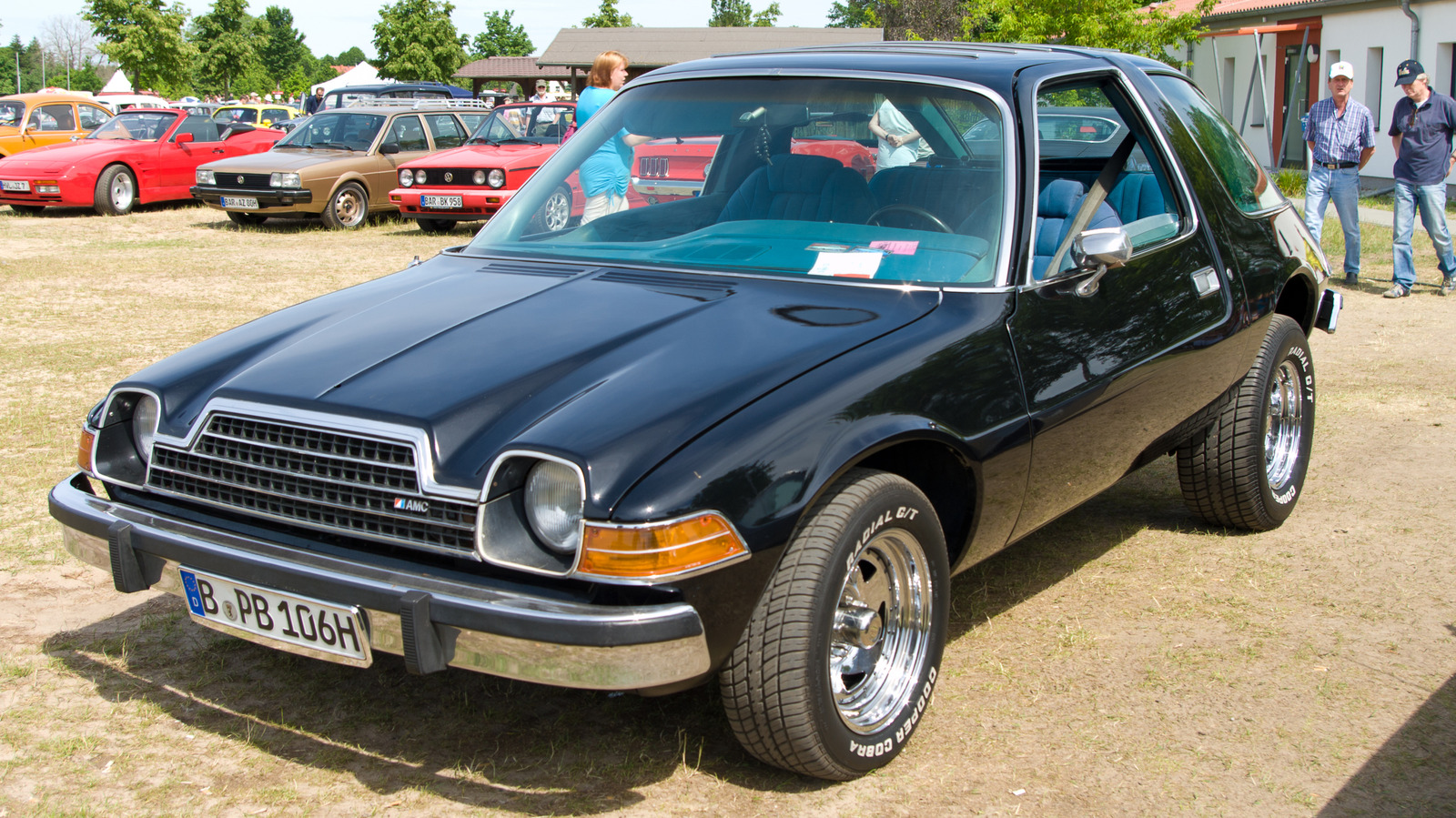
AMC Pacer: The Fishbowl on Wheels
The AMC Pacer, often referred to as “the fishbowl,” was manufactured from 1975 to 1980. Despite its initial promise, this vehicle quickly gained a reputation for its awkward design. The Pacer featured an extensive glass area intended to enhance visibility, but critics described it as akin to “a goldfish being boiled in its own bowl,” according to Motor Trend. Originally conceived to house a rotary engine, the final version was powered by a less efficient inline-six engine, with a V8 option later introduced. Sales peaked at 117,244 units in 1976 but plummeted to around 2,000 by 1980, reflecting a waning interest in the model.
The MGB: A Classic Ruined by Regulations
The 1980 MGB marked the end of an era for this once-iconic British sports car. From its debut in 1962 until 1974, the MGB boasted elegant chrome bumpers. However, new U.S. regulations mandated 5 mph bumpers, leading to the introduction of unsightly black rubber bumpers in 1974. This change, coupled with increased ride height and cost-cutting measures that compromised handling, rendered the MGB nearly obsolete. A Car and Driver comparison in 1980 described the car’s handling as akin to “a septuagenarian running a decathlon.” Production ceased in the U.S. in 1980, and the rubber-bumper models continued to lag in value compared to their chrome counterparts.
Lincoln Versailles: A Missed Opportunity
Introduced in 1977 as a response to Cadillac’s success with the Seville, the Lincoln Versailles was intended to compete in the compact luxury market. However, instead of innovative design, Ford opted for a modified version of the Ford Granada. While the Versailles featured new hood and trunk designs, its side profile remained virtually identical to the Granada. Priced at $11,500 at launch, it was significantly more expensive than the Granada, yet failed to attract buyers. Sales numbers illustrate its struggles, starting at 15,434 in 1977 but dropping to just 4,784 by 1980.
Dodge Rampage: An Odd Hybrid
The Dodge Rampage was a unique vehicle that attempted to blend the characteristics of a car and a pickup truck. Launched in 1982 and discontinued after just three years, the Rampage was constructed on the chassis of the Dodge Omni. Its design received mixed reviews, with Motor Trend describing it as “homely” and “dopey.” Equipped with a modest four-cylinder engine, it could carry a respectable load of 1,145 pounds. Despite its quirky appeal, only 37,401 units were sold during its brief production run, with the highest sales occurring in its debut year.
Ford EXP: The Struggle for Identity
Launched as Ford’s first two-seater production vehicle since the original Thunderbird, the Ford EXP was marketed as a personal luxury coupe. However, it was often criticized for its unconventional design. Weighing 200 pounds more than the Escort from which it derived, the EXP struggled to deliver on performance, featuring a 70-horsepower engine. Although an upgraded turbo version was introduced in 1984, sales remained disappointing, leading to the car’s discontinuation in 1985. Interestingly, production line workers subsequently modified the EXP, resulting in the rebranded Escort EXP, which continued until 1988.
These five vehicles from the 1980s exemplify the challenges faced by automakers during a transformative period in automotive history. As design trends and consumer preferences evolved, these models fell short, leaving behind a legacy that is often discussed in the context of automotive missteps.