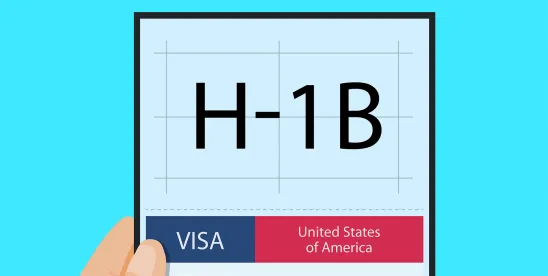
A federal court has confirmed the legality of a new $100,000 fee imposed by the Trump Administration on specific H-1B visa petitions. This decision comes after a lawsuit filed by the U.S. Chamber of Commerce and the Association of American Universities challenged the fee’s legality, arguing it would adversely affect American businesses.
On December 23, 2025, U.S. District Judge Beryl A. Howell ruled in the case titled Chamber of Commerce of the USA v. U.S. Department of Homeland Security, affirming that the fee requirement established under President Donald Trump‘s September 19, 2025 Presidential Proclamation, “Restriction on Entry of Certain Nonimmigrant Workers,” is valid. This proclamation introduced a new fee for H-1B petitions submitted by foreign workers located outside the United States.
The lawsuit, filed on October 16, 2025, questioned whether the Administration had the authority to impose such a fee. The plaintiffs contended that the fee could lead to significant and potentially irreparable damage to businesses that rely on foreign talent to fill gaps in their workforce. Judge Howell determined that the Administration acted within its rights, citing the broad powers delegated by Congress to the executive branch regarding the restriction of noncitizen entry into the country.
As a result of this ruling, the $100,000 fee remains in effect for new H-1B visa applications. This decision is part of a broader trend of legal challenges surrounding immigration policies under the Trump Administration.
Two additional lawsuits are currently pending, further complicating the legal landscape. The first, filed on October 3, 2025, involves a coalition of immigration advocacy organizations and employers, challenging the proclamation in the U.S. District Court for the Northern District of California. The second lawsuit, submitted on December 12, 2025, involves a coalition of 20 states, which has brought its case in the U.S. District Court for the District of Massachusetts.
The implications of these ongoing legal battles could significantly impact the future of H-1B visa applications and the businesses that rely on skilled foreign workers. As the legal proceedings unfold, stakeholders in both the business and immigration sectors will be closely monitoring the developments surrounding these challenges.