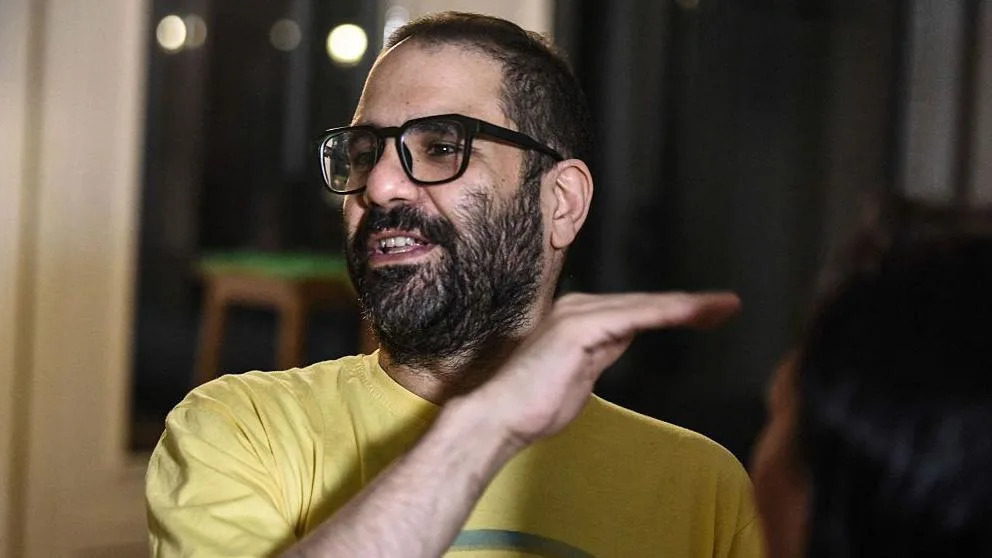
Alaa Abdel Fattah, the Egyptian democracy activist, has issued an apology for several of his past tweets as discussions intensify regarding his potential deportation from the United Kingdom. Abdel Fattah arrived in the UK just days ago following his release from an Egyptian jail, where he had been imprisoned for nearly a decade.
The calls for his deportation are being led by leaders from the Conservative Party and Reform UK, who cite social media messages in which Abdel Fattah appeared to advocate violence against police and Zionists. In light of these resurfaced tweets, Home Secretary Shabana Mahmood is urged to consider whether his dual nationality warrants revocation.
In a recent statement, Abdel Fattah expressed his remorse, saying, “I do understand how shocking and hurtful they are, and for that I unequivocally apologise.” He added that the timing of the resurfacing tweets is particularly distressing, occurring just as he reunites with his family after a 12-year separation.
Political Reactions and Calls for Accountability
The political climate surrounding Abdel Fattah’s arrival has become charged. Conservative leader Kemi Badenoch and Reform UK leader Nigel Farage both called for an examination of Abdel Fattah’s citizenship status. Farage emphasized in a letter to Mahmood that individuals holding “racist and anti-British views” should not be permitted entry into the UK.
Critics have also emerged from within the Labour Party. Some senior Labour MPs are advocating for the removal of Abdel Fattah’s citizenship, while Sir Keir Starmer, the party leader, faced scrutiny for expressing delight over Abdel Fattah’s arrival without prior knowledge of his controversial past.
The UK Foreign Office has acknowledged its longstanding commitment to securing Abdel Fattah’s release, deeming his previous tweets as “abhorrent.” The 44-year-old was convicted in 2021 in Egypt for “spreading fake news,” a charge widely criticized by human rights organizations for lacking fairness.
Context and Implications of Citizenship Revocation
The question of revoking Abdel Fattah’s citizenship raises complex legal and ethical considerations. Under international law, the UK is obligated to avoid rendering individuals stateless, meaning any revocation must align with the possibility of obtaining citizenship elsewhere.
Shadow Home Secretary Chris Philp has stated unequivocally that he believes Abdel Fattah should lose his citizenship, declaring, “There is no excuse for what he wrote.” The resurfaced tweets include inflammatory remarks from 2012, wherein Abdel Fattah reportedly stated, “I am a racist, I don’t like white people,” and others that express a desire for violence against certain groups.
Abdel Fattah has responded to these allegations, asserting that some of his comments have been misconstrued. For instance, he claims that tweets interpreted as homophobic were intended to mock homophobia itself. He has long been an advocate for LGBTQ+ rights, which he argues has resulted in severe personal consequences, including his imprisonment.
Abdel Fattah’s activism gained prominence during the 2011 Egyptian uprising that led to the resignation of former president Hosni Mubarak. His release from prison in September 2023 followed a concerted campaign by his family and lobbying efforts from the British government.
While he has faced significant backlash, including from the Board of Deputies of British Jews, which expressed profound concern regarding his rhetoric, Abdel Fattah’s supporters highlight the complexities of his situation.
As the debate continues, the implications of Abdel Fattah’s past statements and their potential impact on his future in the UK remain uncertain. His case reflects broader discussions about free speech, accountability, and the responsibilities of governments in handling controversial figures.