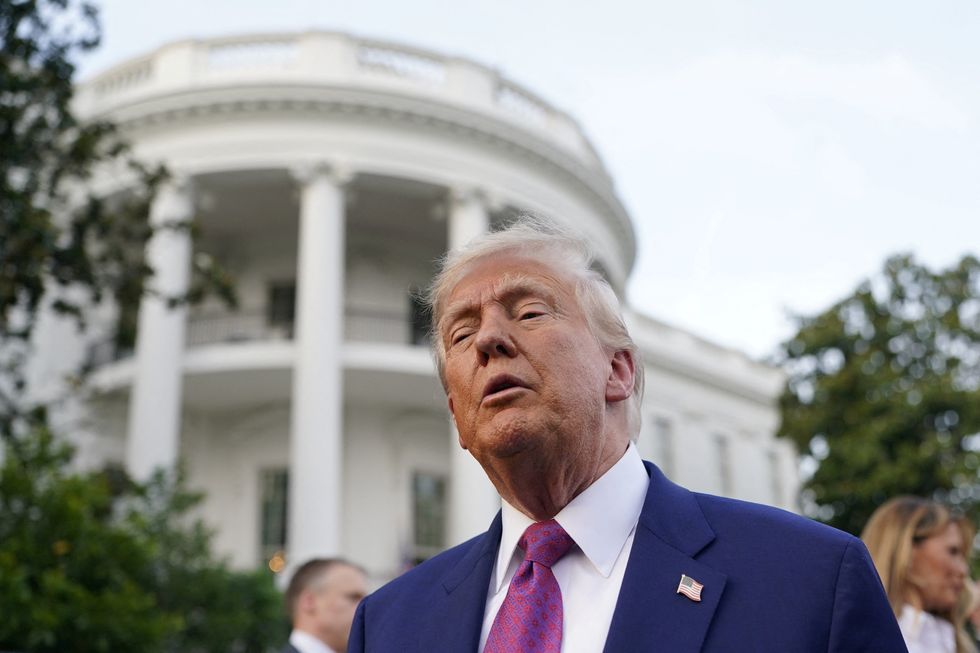
UPDATE: Donald Trump is reportedly transforming the White House to reflect the opulence of his Mar-a-Lago resort, according to political commentator Mikey Smith. In a recent analysis for The Mirror, Smith asserts that Trump is focused on renovations that echo his Florida estate, raising concerns about the President’s priorities as he enters the second year of his second term.
Smith highlights that Trump has been spending significant time at Mar-a-Lago, often opting for briefings from the golf club instead of the Oval Office. With polls indicating he is the second most unpopular President in history, Trump appears to be “fighting the old wars of 2020,” while remaking the White House in his image. Smith states, “He schmoozes America’s enemies and alienates her allies.”
The renovations, which include updates to the East Wing and interior decorations, reflect a deliberate attempt to mirror the luxury of Trump’s Florida residence. Smith notes that every appearance of the Oval Office has shown new gold accents and lavish details. “The new ballroom is just part of a gradual process throughout the year to turn the White House into Mar-a-Lago,” he writes.
Particularly controversial is the removal of an art deco bathroom in the Lincoln Bedroom, replaced by “polished marble monstrosities,” further distancing the White House from its historic roots. Trump has even paved over the iconic rose garden to install a patio resembling that of Mar-a-Lago, ostensibly for hosting Republican gatherings during summer evenings.
Adding to the renovation controversy, Trump faces legal challenges regarding plans to refresh the Eisenhower Executive Office Building. Preservation groups have filed a lawsuit in the U.S. District Court for the District of Columbia, seeking to halt any changes until a thorough review process is conducted. Judge Dabney L. Friedrich is expected to rule on this request soon.
“GSA will not authorize or engage in the physical actions of power washing/cleaning, painting, or repointing the Eisenhower Executive Office Building before Dec. 31, 2025,”
Work on the East Wing renovations has already commenced earlier this year, raising alarms about the future of other historic parts of the White House. The implications of these renovations extend beyond aesthetics; they challenge the preservation of national history and tradition.
As Trump continues to reshape the White House, observers are left questioning the impact of his actions on the fabric of American politics and heritage. The situation remains fluid, and future developments are anticipated as the legal battles unfold.