Protests have erupted across Iran, driven by deep-seated frustrations that extend far beyond the country’s economic turmoil. Demonstrators are voicing their anger against a regime they deem morally bankrupt, calling for fundamental changes in governance. While reports suggest that the unrest has been sparked by the Iranian rial hitting record lows, this framing overlooks the broader context of a population demanding dignity, freedom, and justice.
The protests, which have spread from Tehran to cities like Mashhad, Isfahan, Shiraz, and Hamadan, reflect a culmination of grievances that have built up over the past 46 years. The economy is indeed in crisis, with inflation soaring past 42 percent and the rial collapsing. However, the shopkeepers who shuttered their stores in Tehran’s Grand Bazaar are not merely protesting high prices; they are expressing desperation against a system that has consistently failed them.
Beyond economic issues, Iranians are protesting against the routine violence used to suppress dissent, arbitrary detentions, and the persecution of ethnic and religious minorities. Groups like the Kurds, Baluchis, and Baha’is have faced systematic discrimination for years. Women, in particular, are protesting against the oppressive enforcement of dress codes and the policing of their choices as part of the regime’s ideology.
Corruption is another critical issue, with public confidence eroded by a regime that appears to prioritize foreign commitments over domestic welfare. In 2023, for instance, Iran sent roughly $1 billion to Hezbollah, highlighting a choice that prioritizes military support over addressing domestic crises such as the severe water shortages affecting Tehran.
The chants of protesters—“azadi” (freedom) and “death to the dictator”—echo through the streets, underscoring that these protests transcend economic grievances. In videos circulating online, demonstrators are seen standing resolutely against a regime that has previously suppressed dissent with brutal force. The recent history of protests in Iran, from the student-led demonstrations in 1999 to the Green Revolution in 2009, illustrates a long-standing struggle for rights and freedoms.
In recent months, the situation has been exacerbated by the 12-day war with Israel, which revealed the regime’s intelligence failures and added to the national sense of humiliation. The rial has lost about 60 percent of its value since then, further fueling public outrage. The clerical leadership now faces a critical challenge: maintaining control over a population increasingly unwilling to accept oppression.
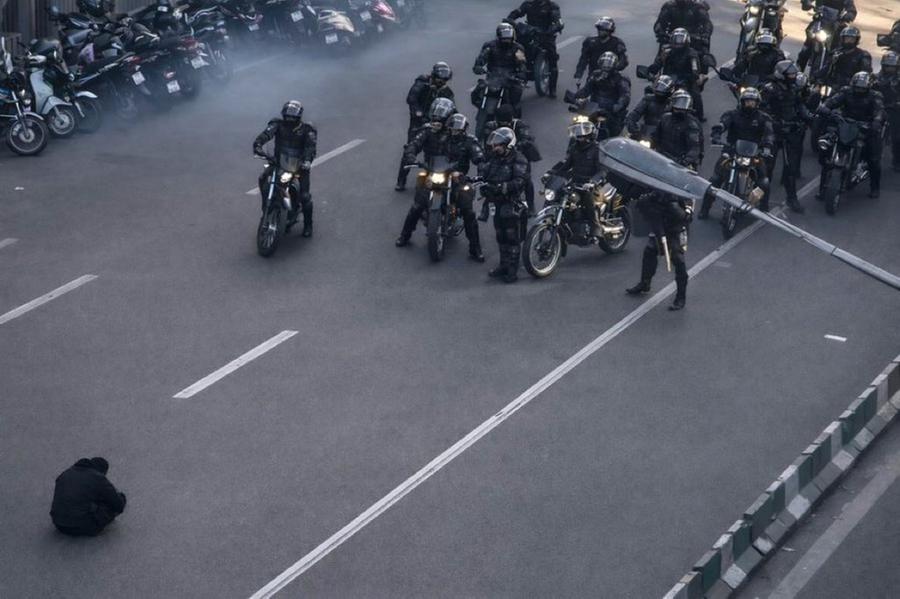
As the situation unfolds, the international community must recognize that reducing the protests to mere economic data offers a superficial understanding of Iran’s internal dynamics. The images of protesters, including a lone man seated defiantly in the street, reflect a profound human desire for recognition and respect.
The people of Iran are not merely seeking relief from economic hardship; they are demanding to be seen and heard in their quest for freedom and dignity. As the protests continue, the world must pay close attention to the voices rising against oppression, understanding this moment as a significant call for change.