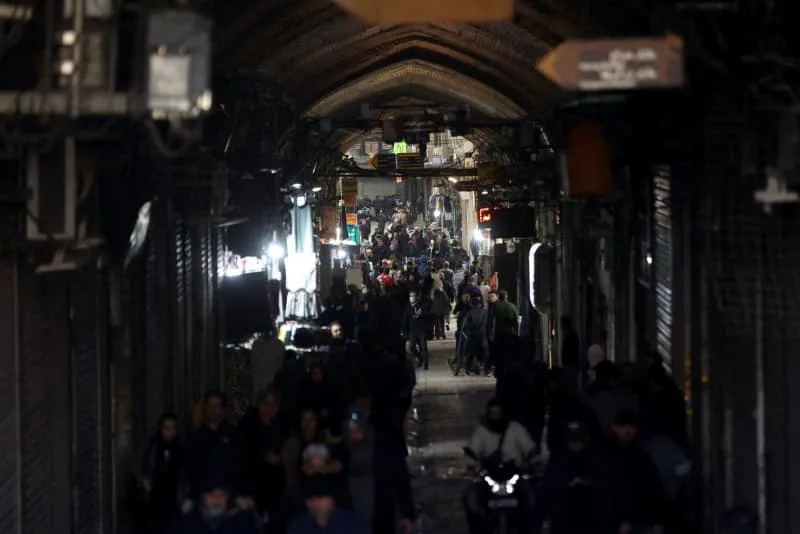
Protests have erupted across Iran as citizens express their discontent over severe economic hardships, leading to a violent crackdown by authorities. Demonstrations have been marked by the use of tear gas and numerous arrests, with significant unrest reported in major cities including Tehran and Kermanshah. Authorities have responded to the protests with force, detaining individuals and attempting to disperse crowds.
In Tehran, footage captured on March 5, 2024, shows crowds successfully pushing back police on Jomhuri Street. However, the situation escalated with reports of police deploying tear gas and arresting at least 11 individuals on Sabunian Street. Among those detained was Mehdi Biek, the political editor of Iran’s Etemad newspaper, who was covering the protests when he was taken into custody. His wife later reported that she had not heard from him for over 24 hours until his release on Tuesday.
The protests are rooted in the dramatic decline of the Iranian rial, which has plummeted nearly 90 percent in value since 2018. As of March 5, the currency reached a record low of 1.4 million rials per US dollar. The public’s frustration has grown not only over economic issues but also regarding the government’s prioritization of funding foreign militant groups over addressing domestic concerns.
Demonstrators have voiced their anger with slogans such as “Neither Gaza nor Lebanon, I will sacrifice my life for Iran,” reflecting a broader discontent with the regime. Renowned Iranian dissident journalist Masih Alinejad remarked, “What we are witnessing in Iran right now is not an isolated economic protest. It is another deep and serious challenge to the legitimacy of the Islamic Republic.”
The unrest has been fueled by a combination of factors, including rising inflation and a worsening water crisis. This situation has drawn comparisons to past protests, notably those following the death of Mahsa Amini, a young woman who died in custody after being arrested for not adhering to the hijab laws.
As protests intensified, Iranian President Masoud Pezeshkian acknowledged the public’s concerns, stating, “The livelihood of the people is my daily concern.” He outlined plans to reform the monetary and banking systems and pledged to increase government salaries by 30 percent next year, a revision from the previously planned 20 percent increase.
Despite these assurances, some officials have stepped down in light of growing public dissatisfaction. Massoud Pezeshkian, a member of the information council, expressed, “I cannot defend the government” amidst widespread criticism from citizens.
While the government has attempted to adopt a more conciliatory approach towards the general populace, the response to student protests has been notably harsher. Reports indicate that the IRGC’s Basij paramilitary forces attacked a gathering of students near Tehran’s Amirkabir University, resulting in serious injuries to at least one student. Multiple arrests occurred on campus, including students Mobin Aminian and Shahin Shokouhi.
As protests continue to unfold, the Iranian regime faces a critical juncture, balancing between addressing legitimate grievances and maintaining control amidst rising unrest. The outcome of this latest wave of protests could significantly impact the political landscape in Iran and the regime’s future.