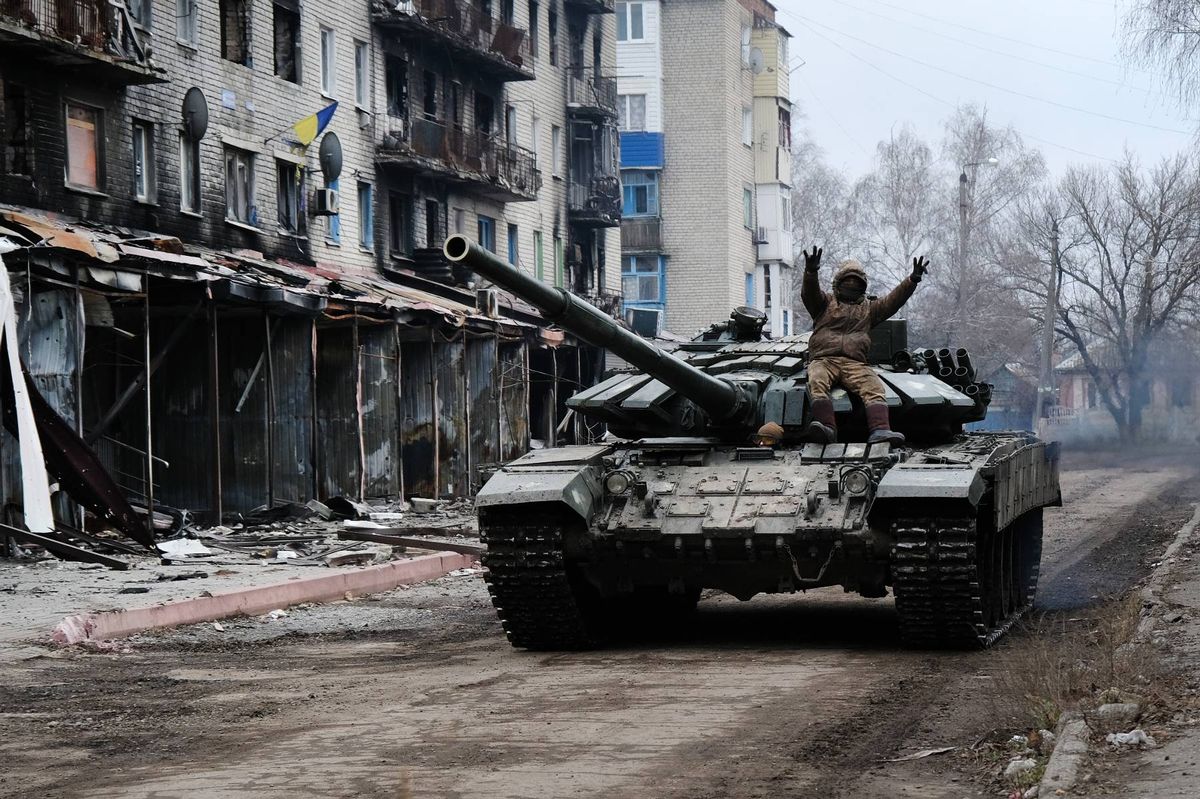
Vladimir Putin has directed his military commanders to intensify the conflict in Ukraine, aiming to seize additional territories in the Sumy and Kharkiv regions. This aggressive move significantly undermines the peace proposal recently developed by former U.S. President Donald Trump. The announcement was made by General Valery Gerasimov during a visit to a frontline command center, highlighting Russia’s renewed commitment to territorial expansion.
According to Gerasimov, Russian forces have already made substantial gains, capturing over 700 square kilometers (approximately 270 square miles) of land in December alone. The general stated, “The troops of the joint grouping are confidently advancing deeper into the enemy’s defences,” indicating a shift in military strategy that appears to be a direct response to accusations that Ukraine launched a drone strike against Putin’s Valdai palace.
Escalation Amidst Allegations
The Russian government has framed this military escalation as an effort to establish a “buffer zone” along its borders, ostensibly to ensure the safety of residents in the Belgorod and Kursk regions. Gerasimov emphasized that the goal for the upcoming year includes further expansion of this security perimeter. “The President of the Russian Federation has set the task of continuing to expand the security buffer next year,” he stated.
Trump expressed frustration upon learning of the drone strike allegations, which he described as alarming. Nevertheless, U.S. officials, including NATO ambassador Matthew Whitaker, have raised doubts about the veracity of Putin’s claims, with Whitaker noting, “It is unclear whether it actually happened.” Ukrainian President Volodymyr Zelensky dismissed the allegations entirely, labeling them a “hoax” intended to undermine peace negotiations. Reports from railway employees near the Valdai palace indicated no signs of an attack, further casting doubt on the Russian narrative.
Civilians Bear the Brunt of Conflict
As military operations escalate, civilians in Ukraine continue to suffer. The Black Sea port city of Odesa was subjected to overnight drone strikes, resulting in heating and electricity outages during severe winter conditions. Tragically, the strikes claimed the lives of a seven-month-old baby and two other children aged eight and 14. Local MP Oleksiy Goncharenko described the situation as a disaster, stating, “Part of the city is without electricity, heat, and water.”
In addition to Odesa, residential areas in Bila Tserkva, located in the Kyiv region, were also impacted, with reports of wounded civilians following attacks on residential buildings. Ukraine has recently intensified its strikes on Russian energy facilities, which it regards as military targets. A notable incident involved a strategic oil plant igniting in flames in the Tuapse region of Krasnodar, alongside hits on a gas pipeline and a dock in the Black Sea port.
The ongoing hostilities highlight a troubling cycle of aggression and retaliation, as both sides appear entrenched in their positions. As the situation develops, the prospect for a peaceful resolution remains uncertain, with the focus increasingly shifting to military strategies rather than diplomatic negotiations.