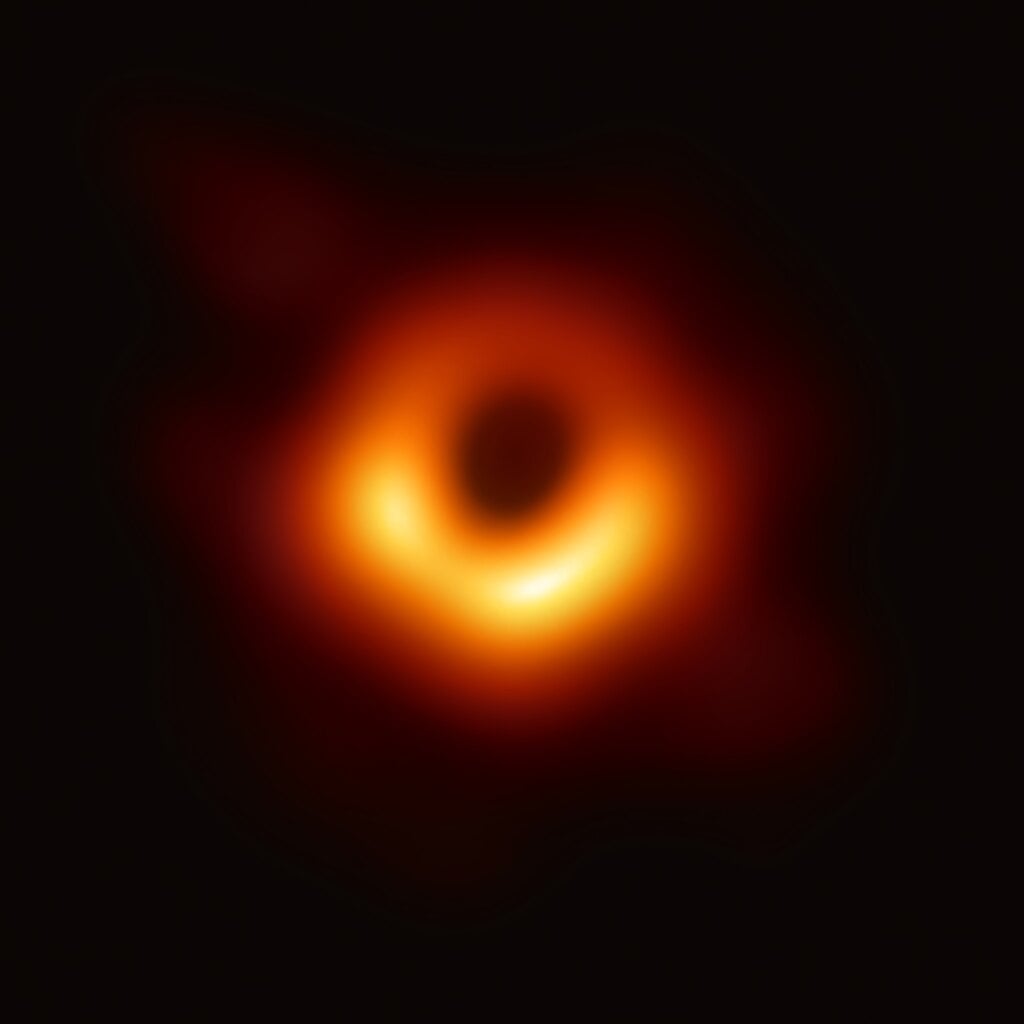
The quest to understand black holes is entering a new dimension. A team of scientists is embarking on a £4 million initiative to create the first three-dimensional movies of black holes, aiming to unveil the complexities of these astronomical phenomena. This project, dubbed the TomoGrav project, is led by Dr. Kazunori Akiyama, a key figure in capturing the first images of black holes, and Professor Yves Wiaux from Heriot-Watt University.
The groundbreaking images of black holes, including the famous photograph of M87* in 2019 and the more recent capture of Sagittarius A*, the black hole at the centre of our galaxy, have fascinated the world. These images provided a tangible glimpse into the enigmatic nature of black holes but only scratched the surface of understanding what occurs around these gravitational giants.
While the initial photographs revealed a two-dimensional view of the glowing plasma encircling black holes, they did not convey the intricate dynamics at play. The new project aims to change that by producing 3D visualizations that will illustrate how plasma flows and evolves over time around black holes.
The Event Horizon Telescope, which captured earlier images, employs a network of radio telescopes spread across the globe to create an Earth-sized virtual telescope. The challenge lies in transforming the incomplete data from this vast network into coherent images. Dr. Akiyama previously developed the imaging algorithms that facilitated the original black hole pictures. Professor Wiaux contributes expertise in artificial intelligence, reconstructing images from fragmented data—a technique that has already revolutionized various scientific fields.
Unveiling Hidden Dynamics of Black Holes
The TomoGrav project promises to reveal dynamics that have remained elusive until now. Black holes are not merely cosmic vacuums; they spin, and this rotation plays a crucial role in how energy is extracted from infalling matter. This energy powers colossal jets that can extend thousands of light years and significantly influence galaxy formation and evolution.
By generating time-resolved 3D maps of magnetic fields and plasma, scientists can observe how matter spiralling inward generates the magnetic fields that facilitate energy outflow. For the first time, researchers will be able to visualize the formation of these jets, offering insights into the processes that occur in the extreme environments surrounding black holes.
Moreover, this initiative will provide rigorous tests of Einstein’s general relativity under extreme conditions. The team plans to collaborate with the proposed Black Hole Explorer space mission, aimed at precisely mapping photon rings—light that has orbited a black hole multiple times before escaping. These measurements will probe gravity in regions where spacetime is distorted most severely.
In summary, the TomoGrav project stands to not only enhance our understanding of black holes but also push the boundaries of astrophysical research. By visualizing the unseen dynamics of these cosmic entities, scientists hope to unlock deeper insights into the fundamental workings of the universe. This project represents a significant step forward in astronomy, promising to illuminate the mysteries of some of the most extreme objects in existence.