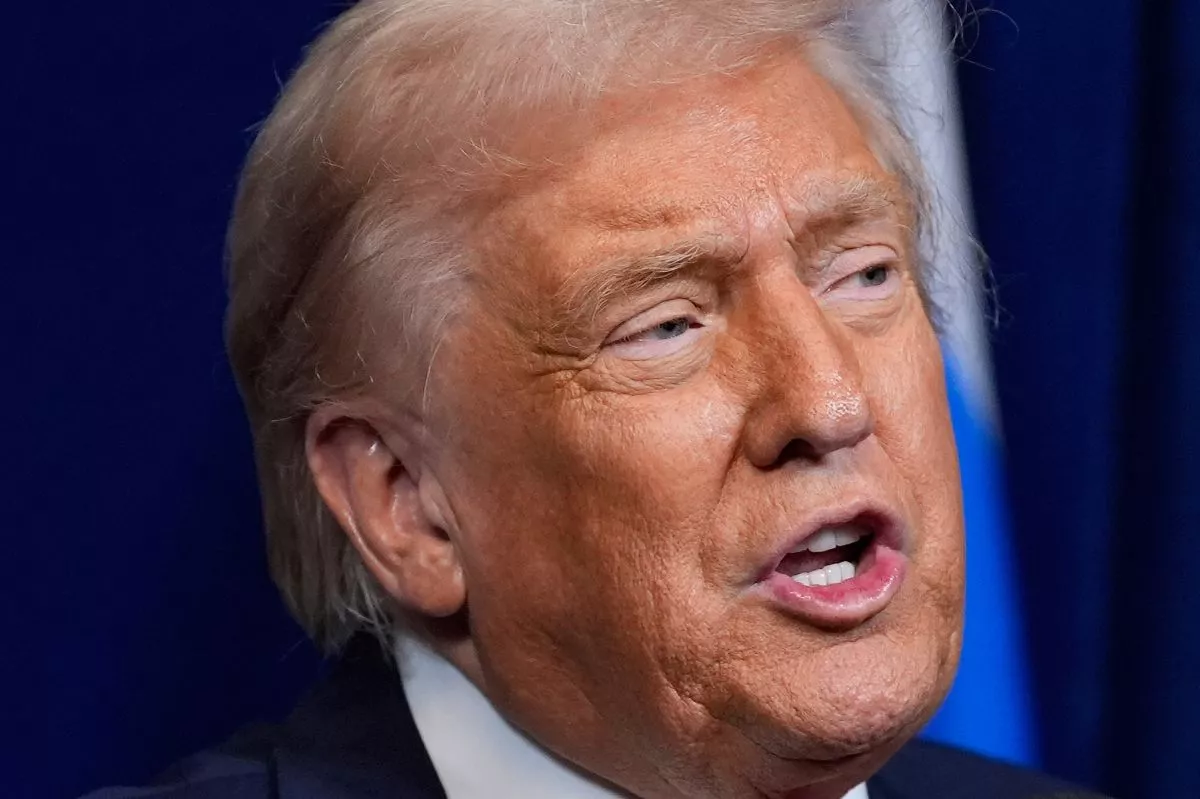
UPDATE: Tensions between the United States and Iran have escalated dramatically as President Donald Trump issued a stark warning amid ongoing protests in Iran. In a post on his Truth Social platform, Trump declared that if Iran “violently kills peaceful protesters,” the United States “will come to their rescue.” This comes as protests fueled by economic despair enter their sixth day, with at least seven deaths reported due to related violence.
The protests erupted following the collapse of the Iranian rial, which now sees $1 costing approximately 1.4 million rials. Demonstrators are voicing their grievances not only over the economy but also against the ruling theocracy. Trump’s warning highlights the urgent situation on the ground, as Iranian officials respond with hostile rhetoric.
In a reaction on social media platform X, Ali Larijani, former parliament speaker and secretary of Iran’s Supreme National Security Council, accused the U.S. and Israel of inciting unrest. “Trump should know that intervention by the U.S. in the domestic problem corresponds (to) chaos in the entire region,” Larijani stated, adding that Americans should be concerned about their soldiers’ safety.
Larijani’s comments reflect a long-standing narrative from Iranian officials, who have consistently blamed foreign powers for internal dissent. Following recent U.S. military actions, including strikes on Iranian nuclear facilities, tensions have reached a boiling point. Iran’s Al Udeid Air Base in Qatar was targeted by Iran in June, leading to heightened military alertness in the region.
Ali Shamkhani, an adviser to Supreme Leader Ayatollah Ali Khamenei, issued a stern warning on X, stating that “any interventionist hand that gets too close to the security of Iran will be cut off.” His remarks emphasize Iran’s readiness to respond to perceived threats amid the protests.
While the protests in Iran are seen as the most significant demonstrations since 2022, when the death of Mahsa Amini sparked widespread outrage, they have yet to reach the same nationwide intensity. The Iranian government, led by reformist President Masoud Pezeshkian, has attempted to signal a willingness to negotiate but is constrained by the rapidly deteriorating economic situation.
As the protests continue, the international community is watching closely. Iran’s civilian government has signaled a desire for dialogue, yet the economic crisis is a significant barrier. The protests have brought attention to the country’s deep-seated grievances, with citizens demanding changes to both economic and political systems.
The situation remains fluid, and with Trump’s recent comments, the potential for U.S. intervention looms large. Observers are left wondering what the next steps will be and how Iran will respond to the mounting external pressures. As developments unfold, the world watches closely, and the human impact of this crisis grows more palpable with each passing day.
Stay tuned for more updates as this story develops.