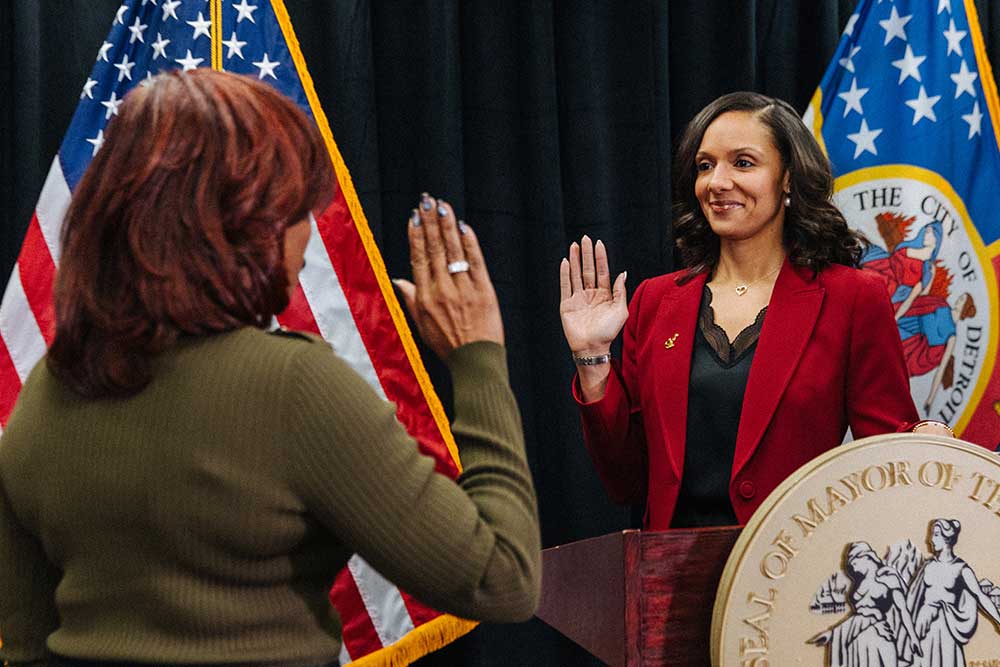
Mary Sheffield made history on January 1, 2026, when she was sworn in as Detroit’s first female mayor. At 38 years old, Sheffield has already established herself as a prominent figure in local politics, first gaining recognition as the youngest elected member of the Detroit City Council at age 26. Her election victory, which garnered 77% of the vote, signals a strong mandate for her progressive agenda focused on equity and community investment.
Priorities for a New Era
In her first interview following the inauguration, Sheffield emphasized her commitment to improving the overall quality of life for Detroit residents. She aims to direct resources to neighborhoods, enhance local investment, and create job opportunities. “I want Detroiters to be able to say their quality of life is better because of this administration,” Sheffield stated. Key indicators of success will include improved infrastructure, accessible home repair grants, and increased income levels.
Sheffield’s agenda also prioritizes affordable housing development. “Increasing access to homeownership is very important to me,” she noted, while also calling for reforms in property taxation to alleviate the financial burden on residents. Addressing basic neighborhood needs such as sidewalk repairs and alley clean-ups is also high on her list of immediate goals.
The challenges before her are significant. Nearly half of Detroit’s children live in poverty, and many neighborhoods still face the repercussions of disinvestment. Sheffield’s administration will need to tackle these issues head-on while ensuring that the city’s economic growth reaches all residents, not just those in the downtown area.
Community-Centric Approach
Sheffield believes in a government that is accessible to its citizens. She plans to establish community hubs where residents can easily access city services and engage with local government. “We want to bring government back into the neighborhoods,” she explained. This approach aims to improve customer service and responsiveness to residents’ concerns, a move Sheffield identifies as crucial for building trust within the community.
Reflecting on her journey, Sheffield attributes her drive to her upbringing. With a father who was a civil rights activist and a mother who was an educator, she highlights the importance of service in her life. “Detroit is a city that shaped me,” she said, emphasizing the role her family played in her commitment to public service.
As she steps into this new role, Sheffield recognizes the importance of arts and culture in Detroit’s identity. She expressed a desire to elevate these sectors further, viewing them as vital economic engines that can beautify neighborhoods and create opportunities for local artists. “We’re looking at forming an office dedicated to the creative economy,” she remarked, indicating her administration’s commitment to cultural investment.
Sheffield succeeds Mike Duggan, who opted not to seek reelection after three terms. The challenges she faces are not just political; they also include addressing expectations as a woman leader in a historically male-dominated role. Sheffield acknowledges that she will be judged by different standards but remains focused on her mission to serve the people of Detroit.
Throughout her campaign, Sheffield garnered support from various sectors, including corporate leaders and grassroots organizers. “The people inspire me,” she said, emphasizing the community’s investment in the city’s future. As she embarks on this new chapter, she remains dedicated to her vision of a Detroit where every resident can thrive.