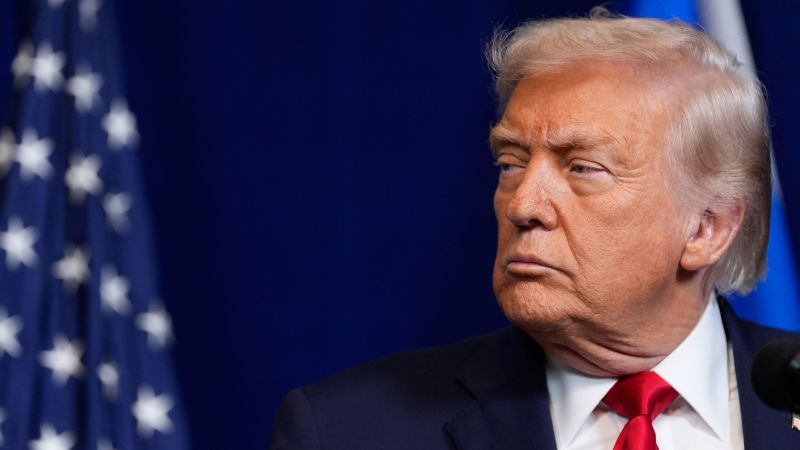
President Donald Trump has sought to quell public concerns regarding his health following recent disclosures about his medical care. The oldest individual to assume the presidency, Trump has faced scrutiny over visible bruises and questions about his vitality, particularly after a series of doctor visits. In an interview with the Wall Street Journal, Trump attributed the bruises to a daily intake of more than the recommended dose of aspirin and asserted that he possesses adequate energy for his duties.
In a subsequent post on Truth Social, Trump claimed he scored “100%” on his latest cognitive test, which marked the third consecutive time he has undergone such an examination. Despite these assertions, concerns about his health persist, prompting renewed scrutiny and a number of salient questions regarding his medical disclosures.
Medical Oversight and Physician Backgrounds
The physician responsible for overseeing Trump’s health is Dr. Sean Barbabella, a Navy captain appointed to the role in March. Dr. Barbabella, who specializes in combat trauma and emergency care, has supported the president’s recent medical imaging and semiannual physical as routine procedures. He is the latest in a series of personal physicians who have publicly endorsed Trump’s physical fitness and cognitive ability.
Previously, Trump was under the care of Dr. Ronny Jackson, who served as President Barack Obama‘s physician. Jackson gained notoriety for his enthusiastic claims about Trump’s health, stating he had “incredible genes.” After stepping down in March 2018, he was nominated to lead the Veterans Affairs Department but withdrew amid allegations regarding his professional conduct. Following Jackson, Dr. Sean Conley took over the role, declaring in 2019 that Trump was “in very good health.”
Dr. Conley also gained attention during the COVID-19 pandemic for prescribing hydroxychloroquine to Trump, a drug that became a controversial topic in discussions about COVID-19 treatment. Trump’s previous physician, Dr. Harold Bornstein, famously claimed that Trump would be “the healthiest individual ever elected” president, although Bornstein later alleged that Trump had dictated that assertion to him over the phone.
Aspirin Use and Health Implications
Trump’s recent interview revealed that he takes 325 milligrams of aspirin daily, significantly higher than the commonly recommended 81 milligrams for cardiovascular protection. Medical experts have increasingly advised against routine aspirin use unless a patient has specific heart conditions due to the associated risks of internal bleeding.
Dr. Andrew Freeman, director of cardiovascular prevention at National Jewish Health in Denver, stated that while low-dose aspirin is typically advised, Trump’s high dosage raises concerns. “Full-dose aspirin has many risk factors associated with it, particularly gastrointestinal risks,” he noted. Dr. Fahmi Farah, an invasive cardiologist, echoed this sentiment, indicating that high-dose aspirin is usually reserved for patients with serious conditions.
The White House has confirmed that Trump suffers from chronic venous insufficiency, a common condition that can lead to blood pooling and swelling in the legs. While some doctors may use aspirin to manage this condition, the long-term implications of Trump’s high-dose regimen remain questionable.
Dr. Vivek Cherian, an internal medicine physician, expressed concerns about the risks associated with prolonged high-dose aspirin use. He noted that many cardiologists would question such a regimen due to the potential for increased bleeding.
Dr. Barbabella emphasized Trump’s overall health, claiming that evaluations show excellent metabolic health and that his cardiovascular condition indicates he is “14 years younger” than his actual age. He concluded that the president is well-suited to carry out his responsibilities as Commander in Chief.
Trump’s interview also touched on recently conducted imaging tests. Initially, he indicated that an MRI was part of his routine physical. However, he later clarified that he underwent a CT scan, which Dr. Barbabella confirmed showed no abnormalities. Cardiovascular CT scans are typically conducted to assess heart attack risk or identify blockages.
Trump reflected on his decision to disclose the scan, expressing regret for providing “ammunition” to critics. He has long advocated for cognitive assessments for presidential candidates and reiterated this stance in his Truth Social post after announcing his test results.
While Trump reported minimal sleep and an unaltered diet that includes fast food, experts have cautioned against the potential impact of sleep deprivation on cardiovascular health. Dr. Farah highlighted that inadequate sleep can lead to serious health risks, including increased chances of heart-related issues.
In the context of these discussions, some health professionals have called for a broader understanding of health and lifestyle factors. Dr. Freeman noted that while genetics play a role in health, environmental factors such as diet and exercise are critical components of overall well-being.
As the dialogue surrounding Trump’s health continues, it underscores the intersection of health and politics, particularly as the 2024 election approaches. The ongoing scrutiny of his disclosures serves as a reminder of the public’s interest in the health of those in leadership positions.