BREAKING NEWS: A female mouse has just given birth after a groundbreaking space mission, raising crucial questions about reproduction in space. This milestone occurred on December 10, following a two-week journey aboard China’s Shenzhou-21 mission, which took place from October 31 to November 14. The significance of this event goes far beyond a simple birth; it could change the future of human space exploration.
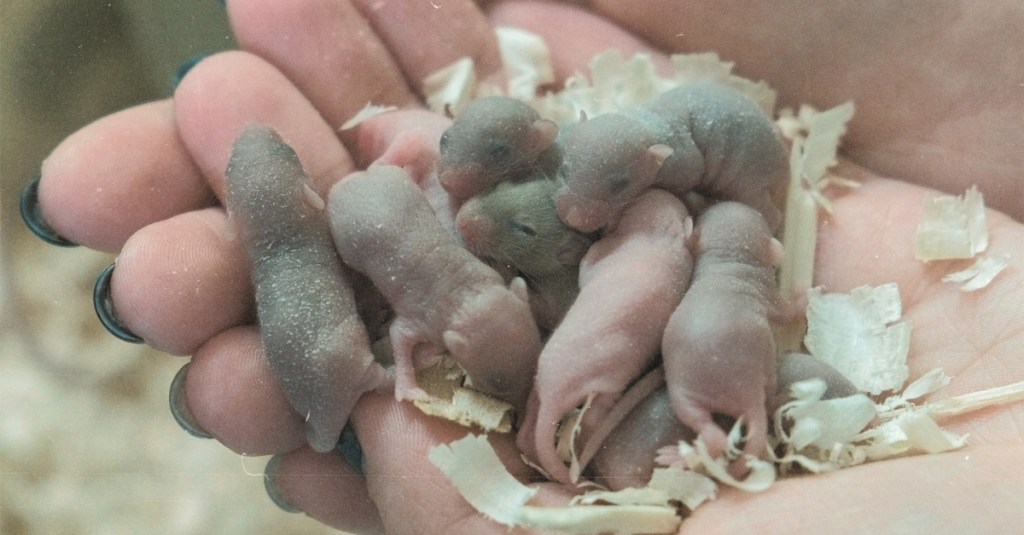
During their time in orbit, the mice lived approximately 400 kilometers above Earth in a microgravity environment, experiencing space radiation and the physical demands of living in orbit. Upon their return, one female mouse successfully delivered nine pups, six of which survived—an outcome consistent with laboratory standards, as reported by ScienceAlert.
According to Wang Hongmei, a researcher at the Chinese Academy of Sciences, these findings indicate that short-term spaceflight did not impair the mouse’s reproductive capabilities. This is a vital discovery, as understanding reproduction in space is one of the most pressing challenges for long-term human missions, particularly to destinations like Mars.
Mice are invaluable research subjects because their biological processes share significant similarities with humans. They reproduce rapidly and can reveal issues before they manifest in humans. Previous studies showed that mouse sperm exposed to space could still fertilize eggs on Earth, but this recent study goes further by confirming that pregnancy and birth can occur post-spaceflight.
The Shenzhou-21 mission faced challenges, including an extended orbital stay due to a change in the return schedule, which raised concerns about food supplies. Ground teams had to test emergency rations, ultimately selecting soy milk as a backup. An AI system monitored the mice’s activity, feeding, and sleep patterns, maintaining an Earth-like day-night cycle.
Researchers are now closely observing the pups to track their development. They will investigate growth patterns and physiological changes, and eventually assess whether these offspring can reproduce normally. This long-term study aims to identify potential reproductive issues that may arise across generations.
While this successful birth does not definitively prove that mammals can reproduce in reduced gravity or that space radiation has no lasting effects, it eliminates one bleak possibility. For the future of human space travel, it is essential that reproduction remains viable beyond Earth. The fact that one mouse and her litter have demonstrated this capability is a significant step forward.
This small yet momentous event could have far-reaching implications for humanity’s ability to establish permanent off-world settlements. With space exploration increasingly becoming a reality, the survival of biological processes like reproduction is a critical factor that will influence future missions.
Stay tuned as researchers continue to monitor these pups, providing vital insights into the challenges of human life beyond Earth. As this story develops, it highlights the resilience of life, even in the most extreme conditions.