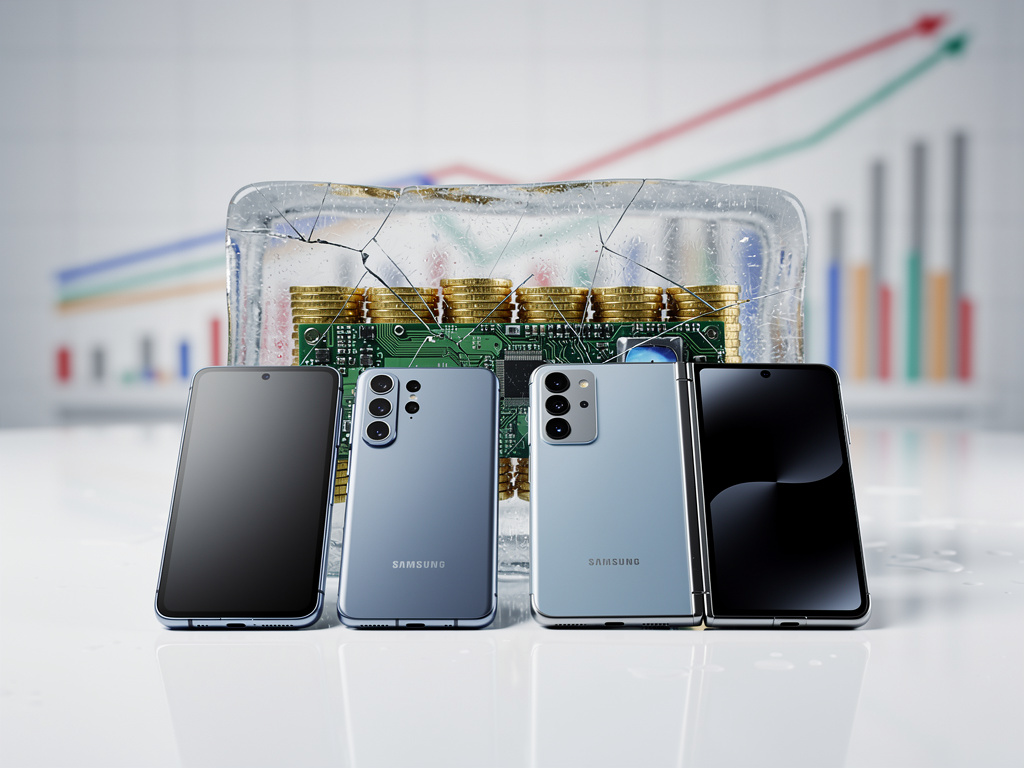
UPDATE: Samsung Electronics has just announced a bold decision to freeze prices for its upcoming Galaxy S26 lineup and next-generation foldable devices, despite rising component costs. This unexpected move aims to enhance affordability for consumers as the tech industry grapples with economic pressures.
The base model Galaxy S26 will remain at $799, with the Plus variant priced at $999 and the Ultra version at $1,299. Additionally, the foldable Galaxy Z Fold 8 and Z Flip 8 will hold steady at $1,999 and $1,099, respectively. This price freeze is a strategic shift for Samsung, which typically adjusts prices to reflect new enhancements in design and technology.
Samsung’s decision comes as component costs continue to rise, pushing many manufacturers to reconsider pricing strategies. Analysts from Talk Android indicate that maintaining these price points could help Samsung retain market share, especially against competitors like Apple, which has successfully upheld high prices for its iPhones.
The tech giant’s internal discussions reveal an ongoing debate about pricing strategies, with executives concerned about alienating budget-conscious consumers. As global smartphone shipments are projected to decline by 2.1% in 2026, maintaining affordability could be crucial for Samsung’s competitive stance.
Consumer reactions are mixed. Early feedback from tech enthusiasts is largely positive, viewing the price freeze as a win for affordability in a premium market. Influencers on social media platforms like X are buzzing about how this could enhance Samsung’s competitiveness without compromising its core audience. However, some experts warn that stagnant prices may signal a lack of ambition in innovation, potentially driving consumers toward competitors offering more substantial upgrades.
Samsung’s decision may also influence broader market trends, encouraging other manufacturers to adopt similar pricing strategies. Yet, with escalating costs, the company faces pressure to maintain margins, which could lead to cuts in marketing budgets or reduced incentives for pre-orders.
Delving deeper into the economic context, Samsung’s price freeze is rooted in a challenging supply chain environment. Shortages of memory chips and rising costs attributed to a shift toward AI-focused production have inflated expenses. Despite having in-house semiconductor capabilities, Samsung is prioritizing cost control to sustain its pricing strategy.
The impact of this decision extends to Samsung’s foldable devices as well. Keeping the Z Fold 8 and Z Flip 8 at their current price points could enhance adoption in a niche market. Reports suggest that these models may feature improvements such as reduced weight and larger batteries, adding value for consumers hesitant about premium prices.
As Samsung prepares for the launch of the Galaxy S26 series, which is expected in late February or March, industry analysts are closely monitoring its performance in a competitive landscape. The upcoming models may include incremental upgrades, such as better battery life and camera enhancements, while keeping the overall design familiar.
This price freeze positions Samsung uniquely within the smartphone market, potentially redefining value in the flagship segment. If successful, it could compel the entire industry to prioritize accessibility over continuous price increases. However, if consumer demand shifts toward more radical innovations, Samsung may need to adapt swiftly to maintain relevance.
In conclusion, Samsung’s strategic decision to freeze prices reflects an urgent response to economic challenges while prioritizing consumer affordability. As the launch date approaches, all eyes will be on how the Galaxy S26 series fares against industry competitors and whether Samsung can sustain its flagship dominance amid evolving market conditions.