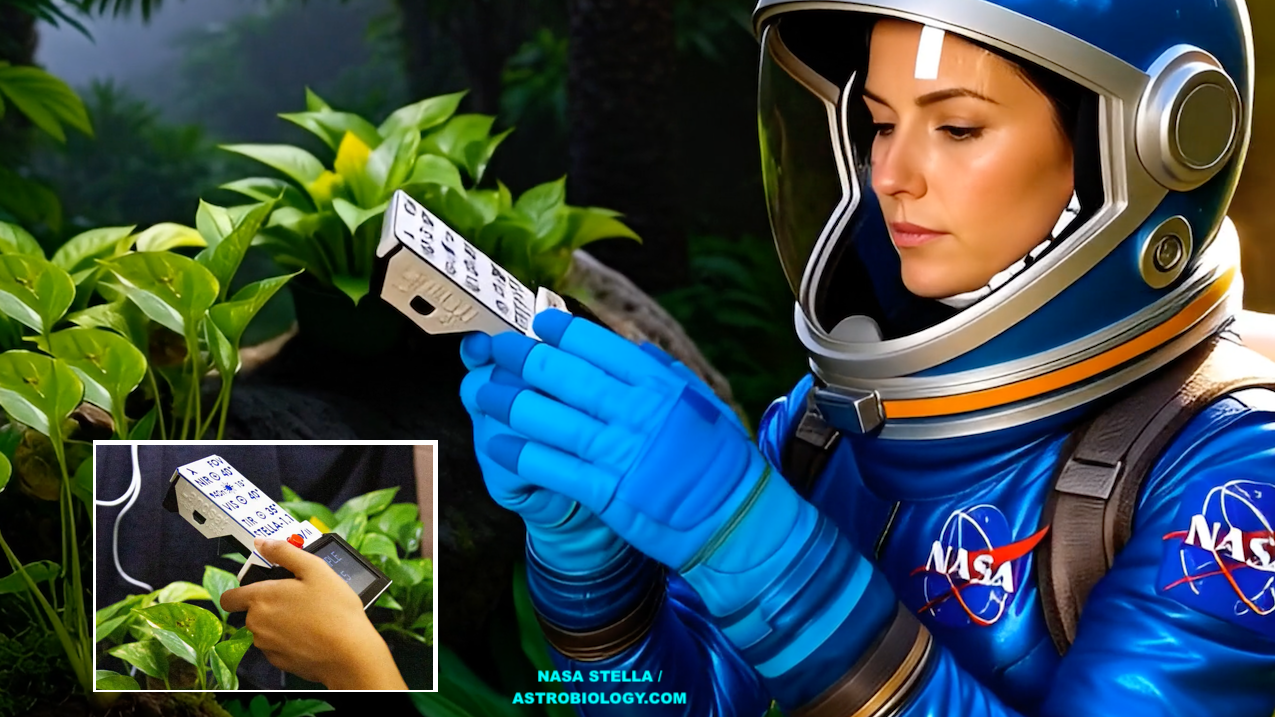
NASA has introduced a groundbreaking initiative, STELLA (Science and Technology Education for Land/Life Assessment), aimed at democratizing remote sensing technology. Designed for educational and research purposes, STELLA enables individuals to construct and utilize low-cost sensor instruments to engage with environmental monitoring and data collection. This innovative approach is detailed in a new paper published in March 2024, accessible online.
The STELLA project focuses on creating affordable, do-it-yourself instruments that can be built from commercially available components. These devices measure light spectra across 18 channels in the visible and near-infrared range, allowing for detailed observation of various surfaces and assessment of vegetation health. The simplest model, the STELLA-Q, can be assembled for approximately $200 and requires basic wiring skills.
Empowering Citizen Scientists and Future Researchers
The initiative is part of an effort to engage a broader audience in scientific research, particularly among the younger generation often referred to as the Artemis Generation. These future explorers are envisioned to play a crucial role in astrobiology expeditions to other planets. The STELLA instruments facilitate hands-on learning experiences in remote sensing, providing insights into satellite data and the scientific process.
According to the authors of the paper, the availability of these tools will foster analytical thinking and encourage students to explore quantitative aspects of Earth observation technologies. NASA’s Goddard Space Flight Center, where the project is based, collaborates with university researchers to refine these instruments and enhance their educational potential.
One of the key features of the STELLA instruments is their open-source software, developed using a variant of the Python programming language. This accessibility allows users to easily record and analyze data, which is stored in plain text on a micro-SD card. Such features ensure that remote sensing education is not restricted to traditional professional scientists, paving the way for new areas of scientific research.
Looking Ahead: The Future of Exploration
As humanity prepares to explore other worlds, the ability to conduct in situ examinations will become increasingly vital. Collecting data on alien ecosystems and life forms will provide insights into their metabolic and genomic systems. Understanding how life operates on other planets is crucial for future missions, as sample return missions are logistically challenging and costly.
The STELLA project not only aims to reduce the complexities associated with such missions but also enhances real-time data collection and analysis capabilities. By utilizing these instruments, astronaut and robotic teams can learn from their findings and adapt their exploration strategies accordingly. This real-time processing of data will facilitate the creation of a catalog of potential life forms, allowing for swift identification and differentiation of species encountered during missions.
The STELLA instruments reflect the spirit of innovation within the vibrant citizen science and DIY communities. As technology advances, tools that were once considered sophisticated are now accessible to enthusiasts and researchers alike. The STELLA initiative embodies NASA’s commitment to fostering a new generation of scientists equipped to tackle the challenges of interplanetary exploration.
For those interested in exploring the STELLA initiative further, the full paper titled “Democratizing Remote Sensing Science With Low-Cost Open-Source Instruments for Research and Education” is available for review. The project highlights a significant step towards ensuring that remote sensing science is inclusive and widely accessible, marking a promising future for both education and exploration.