Zillah, a small city in Yakima County, Washington, is commemorating its 115th anniversary of incorporation. On December 31, 1910, residents gathered at the Modern Woodmen lodge hall to vote on the town’s incorporation, resulting in a decisive approval of 94 to 6. The official certification by Yakima County commissioners came on January 3, 1911, with the secretary of state filing the incorporation documents just two days later.
While Zillah’s incorporation marked a significant milestone, its history dates back nearly two decades earlier. The development of the area began with Walter Granger, president of the Yakima Land and Canal Company. Granger was instrumental in constructing the Sunnyside Canal, which opened the Lower Valley for agriculture and further development. This project was a collaboration with the Northern Pacific Railway, aiming to enhance its land grants in the region.
The town’s name, Zillah, is linked to Zillah Oakes, the 19-year-old daughter of Thomas Oakes, president of the Northern Pacific. In April 1892, Zillah accompanied her parents and Granger on a scouting trip for potential town sites. According to local lore, during a river crossing, the wagon tipped over, prompting Granger to name the new town after the upset young girl. Other accounts suggest it was a gesture to honor the youngest member of the party. It is noteworthy that her father was the largest investor in Granger’s company.
In the months following the naming, Zillah saw its first business emerge: the Zillah Hotel, built by Reuben Hatch. Granger’s irrigation company established its headquarters nearby, leading to the opening of a general store, drug store, hardware store, and a blacksmith shop. By the end of its first year, the population had grown to approximately 50 residents.
In 1894, the community took a significant step by forming a school district, resulting in the construction of the first schoolhouse at a cost of $2,200, equivalent to about $81,058 today. The agricultural potential of the area flourished, thanks to the water supplied by Granger’s canal, fostering the growth of local farms.
As Zillah approached its incorporation vote in 1910, residents submitted a petition to the county commissioners. The commissioners agreed to proceed with the incorporation, but not without first adjusting the town’s boundaries. The vote took place at the lodge hall, the largest venue available for the gathering. Alongside the incorporation, residents also elected town officials, all running unopposed on what was dubbed the “Citizen’s Ticket.” E.J. Jaeger was elected as the first mayor, with council members J.P. Fox, C.M. Mudd, J.E. Townsend, A.A. Hunter, and W.B. McDonald rounding out the leadership team.
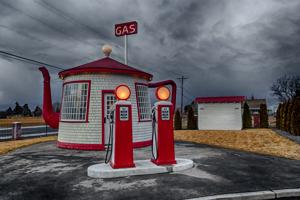
Today, Zillah is recognized as a city in the heart of Yakima County’s wine country. The historic Teapot Dome Gas Station serves as a visitor center and stands as one of the city’s most notable landmarks, representing the enduring spirit of a community that has continued to thrive since its humble beginnings over a century ago.