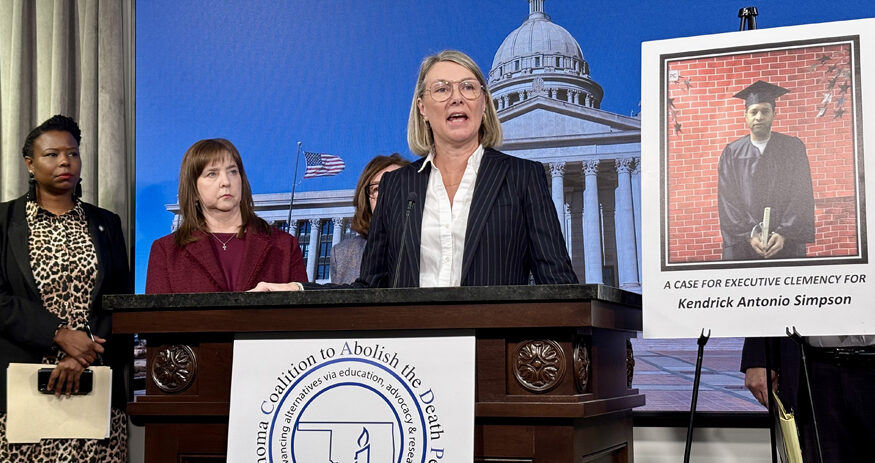
Advocates are calling for clemency for Kendrick Simpson, who is currently on death row in Oklahoma. With his clemency hearing before the Pardon and Parole Board set for January 14, state senators and supporters are urging for mercy ahead of his scheduled execution on February 12. Simpson was convicted of two counts of first-degree murder, as well as firearm-related charges, stemming from a violent incident in 2006.
In January of that year, the then-27-year-old Simpson, a Hurricane Katrina evacuee, was involved in an altercation with three individuals at a nightclub. After leaving the venue, Simpson and his associates encountered the same individuals in a 7-Eleven parking lot. Following them onto Interstate 44, Simpson opened fire, killing 20-year-old Anthony Jones and 19-year-old Glen Palmer. The third individual, London Johnson, attempted to provide aid but was unable to save his friends.
Supporters of clemency, including Simpson’s attorney, Emma Rolls, argue that critical evidence regarding Simpson’s mental health and traumatic history was not fully presented during his 2007 trial. They contend that had this information been available, the jury’s recommendation for the death penalty may have been different. Rolls stated, “While Kendrick’s trauma does not absolve him from his responsibility, it does provide context for the actions and a reason for compassion.”
Simpson’s traumatic past includes being shot in 2004, suffering severe injuries that required 16 surgeries and left him with lasting physical and psychological effects. Following his recovery, he faced the devastation of Hurricane Katrina, losing his home and enduring significant hardship before finding shelter. Rolls emphasized that these experiences contributed to the development of post-traumatic stress disorder for Simpson.
Arguments for Clemency
Advocates for Simpson’s clemency highlight his achievements while on death row. Rolls noted that he became the first inmate to earn a GED diploma during this time, along with publishing a book of essays and poems. Additionally, he has been taking college courses and achieving high grades. “Kendrick is profoundly remorseful and understands he has caused immense pain,” Rolls remarked. She emphasized that Simpson accepts his punishment but argues that the death penalty should be reserved for the most heinous crimes.
In a contrasting statement, Oklahoma Attorney General Gentner Drummond has requested the Pardon and Parole Board deny clemency, asserting that Simpson has not demonstrated genuine remorse for his actions. Drummond described Simpson as having “hunted his victims” and noted the lasting impact on the families of the deceased. “Nothing in Simpson’s decades on death row has shown that he deserves the mercy he refused to give to others,” he stated in a press release.
The Pardon and Parole Board has the authority to recommend or deny clemency, but the final decision rests with Governor Kevin Stitt. As the hearing approaches, the case continues to draw attention, reflecting broader discussions on justice, mercy, and the death penalty in the United States.