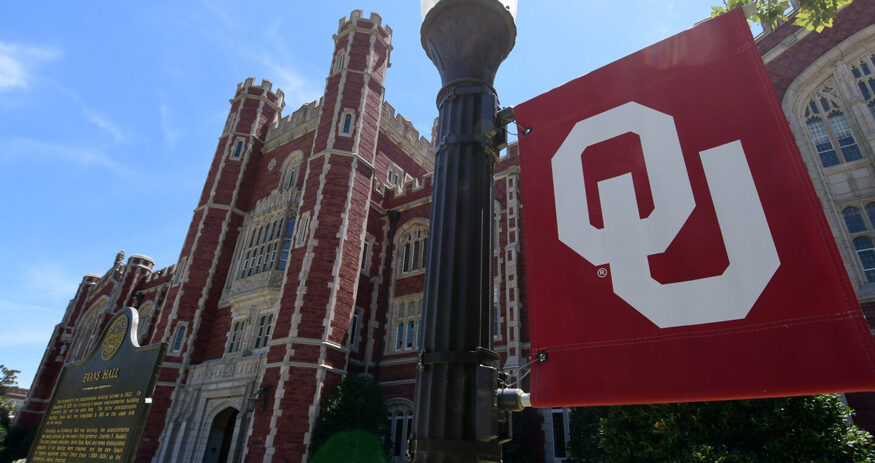
A dispute involving a controversial essay at the University of Oklahoma (OU) has sparked national attention, prompting professors to seek clarity over the university’s handling of the situation. On December 1, 2023, the American Association of University Professors (AAUP) delivered a petition to OU administrators demanding answers related to an academic freedom case involving student Samantha Fulnecky.
Fulnecky, a psychology junior, filed a formal claim of illegal discrimination after receiving a zero on an essay that addressed gender stereotypes, citing the Bible as her sole source. In her grading comments, instructor Mel Curth stated that the paper did not meet assignment requirements and was at times “offensive.” The essay included statements asserting that the “lie that there are multiple genders… is demonic and severely harms American youth,” along with claims of “lies spread from Satan.”
Following the incident, Curth was placed on administrative leave while the university investigated the matter. Ultimately, she was relieved of all instructional duties, a decision she is currently appealing, according to civil rights attorney Brittany Stewart on Bluesky. OU described Curth’s grading of Fulnecky’s paper as “arbitrary” but did not disclose the findings of the investigation into Fulnecky’s religious discrimination claim. The appeal regarding Fulnecky’s grade was decided in her favor.
The petition, signed by over 24,571 individuals by the afternoon of December 4, calls for several actions from OU. It requests the university to release full details about the process leading to Curth’s administrative leave, publicly reaffirm the rights of instructors to teach and grade without political interference, and collaborate with the campus community to develop a Harassment Response and Prevention plan.
The petition states, “OU’s decision to place the instructor on administrative leave following a routine grading dispute — a decision it has yet to adequately explain — raises serious concerns about the University’s commitment to educational standards, academic freedom, and instructor safety.”
OU’s Faculty Handbook draws its definition of academic freedom from the AAUP, emphasizing that faculty members should encourage a free pursuit of learning and uphold ethical standards. Michael Givel, president of OU-AAUP, commented on the implications of the university’s actions, saying it opens a “can of worms” for academic freedom and scholarly integrity. He expressed concern about whether instructors would need to fear accusations of discrimination simply because a student disagrees with their grading.
The case has attracted attention from various stakeholders. Oklahoma Governor Kevin Stitt publicly called for the OU Board of Regents to review the investigation, while Florida Governor Ron DeSantis labeled the incident as “intellectual rot in higher education.” Protests in support of Curth took place in December, with hundreds gathering on OU’s Norman campus.
Fulnecky has since engaged with media and community events, reiterating her stance. “I was asked to give my opinion, and I gave my opinion,” she stated at a recent event hosted by a local conservative group. She noted that she has received high marks on all other essays in the course.
In the Oklahoma State Legislature, punitive measures targeting universities are also being introduced. Recently, Representative Gabe Woolley filed House Joint Resolution 1037, which, if approved, would grant the legislature the authority to freeze or withhold up to 100% of state-appropriated funds for higher education institutions.
As of now, OU has not responded to requests for comment regarding the AAUP’s petition. Givel indicated that his organization will consider its next steps if the university fails to address the demands outlined in the petition. This ongoing situation raises significant questions about academic freedom, instructor rights, and the role of educational institutions in managing disputes involving sensitive topics.