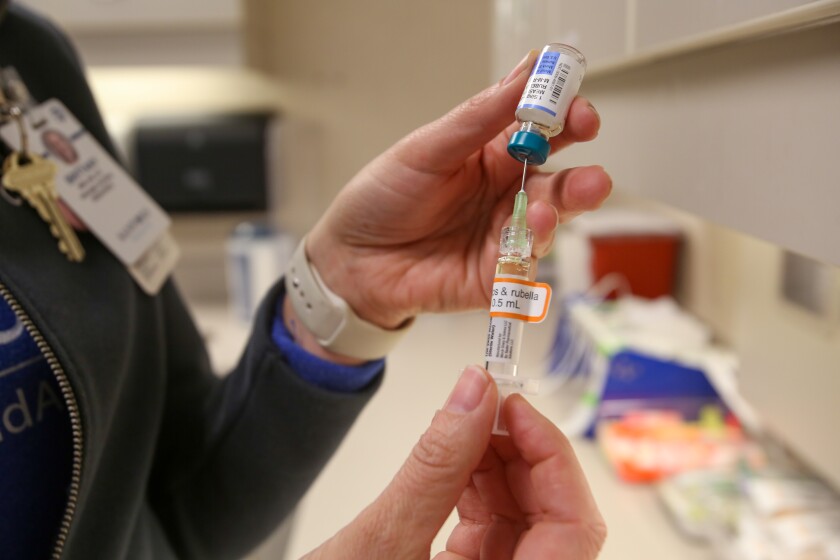
Health experts in the Fargo-Moorhead area are choosing to uphold existing vaccination recommendations, even as the U.S. Centers for Disease Control and Prevention (CDC) announced a revision on January 5, 2024. The CDC has shifted its approach, no longer recommending routine vaccinations for all children against diseases such as RSV, rotavirus, seasonal influenza, COVID-19, meningitis, hepatitis A, and hepatitis B. Instead, these vaccinations are now suggested only for children deemed at high risk or after consultation with healthcare providers.
Dr. Stephanie Hanson, a pediatrician at Sanford Health, confirmed that local providers will continue to adhere to the vaccination schedule set forth by the American Academy of Pediatrics (AAP), which remains unchanged despite the federal update. “We’re not beholden to follow the new schedule. Families will still be able to access all of the vaccines in the same way that they had before,” she stated. Dr. Hanson added that insurance coverage for these vaccinations will not be affected by the new guidelines.
The current childhood vaccination schedule has proven effective in protecting children against infectious diseases at critical developmental stages. “It really is designed to prevent infectious disease for kids at the time that they are vulnerable and at the time that their immune system is primed to respond well to vaccines,” Dr. Hanson explained.
Local Health Authorities Align with National Recommendations
The Clay County Public Health agency in Moorhead also plans to follow the AAP schedule. Family Health Supervisor Elizabeth Bjur stated that the agency aligns with the Minnesota Department of Health, which supports the AAP’s guidelines. “We’ve relied on consistent messaging for families, and also based on science, as far as what the current recommendations would be,” Bjur noted. The agency provides vaccines at reduced costs for individuals who are underinsured or uninsured.
Concerns have emerged regarding the potential implications of the CDC’s decision. Some public health experts, including Dr. Michael Osterholm, director of the University of Minnesota Center for Infectious Disease Research and Policy, have cautioned that the rollback in vaccination recommendations could pose risks to children’s health. Dr. Osterholm emphasized the importance of public discourse surrounding the benefits and drawbacks of such significant changes.
Infections like RSV and rotavirus are notably prevalent and can lead to severe illness in young children, sometimes necessitating hospitalization. Dr. Hanson remarked, “Not every child that gets these infections ends up with those more severe complications, but as a parent, I certainly would like to prevent that, if I could.”
Implications of the CDC’s Decision
The recent federal action follows directives from former President Donald Trump, who instructed the Secretary of Health and Human Services and the Acting CDC Director to update the U.S. childhood vaccine schedule based on protocols from 20 other developed nations. Notably, Denmark was frequently cited as a contrasting example, as it recommends fewer childhood vaccinations than the United States. Dr. Hanson highlighted that the healthcare systems in these countries differ significantly. Denmark offers universal healthcare and a comprehensive safety net, which includes screening for hepatitis B in mothers to prevent transmission to newborns. Additionally, Denmark’s parental leave policies allow parents to care for their infants without immediate daycare exposure to potential illnesses.
One anticipated outcome of the CDC’s revised recommendations is an increase in discussions between parents and healthcare providers regarding vaccination options. Dr. Hanson welcomed this development, stating, “We always welcome conversations with families about vaccines.”
As the situation evolves, local health experts remain committed to prioritizing the health and safety of children while adhering to established medical guidelines.