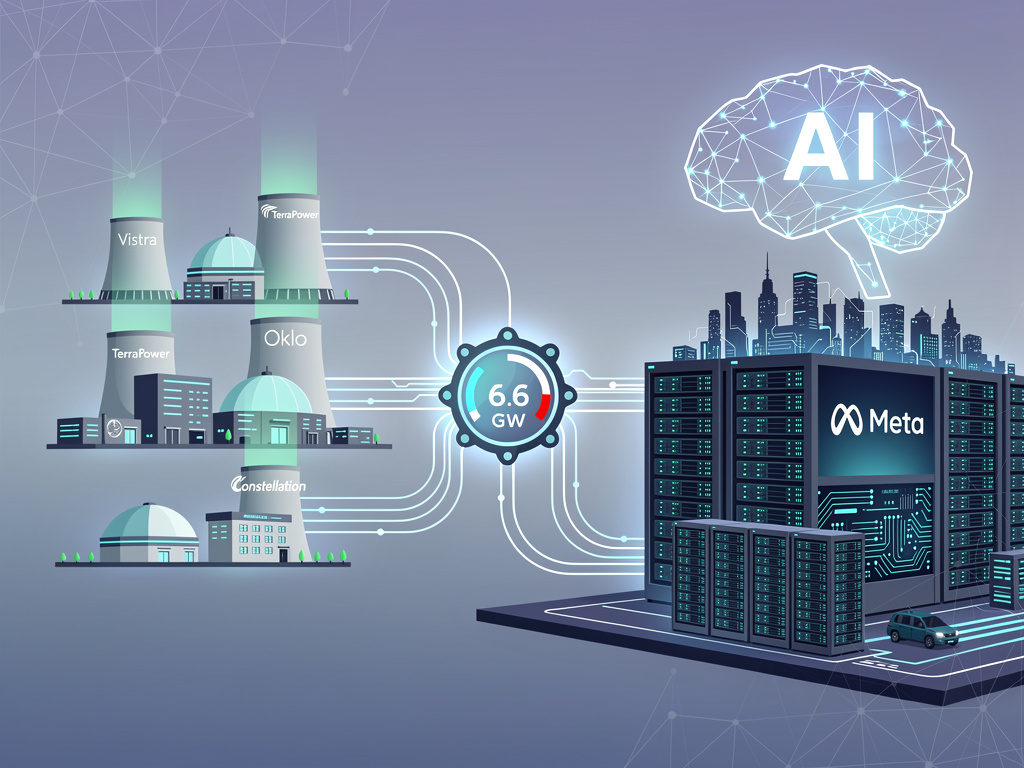
Meta Platforms Inc. has initiated a transformative energy procurement strategy, securing agreements that could deliver up to 6.6 gigawatts of nuclear power to support its artificial intelligence infrastructure. Announced on January 9, 2026, these landmark deals with Vistra Corp., TerraPower LLC, Oklo Inc., and Constellation Energy Corp. position Meta as a critical player in revitalizing U.S. nuclear capacity amid growing electricity demands driven by AI technologies.
The agreements involve long-term power purchase contracts with three existing Vistra nuclear plants located in Illinois, Pennsylvania, and Texas. They also include development support for advanced small modular reactors (SMRs) from TerraPower and Oklo. Meta has described these pacts as vital for expanding plant operations, advancing nuclear technology, and creating jobs in American communities.
AI training and inference workloads have significantly increased power requirements for large technology companies. Meta’s upcoming Prometheus AI supercluster aims to push the boundaries of model scale and necessitates reliable, carbon-free baseload power that intermittent renewable sources cannot fully provide. Industry analysts predict that U.S. data centers could consume up to 8% of the nation’s electricity by 2030. This strategy marks a shift from renewable energy commitments toward nuclear, which offers greater power density and reliability.
The Wall Street Journal estimates that the energy agreements could provide enough power for a city of five million homes. Following the announcement, shares of Vistra surged by as much as 16%, reflecting investor enthusiasm for nuclear energy’s resurgence.
Details of the Agreements
Meta has signed 20-year power purchase agreements with Vistra for energy output from its nuclear facilities. These contracts will extend the operational lives of the plants. Constellation Energy, the largest nuclear operator in the United States, will participate in capacity expansions, as highlighted by Meta executive Joel Kaplan on social media. Kaplan noted that this positions Meta as “one of the most significant corporate purchasers of nuclear energy in American history.”
TerraPower, co-founded by Bill Gates, and Oklo, backed by Sam Altman, focus on next-generation reactor designs. These small modular reactors promise faster deployment and reduced costs. Meta’s commitments encompass funding for site development and regulatory licensing, accelerating projects anticipated for the late 2020s.
Joel Kaplan emphasized on social media that these agreements will help power Meta’s AI future while strengthening the nation’s energy infrastructure. This strategic shift aligns with national energy priorities and reflects a broader movement away from reliance on natural gas, as nuclear power provides consistent output unaffected by weather variability.
Market and Community Impact
The news has caused a significant impact in the energy market, with Vistra’s market capitalization increasing by $10 billion in a single day, as reported by Bloomberg. This indicates strong investor confidence in the nuclear revival. The commitment to nuclear energy is expected to create thousands of high-wage jobs in construction, operations, and supply chains. Each Vistra plant employs hundreds of workers, and expansions could potentially double that number.
Despite historical local opposition often tied to safety concerns, support for nuclear projects has grown, particularly following advancements in reactor design. Economic benefits such as increased tax revenues and infrastructure improvements bolster local community support, especially in regions where these plants operate.
By 2035, Meta’s nuclear initiative could offset up to 20 million tons of CO2 emissions annually compared to natural gas alternatives, shifting the U.S. nuclear contribution from 19% to potentially higher levels of clean energy production. This could redefine corporate energy strategies globally and set new precedents in the tech industry, encouraging competitors like Microsoft and Google to explore similar avenues.
As the energy landscape evolves, Meta’s strategic moves are likely to influence industry dynamics and accelerate the pace of nuclear energy adoption, marking a significant chapter in the intersection of technology and sustainable energy solutions.