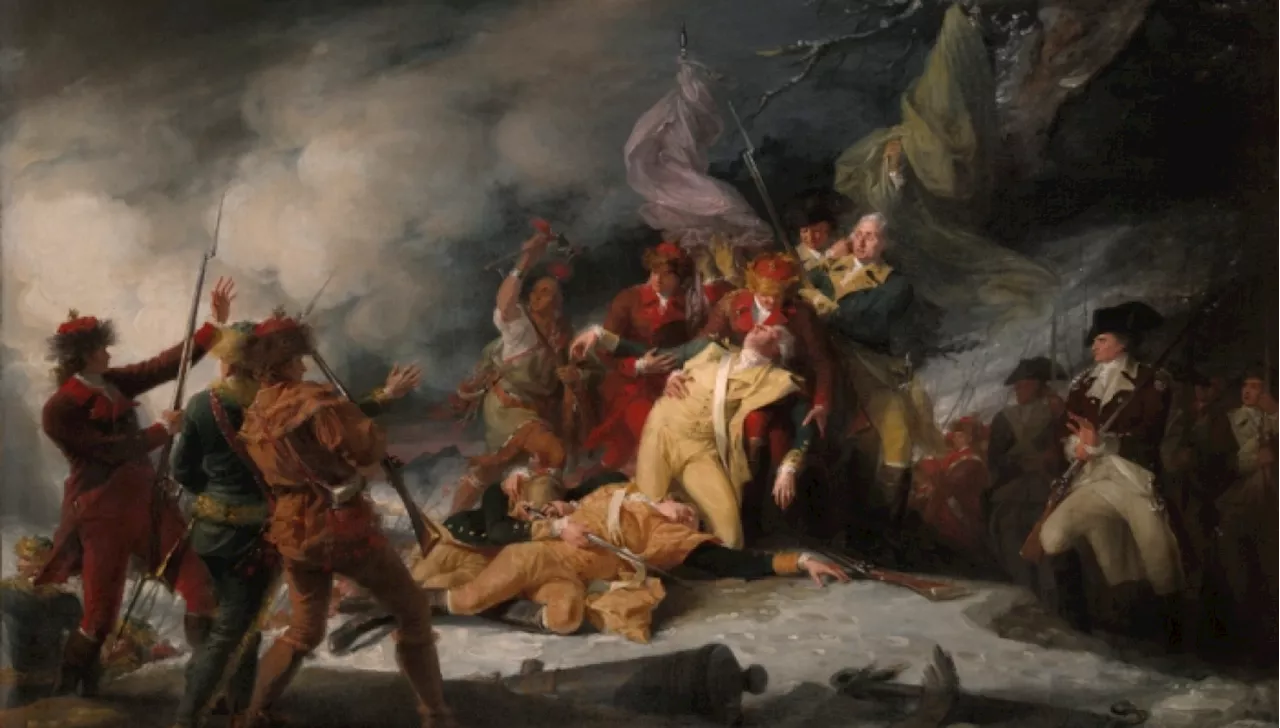
On December 31, 1775, General George Washington reached out to Brigadier General Benedict Arnold for crucial supplies, unaware of the recent American defeat in Quebec. This communication forms part of a series marking the United States’ upcoming 250th anniversary, reflecting on key events leading up to the signing of the Declaration of Independence. Washington’s request highlights the challenges faced by the American forces during the Revolutionary War.
Two weeks after the failed American assault on Quebec, known as the “attack on Quebec,” Washington remained in the dark about the loss and the death of General Richard Montgomery. The decision to invade Quebec had been based on two primary assumptions: that many colonists still viewed Catholic French Canada as a threat and that Quebec could align with the American cause. Many in the Continental Congress believed it was appropriate for Quebec to be included in the new union.
In his letter to Arnold, Washington expressed urgency in obtaining supplies to support the beleaguered army around Boston. He requested blankets, clothing, and arms, emphasizing the dire need for these items. Washington’s hope for reinforcements from Arnold also reflected his expectations for a positive outcome, as he noted that Congress was even considering raising a new army for Canada that winter.
Washington wrote, “Your favour of the 5th ulto from before Quebec inclosing the returns of your detachment has come to hand… I am informed that there are large quantities of arms—blankets, clothing, and other military stores in that City—these are articles which we are in great want of here.” He also urged Arnold to assist in expediting their dispatch, showcasing Washington’s reliance on his commanders during a critical juncture.
The Continental Congress promoted Arnold to brigadier general on January 10, 1776, although Washington did not receive this information until later. Throughout January, Washington continued to address Arnold as “Col. Arnold,” indicating a lag in communication during this tumultuous time.
By early January 1776, Arnold was recognized as one of the most capable battlefield commanders within the American army. His audacious actions, including the capture of Fort Ticonderoga and his operations on Lake Champlain, had earned him significant acclaim. He had a reputation for being bold and relentless, often found at the forefront of battles, rapidly advancing from colonel to major general.
Despite his earlier successes, Arnold was severely wounded during the assault on Quebec. This injury would set the stage for a complicated future; it would be four years before his allegiance shifted and he committed the treason that would forever stain his legacy in American history.
In this period of uncertainty and conflict, the correspondence between Washington and Arnold serves as a poignant reminder of the struggles faced by the early American forces. Their bravery and determination would ultimately shape the course of a nation striving for independence.