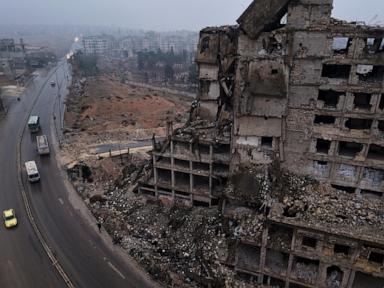
The Syrian army has declared a region east of Aleppo a “closed military zone,” indicating a potential escalation in tensions with the Kurdish-led Syrian Democratic Forces (SDF). This announcement, made on Tuesday, follows a series of clashes in Aleppo that resulted in the displacement of tens of thousands of residents. The clashes concluded over the weekend with the evacuation of Kurdish fighters from the contested neighborhood of Sheikh Maqsoud.
In recent days, Syrian officials have accused the SDF of bolstering its military presence near the towns of Maskana and Deir Hafer, located approximately 60 km (37 miles) east of Aleppo. The SDF has denied these allegations. The state news agency SANA reported that the Syrian army’s decision to establish a closed military zone stemmed from “continued mobilization” by the SDF and concerns that the area serves as a launch point for Iranian suicide drones targeting Aleppo.
On Saturday, an explosive drone struck the Aleppo governorate building shortly after two cabinet ministers and a local official held a news conference regarding the ongoing situation. The SDF has refuted claims of involvement in the attack. In a statement, the Syrian army urged armed groups to retreat to areas east of the Euphrates River, highlighting the rising tensions amidst stalled political negotiations between the Syrian government and the SDF.
Political Context and Military Dynamics
The leadership in Damascus, under interim President Ahmad al-Sharaa, signed an agreement with the SDF in March, aiming for the latter to integrate into the Syrian army by the end of 2025. However, disagreements persist over the terms of this merger. Some factions within the newly formed Syrian army, established following the fall of former President Bashar Assad in December 2024, are comprised of groups previously backed by Turkey, which has a history of conflict with Kurdish forces.
The SDF has been a crucial ally for the United States in the fight against the Islamic State group, yet Turkey categorizes the SDF as a terrorist organization due to its ties to the Kurdistan Workers’ Party (PKK), known for its longstanding insurgency in Turkey. Despite ongoing U.S. support for the SDF, the Trump administration has also fostered closer relations with al-Sharaa’s government, urging Kurdish leaders to adhere to the March agreement.
Recent developments in the region suggest a complex and evolving situation, with potential for further military engagement. On Monday, Shams TV, a media outlet based in Irbil, the capital of Iraq’s semi-autonomous Kurdish region, announced that an interview with al-Sharaa was postponed for “technical” reasons, leaving questions regarding the broader political implications of these military actions unanswered.
The dynamics in northeastern Syria remain precarious, with the Syrian army’s declaration serving as a stark reminder of the ongoing tensions between government forces and Kurdish factions, as well as the intricate web of international interests that complicate the region’s stability.