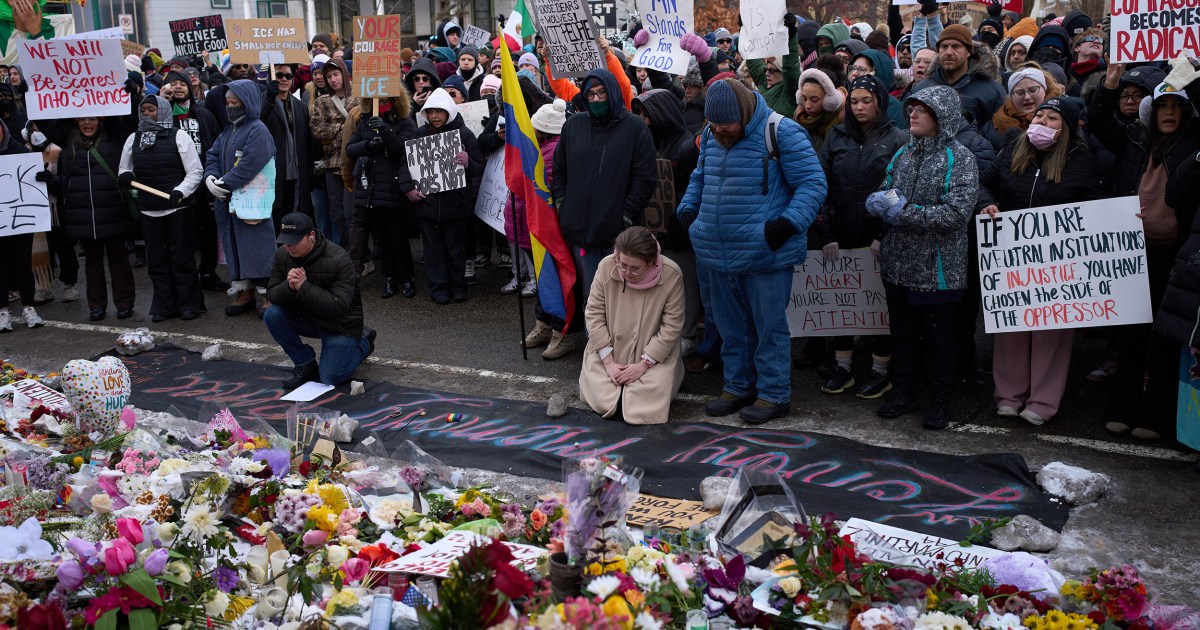
The shooting of an unarmed woman by an Immigration and Customs Enforcement (ICE) agent in Minneapolis has provoked widespread public outcry and scrutiny of the Trump administration’s narrative surrounding the incident. The victim, identified as Renee Nicole Good, a 37-year-old mother, was killed during an altercation with ICE officers. In the wake of her death, the administration characterized Good as a perpetrator of “domestic terrorism,” alleging her involvement in a coordinated effort to use vehicles as weapons. These claims have been met with skepticism, as video evidence and local officials have contradicted the administration’s assertions.
Voter sentiment appears to be shifting against the White House’s portrayal of the event. According to a recent Economist/YouGov poll, a significant majority of Americans are aware of the incident, with 50% viewing the shooting as unjustified compared to 30% who believe it was justified. The survey further revealed that 56% of respondents believe both state and federal authorities should investigate the shooting, directly opposing the administration’s stance.
Public Opinion Reflects Distrust in ICE
The Economist/YouGov poll is not the only survey indicating public discontent with ICE. A Quinnipiac University poll released shortly after the incident found that 82% of voters had seen video footage of the shooting. Of those, 53% deemed the shooting unjustified, while only 35% supported the actions of the ICE agent involved. Furthermore, a majority of respondents, 57%, disapproved of ICE’s enforcement of immigration laws, indicating a significant shift in public perception.
The partisan divide on this issue is stark, with independent voters showing pronounced disapproval. Among these voters, 64% disapproved of ICE’s actions, compared to only 33% who approved. This suggests that the Trump administration’s attempt to frame the narrative may be falling flat, particularly among moderates who might have previously supported the agency.
The implications of these findings extend beyond public opinion; they could influence future policy discussions and the political landscape as the nation approaches upcoming elections. With such a significant portion of the population expressing concern about ICE’s practices, calls for reform or even abolition of the agency are likely to gain momentum.
In light of the public response, Minnesota officials and community leaders have also voiced their calls for accountability. Many local leaders have criticized the administration’s handling of the situation, framing it as an attempt to divert attention from the incident itself and the pressing need for a thorough investigation.
As the situation continues to unfold, the administration faces mounting pressure from both the public and political figures to address the concerns raised by the shooting of Renee Nicole Good and to reconsider how ICE operates within the community. The narrative that the White House seeks to promote is increasingly at odds with the beliefs and feelings of many Americans, raising questions about the future of immigration enforcement policies in the United States.