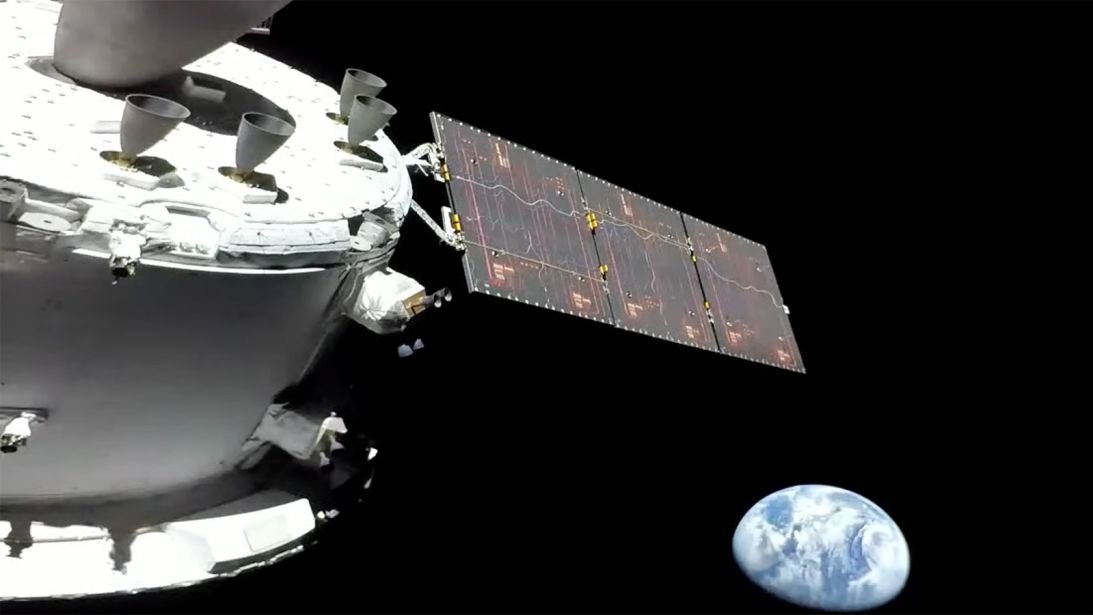
NASA is set to make significant strides in its lunar exploration efforts with the upcoming Artemis II mission, slated for launch no earlier than February 6, 2024. This mission will feature the Space Launch System (SLS) rocket and the Orion capsule, transporting four astronauts to the vicinity of the moon. This marks the first crewed mission since Apollo 17 in 1972, and it is poised to set a record for the farthest distance humans have traveled from Earth, surpassing the current record held by Apollo 13.
The Artemis II crew includes NASA astronauts Reid Wiseman, Victor Glover, Christina Koch, and Jeremy Hansen from the Canadian Space Agency. Their journey will take them beyond the far side of the moon, but notably, the mission will not involve a lunar landing. This decision stems from the spacecraft’s design limitations, as detailed by Patty Casas Horn, Deputy Lead for Mission Analysis and Integrated Assessments at NASA. “The short answer is because it doesn’t have the capability. This is not a lunar lander,” Horn explained.
Understanding the Mission Objectives
Artemis II aims to test various new capabilities that are crucial for future lunar missions. The Orion capsule will carry the astronauts around the moon, while the SLS rocket will launch them into Earth orbit before they venture deeper into space. Key mission objectives include ensuring crew safety and health, alongside testing navigation and propulsion systems.
Horn emphasized the importance of crew health, noting that the mission will introduce additional complexities, such as maintaining thermal stability and providing necessary life support systems. “With our four humans on board, we’ll be testing out a lot of new capabilities that were not there for Artemis I,” she said.
The Artemis II profile draws parallels to the Apollo 8 mission, which, in 1968, was the first to send humans to the moon’s vicinity without landing. Apollo 8 provided a pivotal moment in space exploration, as it allowed astronauts to photograph the moon’s far side. Similarly, Artemis II will not enter lunar orbit; instead, it will execute a “free return” trajectory, ensuring that the crew can safely return to Earth without additional maneuvers.
Future Plans and Challenges
The Artemis program’s next planned lunar lander, the Starship HLS (Human Landing System), is currently under development by SpaceX. Astronauts are expected to launch aboard the Orion capsule during the Artemis III mission, targeted for 2028. Upon reaching lunar orbit, they will transfer to the Starship HLS for their lunar surface journey. However, development delays have led NASA to consider alternative contracts for landing capabilities.
Assessing the mission’s scope, Horn noted that the absence of a lunar landing simplifies the mission parameters, allowing the crew to concentrate on critical tasks during their journey. “The value of incorporating other mission objectives like rendezvous and landing would have been assessed against the risk of first-time flight,” she said.
The Artemis II mission is not just a stepping stone in NASA’s exploration ambitions; it represents a renewed commitment to deep space exploration. As James W. Head, a professor at Brown University and Apollo program veteran, remarked, “Artemis II will be that same kind of awakening moment — we’re going back to the moon.”
The mission’s trajectory will begin with two Earth orbits before initiating the translunar injection, a maneuver that will propel the spacecraft toward the moon approximately 26 hours into the flight. The success of Artemis II will set the stage for future lunar exploration while reinforcing NASA’s dedication to human spaceflight.