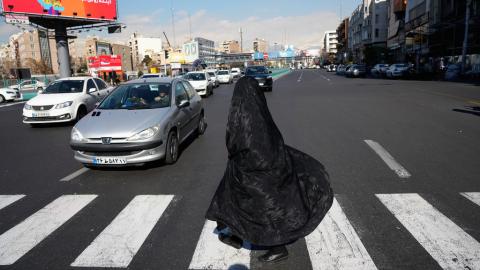
As protests in Iran enter their third week, the Islamic Republic is intensifying its efforts to suppress dissent through widespread arrests and intimidation tactics. Tens of thousands of individuals have been detained in a nationwide crackdown, as government forces threaten to use lethal force against demonstrators. The regime’s actions have prompted a continuing war of words with nations such as the United States and Israel.
On March 25, 2024, Iran’s top police official issued an ultimatum to protesters, demanding they surrender or face severe repercussions. Despite a significant internet blackout, reports indicate that violence against demonstrators persists, with one doctor describing the situation as “genocide under digital darkness.”
Many Iranians are refusing to back down. A woman speaking on a radio talk show expressed her determination, stating, “Don’t think everything is over here. We are not finished. Don’t leave us here alone at all.” She emphasized the loss of life, saying, “They killed 20,000 of my beautiful compatriots. Can I sit at home and not talk? I can’t stand them anymore.”
In a stern warning, Iranian President Masoud Pezeshkian cautioned that any military action by the United States would provoke a “harsh response.” He labelled an attack on Supreme Leader Ali Khamenei as equivalent to a declaration of war against Iran.
During a speech in Jerusalem, Israeli Prime Minister Benjamin Netanyahu echoed these sentiments, asserting, “If Iran makes a mistake and attacks us, we will act with a force that Iran has not yet experienced.” He acknowledged the uncertainty of Iran’s future but insisted that the nation would not revert to its previous state.
Exiled Crown Prince Reza Pahlavi issued a scathing denunciation of Khamenei, stating, “You are an anti-Iranian criminal. You have neither honor nor humanity.” Pahlavi condemned the regime’s actions, claiming it would be held accountable for the bloodshed of innocents.
Amid the turmoil in Iran, the situation in neighboring Syria remains precarious. The Syrian Army has advanced against Kurdish forces in the northeast, with reports emerging of jihadist groups committing brutal acts of violence against civilians. Analysts warn that the rebranding of these groups as official military commanders does not change their fundamental nature.
The release of thousands of ISIS prisoners by the Syrian government has raised alarms about potential threats to regional stability and the prospects for a democratic future in Syria.
As the situation develops, the resilience of the Iranian people and their demands for justice and accountability continue to resonate across the region. The international community watches closely, understanding that the outcomes of these events will have lasting implications for both Iran and its neighbors.