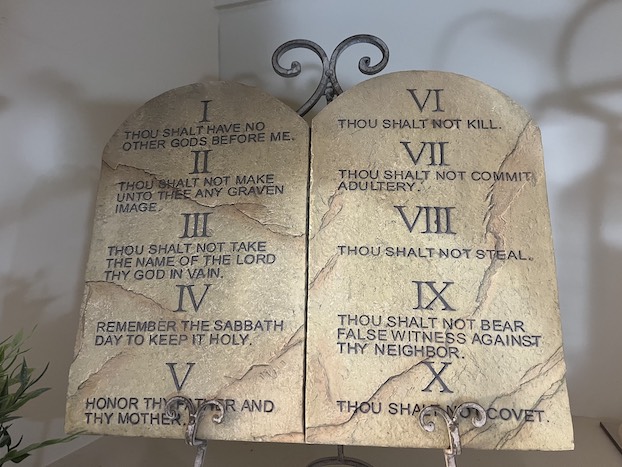
The Fifth Circuit Court of Appeals convened to hear arguments regarding the legality of laws in Louisiana and Texas that mandate the display of the Ten Commandments in public school classrooms. These cases stem from legislative actions taken by both states, with Louisiana Governor Jeff Landry being the first to sign such a law, followed by Texas Governor Greg Abbott.
Following the enactment of these laws, several organizations filed suit, arguing that the mandates violate constitutional provisions regarding the separation of church and state. Initial rulings from district courts in both states have sided with the plaintiffs, declaring the laws unconstitutional and blocking their implementation. The injunction in Texas currently applies only to specific school districts.
After the cases were appealed to the Fifth Circuit, a panel of judges previously ruled that Louisiana’s law was “plainly unconstitutional.” In response, Louisiana requested that the full court review the case, which took place on September 26, 2023.
Legal Debate Stirs Optimism Among Advocates
During the lengthy hearing, Louisiana Attorney General Elizabeth Murrill expressed optimism about the state’s chances in the appeal. “I like our chances,” Murrill stated, highlighting that she believes there are judges who disagree with the earlier panel’s decision. She emphasized the ongoing discussions surrounding Supreme Court precedents that may influence the outcomes of these cases.
Regardless of the Fifth Circuit’s ruling, Murrill indicated that further appeals to the U.S. Supreme Court are likely from either side. “We have the better side of that argument,” she added, underscoring the state’s efforts to produce educational materials supporting the law’s constitutionality.
Governor Landry reinforced the belief that the United States was founded on Judeo-Christian values. He questioned why these principles could not be acknowledged in public schools, pointing to the motto “In God We Trust” on U.S. currency as an example of their prevalence in American culture. He stated, “Why can’t we just embrace the historical concepts of the Judeo-Christian principles that this nation was founded on?”
Opposition Voices Concerns on Religious Freedom
On the other side of the debate, the American Civil Liberties Union (ACLU) represents plaintiffs challenging the laws in both states. The plaintiffs include a diverse group of individuals, including Protestant pastors, Islamic leaders, and nonreligious parents. They argue that no federal court has ever upheld the display of the Ten Commandments in public schools.
Rev. Jeff Sims, a Louisiana pastor, articulated concerns about the implications of such displays. “I send my children to public school to learn math, English, science, art, and so much more—but not to be evangelized by the state into its chosen religion,” he stated. Sims described the Ten Commandments display as a form of religious favoritism that runs counter to his values of inclusion and equality.
Texas Rabbi Mara Nathan echoed similar sentiments, asserting, “No one faith should be canonized as more holy than others.” She argued that while the Ten Commandments are sacred to many, they do not belong in public school classrooms, where children’s beliefs should be shaped by their families and communities, not by legislative mandates.
As the Fifth Circuit deliberates, the cases, identified as Rev. Roake v. Brumley in Louisiana and Rabbi Nathan v. Alamo Heights Independent School District in Texas, raise fundamental questions about religious freedom and the extent to which government can influence religious expression in public education. The outcome of these hearings could have significant implications for public school policies across the United States.