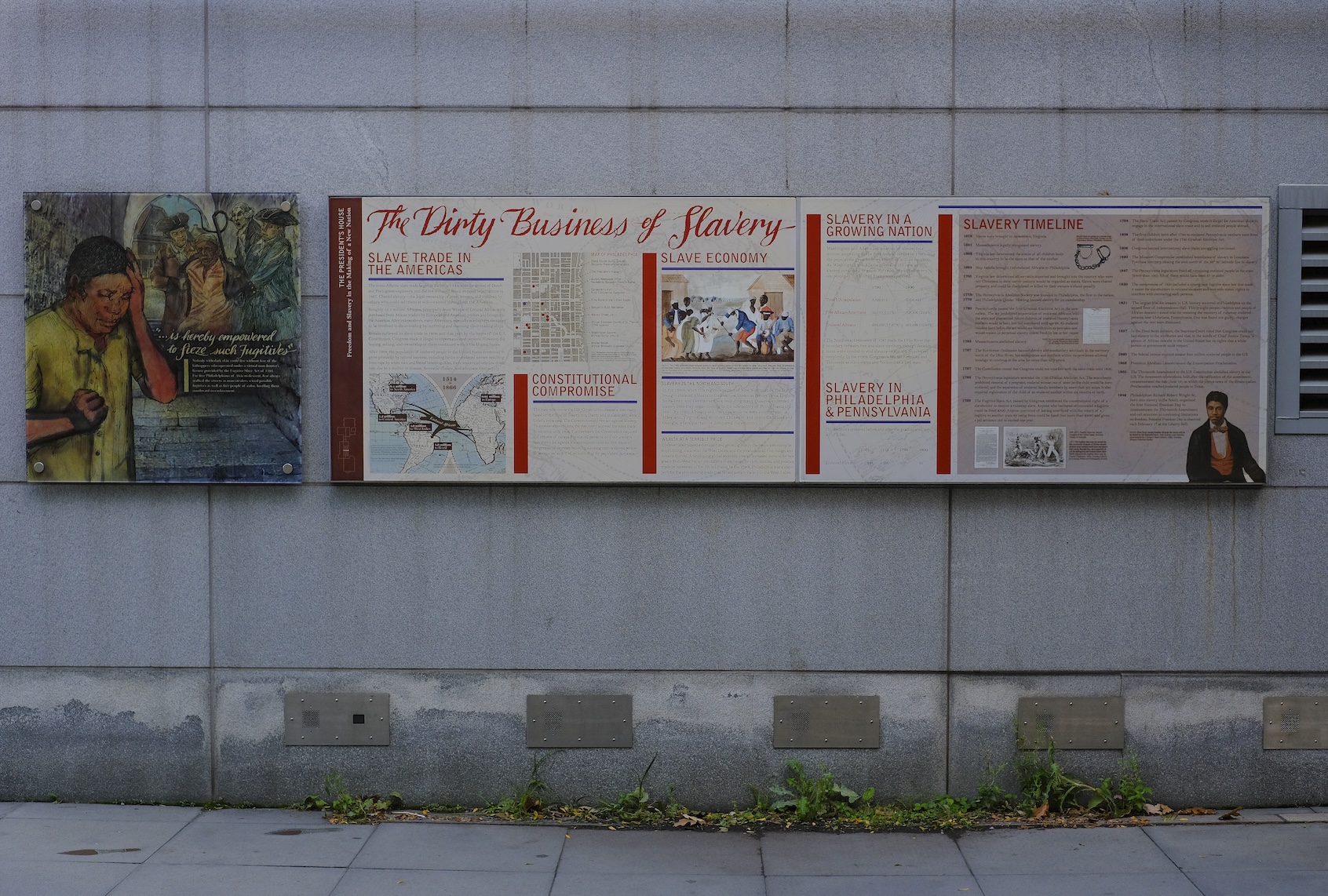
Philadelphia has filed a lawsuit against the Department of Interior following the controversial removal of a slavery exhibit at the President’s House site within Independence National Historical Park. This exhibit commemorated nine enslaved individuals owned by George Washington during the formation of the United States. According to an employee from Independence Park, all related signage was removed on Thursday afternoon under direct orders.
The decision to eliminate the exhibit aligns with an executive order issued in March 2025, which mandates a review of over 400 national sites. The order calls for the removal or modification of materials deemed to “inappropriately disparage Americans past or living.” The directive has faced criticism for specifically targeting Independence Park and for its characterization of the Biden administration’s historical narrative as “corrosive ideology.”
Political Reactions and Historical Context
In response to the exhibit’s removal, Pennsylvania Governor Josh Shapiro, a Democrat, expressed strong disapproval. He accused Trump of attempting to “rewrite and whitewash our history,” emphasizing that Pennsylvania has a commitment to learning from its past, no matter how painful. Shapiro’s statement underscores the ongoing debate about historical representation and the importance of acknowledging uncomfortable truths in American history.
The exhibit, initially approved in 2006 by both the city and the National Park Service, aimed to highlight the experiences of all individuals residing in the house, including the nine enslaved Africans brought by Washington. The display was inaugurated in 2010 during the Obama administration. The original agreement stipulated that no changes could be made to the property without mutual consent between the Secretary of the Interior and the involved parties.
Legal Action and Implications
The lawsuit claims that the removal of the exhibit occurred without the required notice or consent from the city of Philadelphia. City officials have requested a preliminary injunction, which would permit the exhibit to remain in place while the legal proceedings unfold.
Kenyatta Johnson, Philadelphia City Council President, stated, “Altering or censoring the site threatens the historical integrity of the site, undermines public understanding of our complete past, and erases the experiences of the enslaved individuals whom the memorial honors.” Johnson emphasized that removing items from the President’s House alters the physical landscape but fails to change the historical record.
The legal battle reflects broader tensions surrounding how history is presented in public spaces and the ongoing struggle to ensure that all aspects of the past are acknowledged in American society. As this case develops, it could set significant precedents regarding historical representation and the responsibilities of federal agencies in preserving public memory.