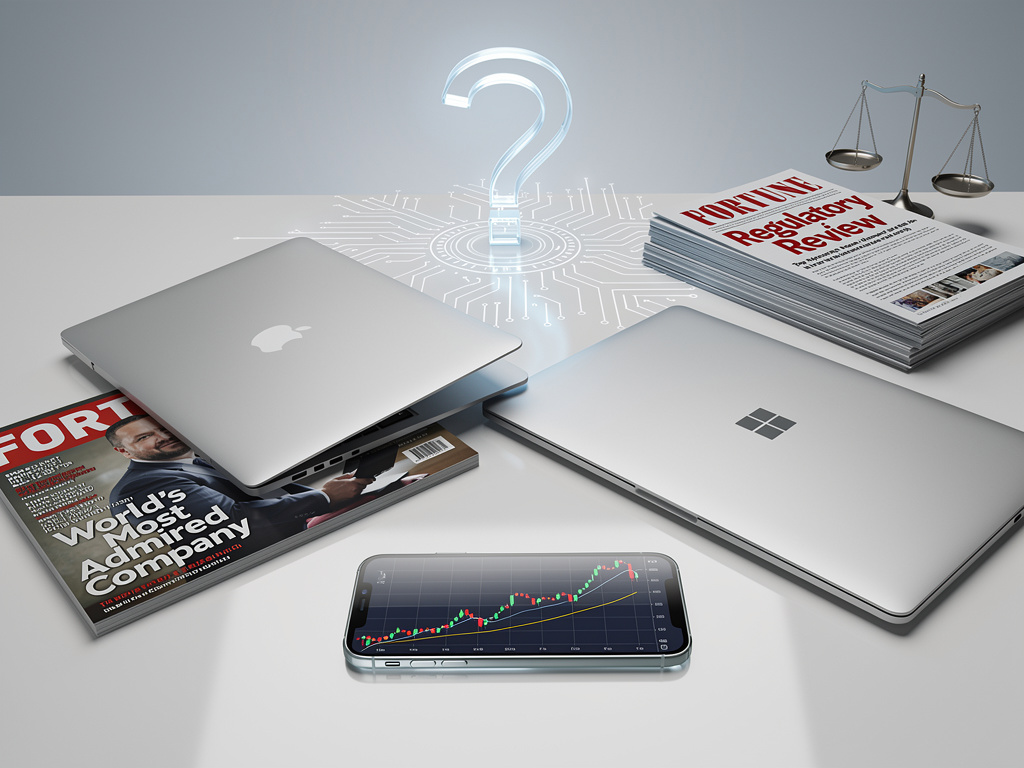
Apple Inc. has once again claimed the title of the World’s Most Admired Company, as announced by Fortune for the 19th consecutive year. This recognition, derived from a survey of approximately 3,750 executives, directors, and analysts, underscores Apple’s strong reputation for operational excellence and innovative products. The tech giant excelled across all nine key attributes measured in the survey, including Quality of Products, Innovation, and Financial Soundness.
This accolade positions Apple ahead of notable competitors such as Microsoft and Amazon, both of which rounded out the top three spots. The recognition serves as a reaffirmation of Apple’s long-term investment potential and the effectiveness of its management under Tim Cook. Yet, this moment of acclaim arrives amidst significant challenges that the company must navigate.
Challenges Amid Corporate Admiration
While Apple enjoys the admiration of its peers, it is also confronting considerable strategic and regulatory hurdles. The company recently announced changes to its App Store and iOS operating system in the European Union to comply with the Digital Markets Act (DMA). These modifications, which permit alternative app stores and payment systems, directly impact Apple’s lucrative services business. Concurrently, antitrust pressures are mounting in the United States, where the Department of Justice is reportedly preparing a substantial case against the company.
These regulatory developments challenge the narrative of Apple’s unassailable management and corporate responsibility. Critics argue that the practices that have contributed to Apple’s profitability and its seamless ecosystem may be anti-competitive, potentially stifling innovation and harming smaller developers. Such criticisms present a reputational risk that could gradually diminish the admiration the company currently enjoys.
The market has also shown signs of volatility for Apple. In January 2024, Microsoft briefly surpassed Apple as the world’s most valuable company, a shift driven largely by investor enthusiasm for Microsoft’s aggressive advancements in generative artificial intelligence, according to Reuters. Additionally, concerns over iPhone sales, particularly in China, have emerged, with analysts noting a significant slowdown in demand amid increasing competition from local rivals like Huawei.
Resilient Reputation and Future Outlook
Despite these challenges, Apple maintains a strong reputation, reflected in the Fortune survey. The ranking is not merely a snapshot of current stock performance; it represents a long-standing recognition of Apple’s quality, resilience, and strategic clarity. The executives surveyed are casting their votes based on nearly two decades of excellence, marking a vote of confidence in Tim Cook’s leadership.
As the tech industry witnesses a surge in interest around artificial intelligence, corporate leaders perceive Apple as a company that systematically entered and dominated the smartphone and wearable markets. They anticipate that Apple’s deliberate, product-focused approach will yield a more integrated and user-friendly application of AI compared to competitors rushing to market with their solutions. In a recent earnings call, Cook confirmed that Apple is investing “tremendously” in AI, with plans to disclose further details later in the year, as reported by MacRumors.
Apple’s ongoing success as the World’s Most Admired Company serves as both a reflection of its past achievements and a potential indicator of its future resilience. The goodwill and respect it commands from the global business community offer a strategic asset as the company navigates regulatory challenges and seeks to innovate further. The upcoming year will be pivotal in determining whether Apple can successfully integrate AI, adapt to evolving regulatory landscapes in Europe, and reignite growth in the critical Chinese market.