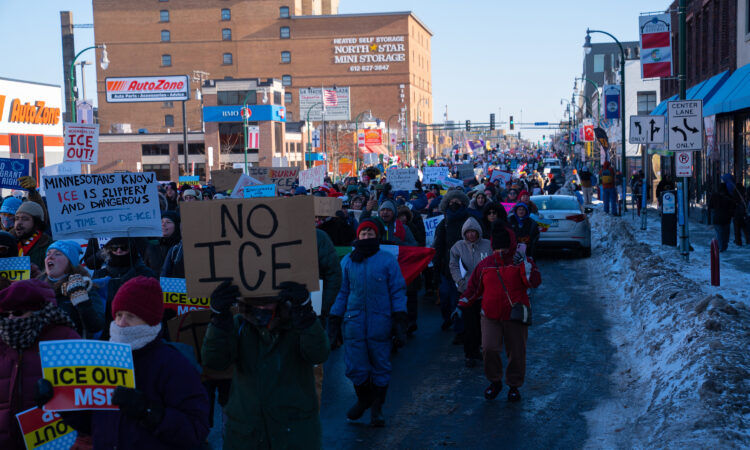
Business leaders in Minnesota are calling for a de-escalation of tensions surrounding recent federal immigration enforcement actions that have led to significant unrest in the state. The appeal comes in the wake of the tragic death of Alex Pretti, a 37-year-old Veterans Administration nurse and U.S. citizen, who was killed by federal agents in Minneapolis.
On January 14, 2024, the Minnesota Chamber of Commerce published an open letter signed by 64 businesses and organizations, urging state, local, and federal officials to collaborate on finding effective solutions. The letter emphasized the need for immediate action following Pretti’s death, which has intensified public concern over the aggressive tactics employed by federal agents from U.S. Immigration and Customs Enforcement (ICE) and Customs and Border Protection (CBP).
Community Impact and Government Response
The surge of approximately 3,000 federal agents into Minnesota has disrupted daily life across multiple communities, including Minneapolis and St. Paul. Reports indicate that federal agents have shot three individuals since the beginning of January, with one immigrant from Venezuela surviving a shooting during an enforcement operation. The business letter highlighted the widespread fear and uncertainty that these actions have caused among residents.
Minnesota’s Democratic-Farmer-Labor (DFL) Governor Tim Walz, along with U.S. Senators Amy Klobuchar and Tina Smith, have called for the withdrawal of federal forces, arguing that their presence exacerbates tensions. In contrast, the business leaders have positioned themselves as mediators, seeking to foster dialogue among various stakeholders.
At a recent meeting with Vice President JD Vance, Doug Loon, president and CEO of the Minnesota Chamber, reiterated the urgency of the situation, stating, “Our goal is clear: to help engage federal and Minnesota public officials to de-escalate the current situation and put our communities and economy back on track.”
Public Outcry and Calls for Action
In response to the ongoing enforcement actions, thousands of Minnesotans participated in a march through downtown Minneapolis on January 12, 2024, braving sub-zero temperatures to protest against the aggressive tactics employed by federal agents. Many citizens have expressed their outrage over incidents of mistaken arrests involving individuals with legal residency status, as well as reports of children being sent to detention facilities in Texas.
On January 13, Pretti was fatally shot while attempting to assist a bystander during an enforcement action. His death has sparked further debate about the methods used in immigration enforcement and the safety of communities. U.S. Representative Tom Emmer, a Republican, criticized local leaders for their rhetoric, suggesting it endangers law enforcement personnel and worsens the situation.
Reflecting on the broader implications, business leaders stated, “The recent challenges facing our state have created widespread disruption and tragic loss of life.” Their letter calls for peace and cooperative efforts between officials to restore stability and ensure the well-being of families and businesses.
As discussions continue, figures such as former Minnesota Governor Arne Carlson have advocated for non-political leaders to mediate and foster understanding. Carlson proposed that respected figures in the business and civic community, such as former Chief Justice Kathleen Blatz, convene discussions aimed at finding common ground.
In an opinion piece for the Wall Street Journal, former U.S. Treasury Secretary Robert Rubin questioned the silence of business leaders regarding the actions of the federal government. He urged them to reflect on the implications of inaction in the face of potential authoritarianism, emphasizing the importance of civic engagement during crises.
The open letter from the Minnesota Chamber of Commerce represents a significant moment in the state’s response to immigration enforcement, highlighting the need for collaboration and understanding among diverse stakeholders to move toward a peaceful resolution. The business community’s involvement underscores the critical intersection of civic responsibility and community welfare in navigating complex social issues.