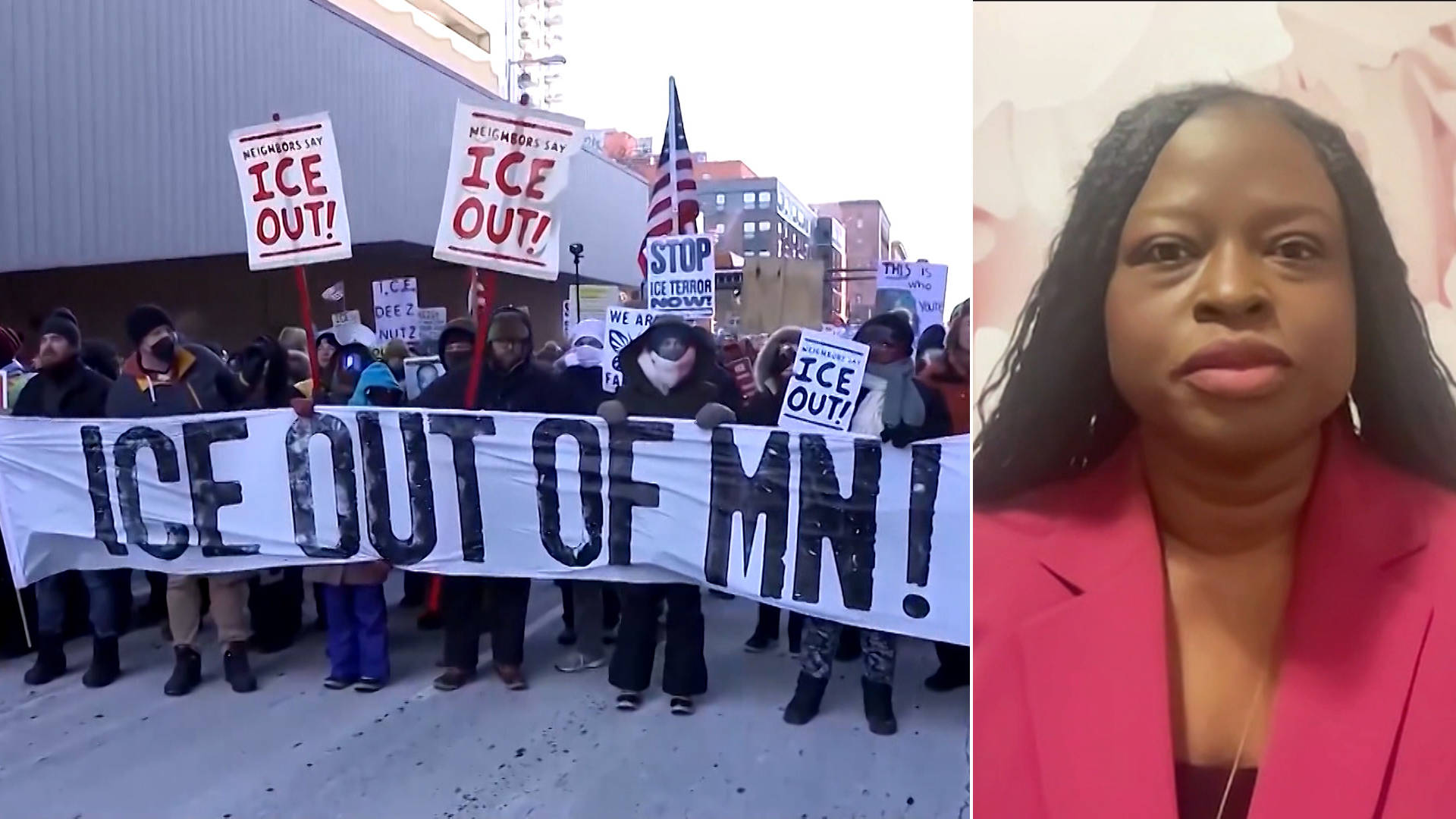
Civil rights attorney and activist Nekima Levy Armstrong was released from federal custody on Friday, one day after her arrest during an anti-ICE protest at Cities Church in St. Paul, Minnesota. She was apprehended by agents from Homeland Security Investigations and the FBI, following directives from Attorney General Pam Bondi. Armstrong has publicly denounced the charges against her as “trumped-up,” claiming they aim to criminalize peaceful demonstrations against federal immigration actions.
Armstrong participated in a demonstration at Cities Church, where a pastor also oversees a local ICE field office. During the protest, she expressed her concerns about the church’s connection to ICE. “Someone who claims to worship God is overseeing ICE agents,” she stated, highlighting the contradiction she sees in ICE’s operations under the guise of immigration enforcement.
The protest has gained significant attention, particularly after images shared by the White House appeared to distort the reality of Armstrong’s arrest. These images, which were digitally altered to show her crying, were described by Armstrong as part of a broader effort to discredit her and her fellow demonstrators. “They have altered the facts, just as they altered my image to criminalize nonviolent, peaceful protests,” she remarked.
Armstrong and her co-defendant were charged under the Freedom of Access to Clinic Entrances (FACE) Act, which prohibits interference with individuals seeking to engage in religious activities. Armstrong has asserted that the charges misrepresent the nature of the protest, claiming that worshippers were still engaged in prayer and song during the demonstration.
The context of the protest has been underscored by recent violence involving ICE agents. Armstrong pointed to the deaths of two civilians, including Alex Pretti, as indicative of the aggressive tactics employed by federal agents in the region. She criticized the federal government, stating, “They have waged war in the streets of Minneapolis and the Twin Cities.”
The implications of Armstrong’s arrest extend beyond her individual case. She argues that it reflects a troubling trend of silencing dissent and criminalizing those who oppose federal actions. “We have to understand that what they’re doing is unconstitutional, diabolical, illegal, and unacceptable,” she asserted.
As Armstrong continues to advocate for her cause, she urges others to join her in opposing what she describes as the “fascism, tyranny, and authoritarianism” of the current administration. She calls for solidarity among those who believe in the right to peaceful protest and dissent against government policies.
The situation remains fluid, with ongoing discussions about the actions of federal agents in Minnesota and the larger implications for civil rights movements across the country. Armstrong’s case serves as a focal point for a growing resistance against federal immigration enforcement tactics that many activists deem excessive and unjust.