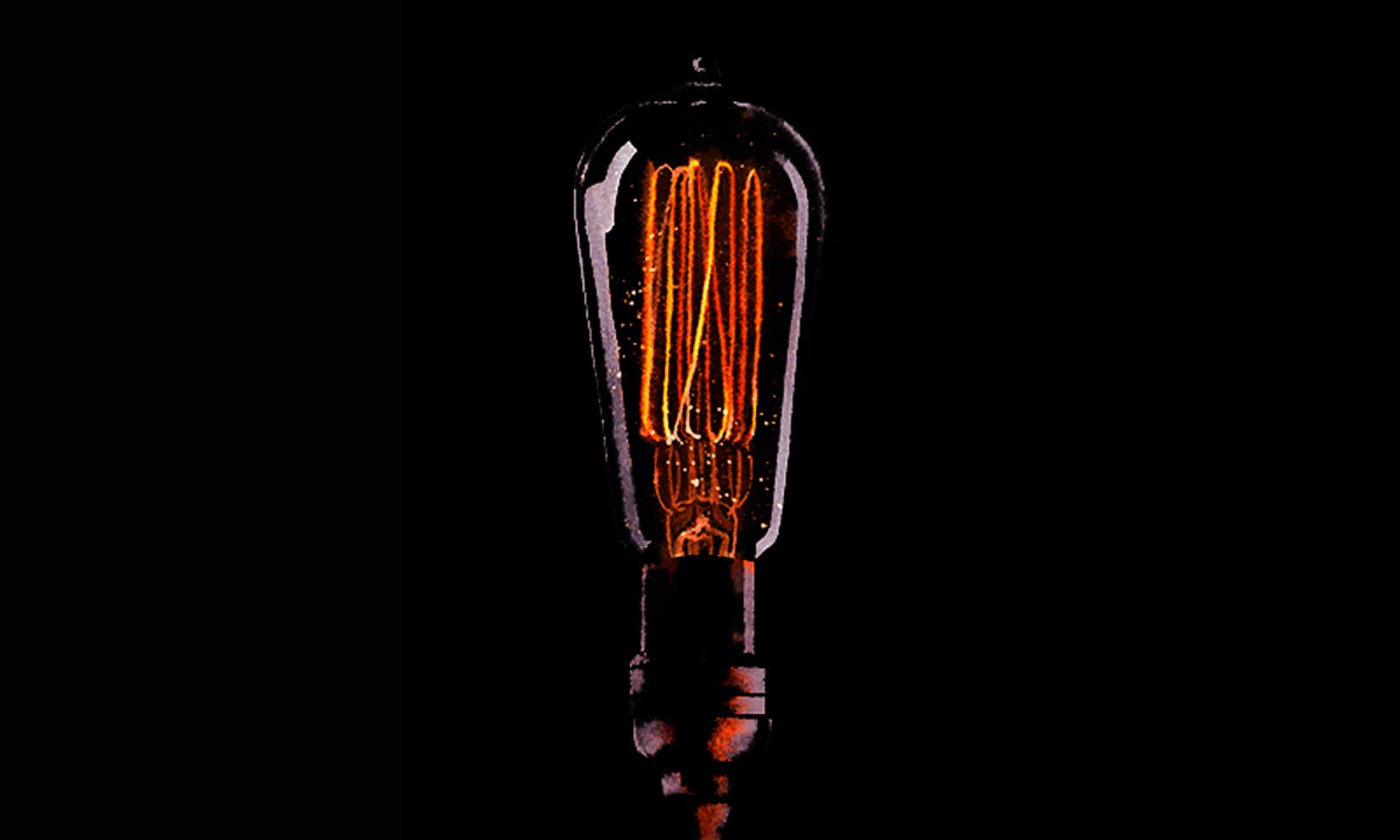
In a surprising twist of scientific history, research indicates that an experiment conducted by Thomas Edison in 1879 may have unintentionally produced graphene, a material of immense modern importance. This discovery unfolds as researchers explore Edison’s legacy beyond his famed invention of the light bulb, which illuminated homes and transformed daily life.
Edison showcased the first practical electric incandescent lamp in 1879. He aimed to create a filament from tungsten, yet this was not feasible at the time. Instead, Edison experimented with various carbonized plant materials, ultimately selecting Japanese bamboo as the filament. This innovative choice allowed the bulb to shine for more than 1,200 hours before burning out. Edison noted, “Before I got through, I tested no fewer than 6,000 vegetable growths, and ransacked the world for the most suitable filament material.”
Edison’s groundbreaking work may have inadvertently led to the production of graphene, a remarkably strong and flexible material just one atom thick. Graphene is now recognized as a potential game-changer in various technologies, from MRI machines to computer chips. Researchers are eager to exploit its properties to develop quick-charging fuel cells for electric vehicles and targeted drug delivery systems.
Despite its potential, producing graphene remains a significant challenge. Lucas Eddy, a nanomaterials researcher at Rice University, sought to create graphene using readily available materials. His research led him to the technique known as flash Joule heating, which involves heating carbon-based materials to over 3,600 degrees Fahrenheit.
Eddy recalled that early light bulbs often contained carbon filaments and that Edison’s bulbs reached the necessary temperature for graphene production. After searching for authentic Edison-style light bulbs with carbon filaments, he finally found suitable examples at a small art store in New York City, which even included Japanese bamboo filaments.
To replicate Edison’s experiment, Eddy connected the light bulb to a 110-volt direct current source and allowed it to heat for just 20 seconds. Prolonged exposure could lead to the formation of graphite, which is a denser form of carbon rather than graphene. By directing lasers at the filament, Eddy and his team confirmed the creation of graphene, an achievement published in the journal ACS Nano.
While it is uncertain whether Edison was aware that his experiment produced graphene, it is notable that during his 1879 demonstration, the bulb operated for over 13 hours, likely converting any resulting graphene to graphite. Researchers did not theorize the existence of graphene until 1947, and it was not until 2004 that scientists successfully extracted layers of graphene from graphite, a breakthrough that earned Andre Geim and Konstantin Novoselov the Nobel Prize in Physics in 2010.
This recent finding raises intriguing questions about the untapped potential hidden within historical scientific endeavors. As James Tour, a co-author of the study, noted, “To reproduce what Thomas Edison did, with the tools and knowledge we have now, is very exciting.” The inquiry into Edison’s work suggests that revisiting past experiments through a contemporary lens might yield further groundbreaking discoveries.
As researchers continue to explore the possibilities of graphene, they unlock the potential for advancements that could redefine technology in the years to come.