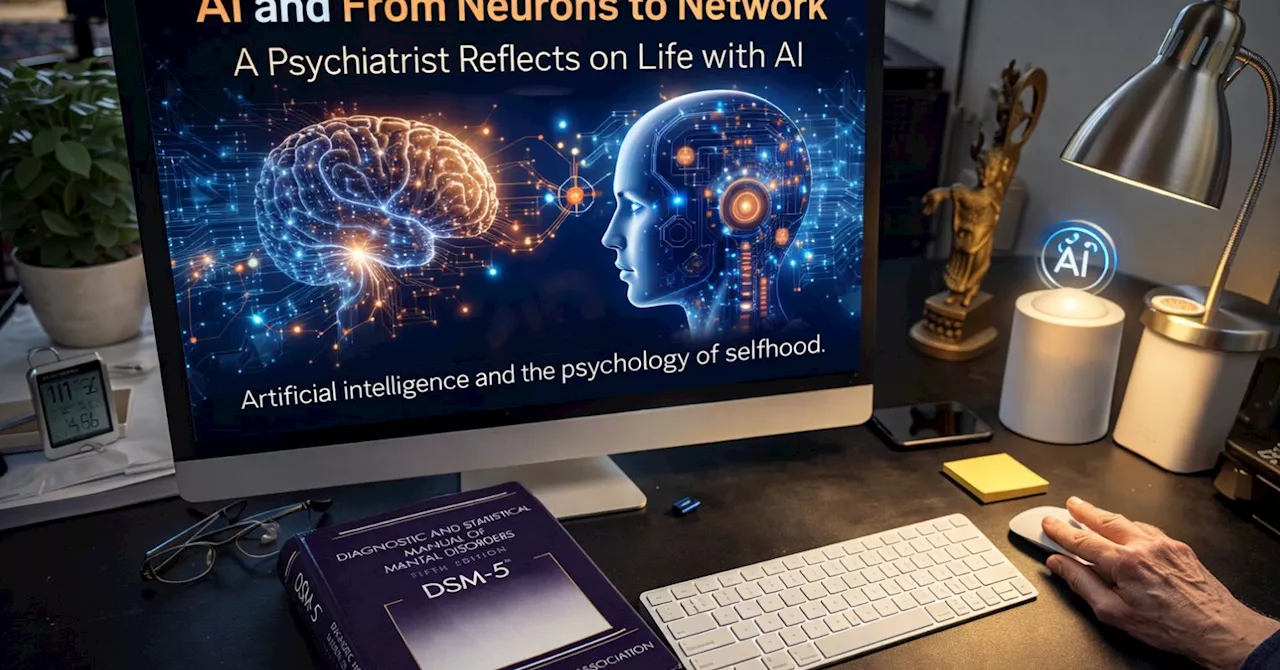
URGENT UPDATE: New insights from psychiatrist Dr. Frances Ninivaggi highlight the pressing need for mindful awareness as artificial intelligence (AI) evolves rapidly, affecting human cognition and identity. As AI systems become more integrated into daily life, the implications on our selfhood are significant and immediate.
In a recent reflection, Dr. Ninivaggi emphasizes that AI, once a mere tool, now acts as a psychological mirror reflecting our very essence. The doctor argues that understanding ourselves through AI requires a return to mindful practices, as the acceleration of technology risks diminishing our inner lives. This revelation comes at a critical time, as AI continues to shape how we perceive our identities and relationships.
Over the past decade, AI has transitioned from basic computational models to complex systems capable of approximating human intuition. Dr. Ninivaggi notes that while these advancements present remarkable opportunities, they also create a new challenge—one that could lead to a loss of human depth. The psychiatrist recalls instances in her practice where patients struggled to articulate their feelings, suggesting that AI’s influence may be distancing us from authentic emotional experiences.
The impact of this technology is already evident. One patient described her compulsive need to check notifications not for information but for reassurance of her existence in others’ awareness. This reflects a troubling trend where attention becomes a commodified resource, shaping our psychological landscape and potentially alienating us from our true selves.
As AI systems become increasingly adept at predicting our behaviors and preferences, the importance of mindfulness cannot be overstated. Dr. Ninivaggi advocates for simple yet powerful practices—like returning to breath and recognizing emotions—to help individuals reclaim their agency amidst the noise created by technology.
In a world where information flows ceaselessly across networks, the call for deeper reflection is more urgent than ever. Dr. Ninivaggi emphasizes that the central question we face is not whether machines will become human, but whether humans will remember how to remain fully human. She warns that as we navigate this new reality, the challenge lies in maintaining our capacity for empathy, depth, and meaningful connection.
Looking ahead, the ongoing dialogue about AI and its psychological implications will become crucial. As both a physician and a participant in this rapidly changing landscape, Dr. Ninivaggi’s insights urge us to engage thoughtfully with the technologies that increasingly define our lives.
As AI technology continues to evolve, the need for mindful awareness and intentional engagement with our inner selves is paramount. This developing narrative is not just about technology; it’s about preserving what makes us human in an age of accelerating artificial cognition.
Stay tuned for more updates as this crucial conversation unfolds.