January 2024 proved to be a turbulent month for the United States, marked by President Donald Trump‘s aggressive policies both at home and abroad. Following a tumultuous Christmas address, Trump entered the new year determined to assert his authority as he faced the challenges typical of a second-term president. His administration’s actions, while demonstrating America’s formidable military power, also revealed the limits of his authority and raised significant ethical concerns.
The month began with a dramatic military operation that resulted in the capture of Venezuelan President Nicolás Maduro. On January 3, U.S. special forces executed a daring raid, leading to Maduro’s arrest. Secretary of State Marco Rubio described Maduro’s situation as being removed from a “gangster paradise.” This event underscored Trump’s willingness to use military force to project American power, yet it also elicited criticism regarding the ethical implications of such actions.
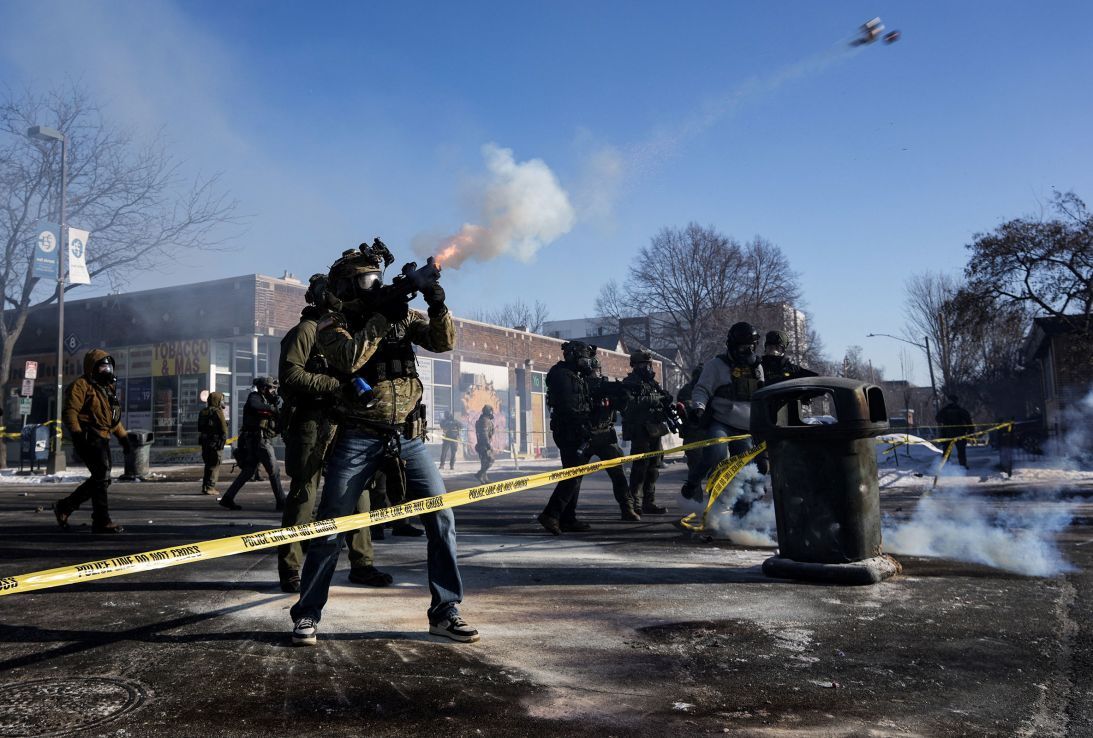
As Trump pursued a vision defined by strength, tragic incidents unfolded at home, particularly in Minnesota. The killing of Renee Good, a mother shot by federal agents during an immigration enforcement operation, shocked the nation. Just weeks later, Alex Pretti, an ICU nurse, was fatally shot while attempting to aid a woman being pushed by a Customs and Border Protection agent. These events illuminated the darker aspects of Trump’s immigration policies and raised questions about the administration’s approach to law enforcement.
Another haunting image that emerged was that of Liam Conejo Ramos, a 5-year-old boy detained alongside his father in a suburb of Minneapolis. This incident encapsulated the emotional toll of immigration policies on innocent families. Liam’s situation highlights the complexities and challenges surrounding immigration, an issue that remains divisive among Americans. Despite Trump’s electoral success in 2020 partly based on promises of enhanced border security, the harsh realities depicted in these images prompt a reevaluation of the methods employed.
The response from Trump’s administration was mixed. Tom Homan, the administration’s border czar, suggested a potential de-escalation of federal presence in Minnesota, conditional upon local cooperation. However, he emphasized that the administration would not back down from its immigration enforcement goals. Public sentiment appears to be shifting, as a recent Fox News poll indicated that even some Republicans view current ICE tactics as excessive.
Tensions continued to escalate in political discourse. Minnesota Governor Tim Walz stirred controversy by drawing comparisons between current events and historical atrocities, likening Minnesota children to Anne Frank. Such rhetoric reflects the deep divisions in American society regarding Trump’s approach to governance and law enforcement.
Internationally, Trump’s attempts to solidify U.S. dominance faced hurdles. His remarks at the World Economic Forum in Davos, Switzerland, where he controversially demanded Denmark surrender Greenland, raised eyebrows and led to questions about his diplomatic strategy. The refusal of European leaders to acquiesce to his demands indicated a growing reluctance to comply with Trump’s unpredictable governance style.
As the month progressed, events in Iran further complicated Trump’s foreign policy landscape. Reports of brutal suppression of anti-regime protests led to renewed threats against the Islamic Republic. The arrival of a U.S. aircraft carrier group in the region underscored the potential for military engagement, raising concerns about the consequences of escalating tensions.
Despite the chaos of January, Trump’s administration maintained its course. His critics perceive a blend of imperial ambition and recklessness, with accusations of fostering an environment that could lead to American “gangsterism” in foreign policy. Rubio, addressing the Senate Foreign Relations Committee, emphasized the complexity of U.S. foreign relations, particularly regarding Venezuela, urging patience in the pursuit of political transition.
The month concluded with a series of speeches from officials, including Minneapolis Mayor Jacob Frey, who criticized the notion that “might makes right,” a principle championed by advisor Stephen Miller. This sentiment resonated with many who believe that America should uphold values of justice and humanity rather than resorting to authoritarian measures.
As Trump navigates the challenges of his presidency, the events of January 2024 illustrate the dual nature of his administration: a commitment to power juxtaposed with the potential for significant backlash. The month’s developments raise critical questions about the direction of the nation and the implications of Trump’s policies as he continues to confront both domestic and international challenges.