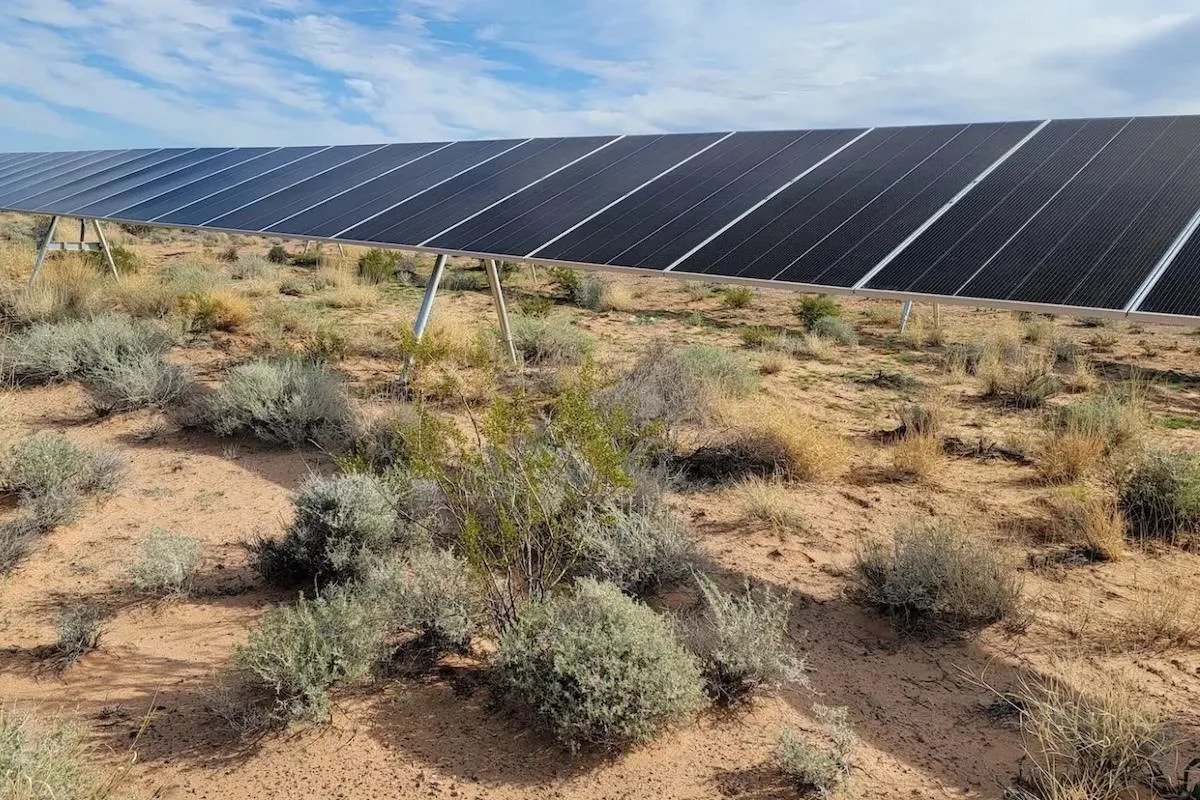
A recent study highlights the remarkable recovery of the rare threecorner milkvetch at the Gemini Solar Project, located in the Mojave Desert near Las Vegas. This resilient plant, part of the pea family, thrives in harsh desert conditions, only emerging after rainfall. The findings reveal that careful construction practices at the solar farm have positively impacted the local ecosystem, allowing this endangered species to flourish.
The threecorner milkvetch is under consideration for listing under the Endangered Species Act, making its recovery particularly significant. Traditionally, energy companies employ a “blade and grade” method, which involves clearing vegetation and leveling soil, disrupting vital seed banks. In contrast, the Gemini Solar Project adopted a more eco-friendly approach, preserving the surrounding habitat during construction.
According to the study led by Tiffany Pereira, an ecologist at the Desert Research Institute, the results are promising. Before construction began, scientists noted only 12 threecorner milkvetch plants at the site. By 2024, that number had surged to 93, indicating that the seeds had survived the building process. The plants at Gemini exhibited enhanced growth, growing wider and taller, while producing more flowers and fruits compared to a nearby area.
The solar panels at Gemini may play a crucial role in this growth. They provide shade, reducing soil evaporation and making more water available for the plants. Pereira noted, “So you just have the potential for a lot more plants… the fact that seed bank survived is phenomenal.”
The concept behind this approach is termed ecovoltaics, which focuses on constructing solar facilities with native species in mind rather than disrupting existing ecosystems. As part of this method, crews can introduce native grasses and flowers to boost biodiversity. Lee Walston, an ecologist at Argonne National Laboratory, emphasized the positive outcomes observed in similar projects, stating, “If you build it, will they come? In Minnesota, the answer is yes.”
In his research, Walston studied two solar sites on converted cropland over five years, noting a sevenfold increase in unique flowering plant species and a threefold rise in insect pollinators. The population of native bees increased twentyfold, showcasing the potential benefits of solar farms for local wildlife. Birds and bats also flocked to these areas, likely attracted by the abundant insect life.
While these findings are encouraging, the success of solar farms in promoting biodiversity is not guaranteed. Different plant species have varying preferences for sunlight, and only one threecorner milkvetch was found growing directly beneath a solar panel. The rest thrived in sunnier areas between the panels.
The height of the solar panels is another important consideration. Taller panels allow larger plant species to flourish, but they also increase material costs for solar companies. Some facilities may set specific heights to accommodate livestock, like sheep and goats, which can help manage invasive weeds and reduce fire risks.
Pereira and Walston advocate for collaboration with developers to optimize habitat management. They suggest that even minimal changes in panel height could significantly enhance ecosystem outcomes. Mowing, while often perceived as destructive, mimics natural processes. Historically, grazers like deer and buffalo, along with wildfires, have maintained the balance in these environments.
Ecovoltaics also offer a pathway to restore former agricultural lands to more natural states. Johanna Neumann, senior director of the Campaign for 100% Renewable Energy at Environment America, noted, “There is real potential for solar farms to be especially good for biodiversity in prairie ecosystems.”
Conversely, traditional blade-and-grade techniques can lead to ecological degradation. By removing native plants, these methods disrupt root systems that stabilize soil, leaving the area susceptible to invasive species that can outcompete local flora and diminish pollinator attractiveness.
The intersection of solar energy and agriculture is also gaining attention. This concept, known as agrivoltaics, allows for the cultivation of crops beneath solar panels. Research indicates that certain crops, such as cucumbers, thrive in the unique microclimate created by solar installations, using approximately one-third less water than traditional full-sun cultivation.
As the demand for renewable energy grows, understanding how to balance solar development with ecological preservation is vital. Pereira remarked, “Rather than a moonscape of invasive species and dust blowing into cities, why not strive for something better? It’s a wild and beautiful place that we live in, and it’s our job to look out for these species as well.”
This study underscores the potential for solar farms to contribute positively to biodiversity while providing clean energy, marking a significant step forward in sustainable development practices.