Nurses and health professionals at Kaiser Permanente are entering the second week of an open-ended strike that began on January 26, 2026. Approximately 31,000 staff members across California and Hawaii have taken to the picket lines, demanding better wages and working conditions. As the strike continues, many nurses are relying on personal savings to sustain their efforts.
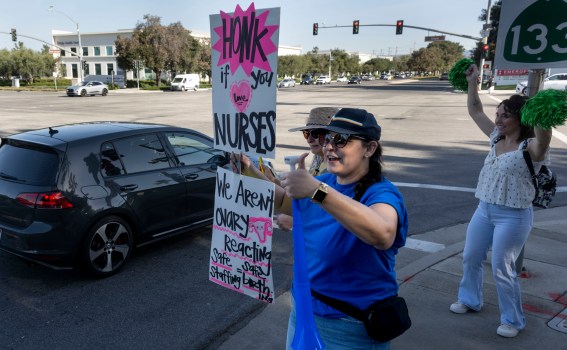
At the corner of Sand Canyon Avenue and Alton Parkway in Irvine, California, registered nurse Sarah Rubino joined around 150 colleagues in a demonstration that featured megaphone chants and supportive honking from passing motorists. Rubino, who has been working extra shifts since a prior strike in October 2025, stated, “I’m prepared for another week with some help from my rainy day fund.” She noted that her family’s Christmas celebrations were affected by the previous strike, highlighting the personal sacrifices nurses are making.
The strike has been organized by the United Nurses Association of California, which currently represents 31,000 registered nurses and health professionals. The union lacks a robust strike fund, prompting nurses to dip into their savings, reduce spending on non-essentials like dining out, and share transportation resources. “All of our health care professionals have been working extra or picking up part-time jobs just so that we can get a fair contract,” Rubino explained.
Another nurse, Alice Hunter, 62, shared that her rainy day fund amounts to $5,000. Hunter, who supports her son attending nursing school, has made adjustments to her budget due to rising costs. “I’m just watching my budget and groceries. I’ve cut back with inflation,” she reported.
The ongoing strike aims to replace a five-year contract that expired on September 30, 2025. Nurses are calling for increased wages and improved benefits while addressing staffing shortages. Initially seeking a 38% pay increase over four years, the union has revised its request to a 25% raise.
In response to the strike, Kaiser Permanente issued a statement asserting its commitment to nurses and patients. Camille Applin-Jones, senior vice president for Kaiser Permanente Southern California, described the company’s proposal as “the strongest compensation package in Kaiser Permanente’s national bargaining history.” She stated that the total pay increase offered, including step increases, would amount to roughly 30% over the life of the contract, excluding proposed benefits enhancements.
This strike follows a previous five-day walkout last October, which was marked by Kaiser bringing in thousands of replacement workers from across the country. These temporary workers were reportedly paid between $78 and $130 an hour, depending on the job requirements.
The economic landscape for healthcare in California is on the brink of significant changes, as highlighted by Laurel Lucia, deputy executive director for the Labor Center at UC Berkeley. She recently published a report predicting cuts to Medi-Cal funding, California’s Medicaid program, which could result in job losses within the healthcare sector. “These federal cuts threaten healthcare access for many and lead to significant job loss,” Lucia stated, estimating that between 109,000 and 217,000 jobs could be at risk due to funding reductions.
Looking ahead, the strike could intensify as more workers join the cause. Over 3,000 pharmacy and lab workers represented by the United Food and Commercial Workers union have announced plans to strike starting February 9 unless an agreement is reached. Kathy Finn, president of UFCW Local 770, criticized Kaiser’s corporate practices, suggesting they prioritize profits over patient care.
As the strike continues, nurses are making lifestyle adjustments to cope with reduced income. Gerard Corros, president of the Kaiser Orange County Professional Association, plans to economize by using his fuel-efficient car instead of a pickup truck. “We’re cutting out restaurants,” he said, emphasizing the long-term commitment of nurses to advocate for their needs and those of their patients.
The developments at Kaiser Permanente signal a critical moment in the ongoing conversation about healthcare labor rights and the future of the industry in California. As the strike unfolds, both sides remain at the negotiating table, with the health and well-being of countless patients hanging in the balance.