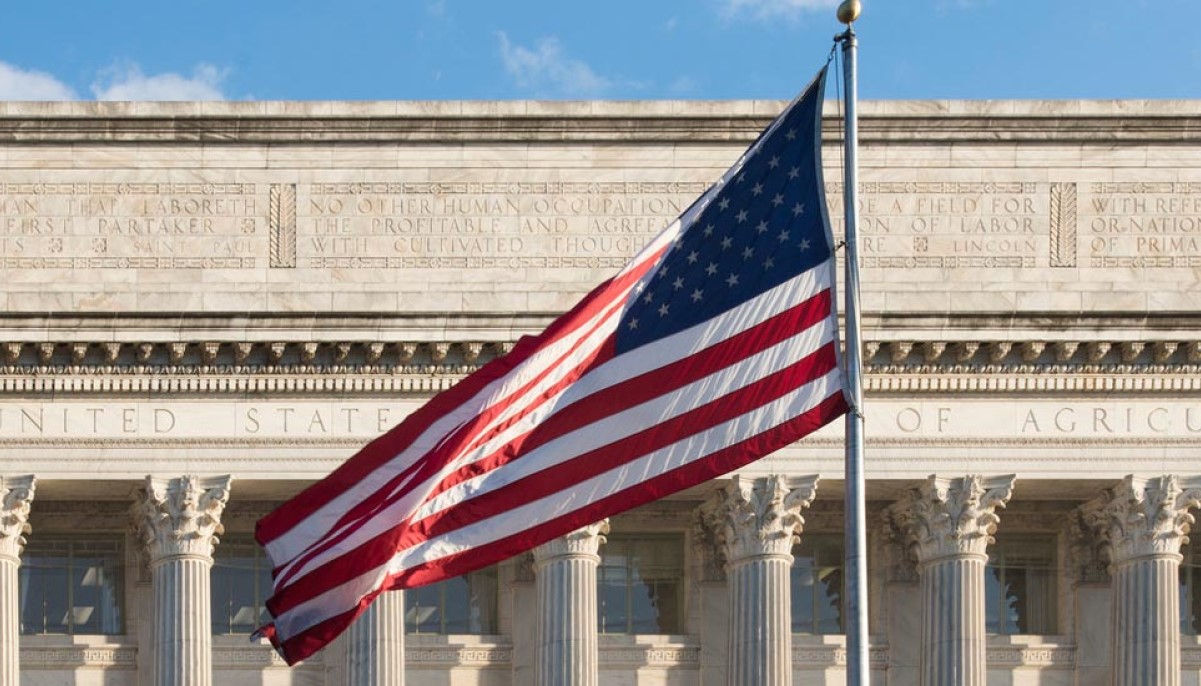
The U.S. Department of Agriculture (USDA) recently unveiled significant initiatives impacting energy management and food safety, amid ongoing discussions surrounding national policies. On January 27, 2026, the USDA announced revisions to federal regulations governing oil and gas resources on National Forest System lands. This update aims to streamline energy development management across extensive areas, emphasizing a reduction in bureaucratic hurdles.
The USDA’s finalized rule, known as 36 CFR 228 Subpart E, will enable more efficient coordination between the U.S. Forest Service and the Bureau of Land Management when issuing permits. Brooke L. Rollins, the USDA’s Under Secretary for Rural Development, highlighted the importance of this move, framing it as part of the Trump administration’s broader strategy to enhance energy independence. Rollins stated, “President Trump has made it clear that unleashing American energy requires a government that works at the speed of the American people, not one slowed by bureaucratic red tape.”
Doug Burgum, a key figure in the announcement, reiterated the intent to replace the “bureaucratic delays” of the previous administration with a focus on American innovation and efficiency. The USDA reported that approximately 5,154 federal oil and gas leases currently cover about 3.8 million acres, which is roughly 2% of National Forest System lands. Among these, around 2,850 leases spanning 1.8 million acres contain active federal oil or gas wells.
Support for E-15 and Ethanol Initiatives
In a related announcement, Rollins praised President Trump’s endorsement of nationwide year-round sales of E-15 fuel, made during a visit to Iowa on the same day. She emphasized that this move could facilitate the consumption of “up to 2 billion more bushels of corn” domestically. The USDA noted a growing demand for biofuels, with American ethanol exports rising by 11% over the past year. Rollins pointed to new agreements expanding ethanol access in several countries, including the UK, Japan, Malaysia, and Cambodia.
Additionally, the USDA is advocating for the extension of the 45Z biofuel tax credit through 2029, which Rollins described as a crucial element of the “One Big Beautiful Bill.” This proposal aims to solidify the U.S. position in the global biofuel market while supporting domestic agricultural interests.
Food Safety Guidelines Ahead of Super Bowl
On January 28, 2026, the USDA’s Food Safety and Inspection Service issued a timely warning in light of the upcoming Super Bowl festivities. The agency cautioned that food safety is paramount during the event, particularly for takeout and delivery items that may be left out for extended periods. Mindy Brashears, USDA Under Secretary for Food Safety, stressed the importance of monitoring food temperature to prevent foodborne illnesses.
“When food is served throughout the Super Bowl, it can be easy to lose track of how long it’s been sitting out,” Brashears noted. The USDA identified the “Danger Zone” as the temperature range between 40 and 140 degrees Fahrenheit, where harmful bacteria can thrive. The agency advises hosts to serve food promptly, transport takeout in insulated bags for longer journeys, and maintain hot food at temperatures above 140 degrees.
For specific cooking temperatures, the USDA recommends cooking whole cuts of beef, pork, and lamb to at least 145 degrees Fahrenheit, while ground meats should reach 160 degrees. Leftovers and casseroles must be reheated to an internal temperature of 165 degrees.
For individuals with food safety inquiries, the USDA encourages contacting the Meat and Poultry Hotline at 1-888-MPHotline (1-888-674-6854) or emailing [email protected] between 10:00 and 18:00 Eastern Time, Monday through Friday.
As the USDA implements these new initiatives, the dual focus on energy and food safety reflects a broader strategy aimed at enhancing public health and national resource management.